Initial reflection
I have reflected a bit on how I can approach this challenge. Looking at the lecture I got this feeling of the gaze from the creator being so present in many of the projects. It is sublime, but it’s there. I do not want to make something like that, portraying other people from my position, if that makes sense.
I live by the forest, I have worked a lot with this forest as starting point in previous weekly challenges. It means a lot to me. I am actually quite proud of living so close to it, because it is so meaningful to me. This is hard to explain. I just feel incredible privileged to be able to walk 200 metres and there is the endless (well) forest that I know, and I know where to find the edibles, where to drink my coffee, a good place to rest, and so on. But there is also another connection, a more metaphysical one.
I have been reading briefly about Escobar on ecological epistemology, mother earth liberation. Matriarchal cultures, focus on the relational the communal instead of individual. And how during the Enlightenment, man separated man from nature and started using nature as a resource for the sake of capitalism.
Cartesian Dualism–krippendorff p2, eg the semiotic two-world assumption
Initial inspiration
Björk has made an entire album approaching these topics. “I was off all my record deals, […] so I felt I was off the grid, […] so in that sense it was kind of crossroads project for me. On another level, at the end of the last project I lost my voice, [I] had a vocal nodule, […] I didn’t even know if I could sing again, so I had to redefine different techniques. And then, all these situation were happening in Iceland, the Bank crash, so I got really involved in environmental stuff [there]. So, on so many different levels, there was this message that all the old systems don’t work anymore, you gotta clear your table and start from scratch.” Source
That album was made into an app which you navigated through a sort of universe, I think I had that app as an inspiration in GDE740.
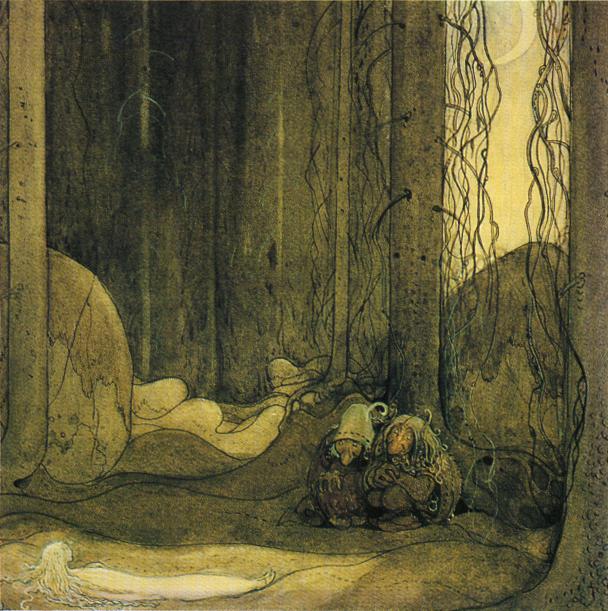
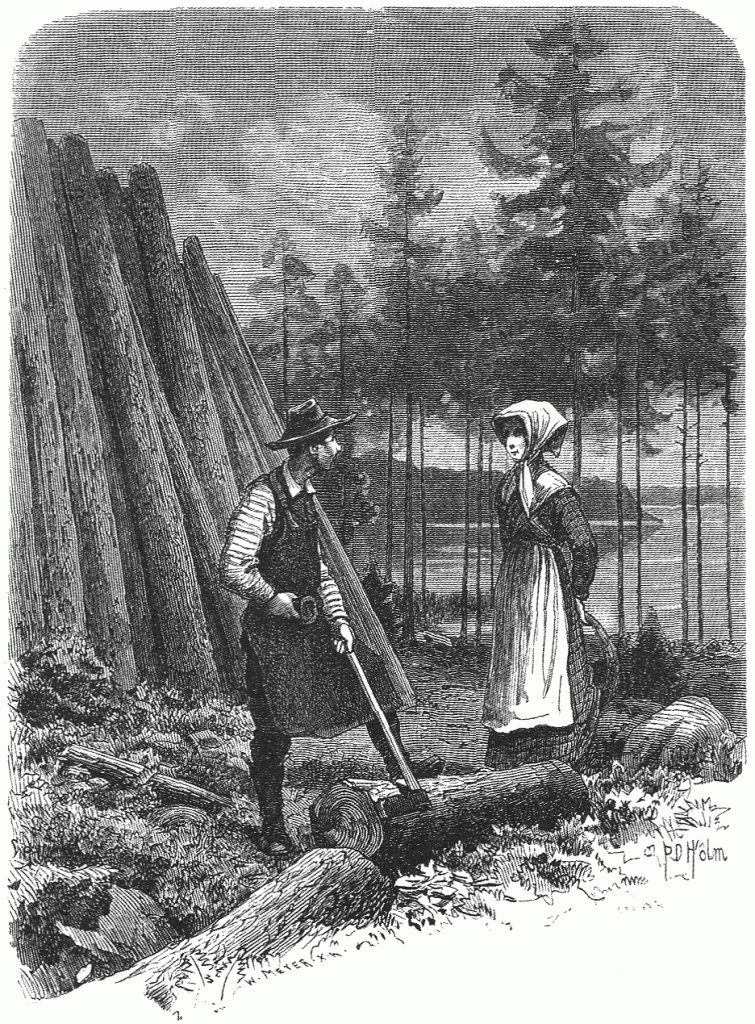
The story about the changeling from the trolls is very common one in Swedish folklore. There was this saying when I was young “looks neither like father or mother, thus must be a changeling”. There is also a story about a skogsrå, a woman who protects the forest, beautiful from the front but has a hole where her back should be. It is interesting that many of these folklore tales female like creatures from the forest are dangerous beings, stealing the soul of good men, stealing children etc. While in reality, what would one consider the safest place for a woman–a city or a forest? UN Women says that the most dangerous place for a woman is in her own home. I asked a friend who is, just like me, an isolating feminist (but she’s on an island and she is also a dedicated free diver, hence my remark on being under water in my question).
“Do you think there is an advantage as a woman to isolate yourself from the public sphere? Have you ever felt that you divide / reduce your ‘self’ to fit into different contexts, BUT being in an isolated context (can be at home, can be under water, can be in the forest) is the only thing that enables you to be whole so to speak.“
“Very good question. Also thinks of the relationship to separatist contexts.”
But then she had to run–and said she would get back to me. But that short mention of separatist contexts is something that I should be able to investigate more. If I go for the second idea that I have worked out, I should maybe interview her. Just as a foundation to find a direction in my writing. She is a very interesting person who is constantly examining the premises of being a woman.
Gina Dirawi, interview in Sverige! for Svt Sverige

Gina Dirawi is a Swedish culture persona. Tv-presenter, singer, comedian, actress. She was the first woman to lead “Melodifestivalen” the program in which the Swedish people select contestant to Eurovision song contest. But then, during the peak of her career she received a lot of threats and harsh critique and withdrew from any public appearances, until now.
She starts the section I want to include in my research with:
“I think I’ve got a little contempt for man. And started to seek out more nature and animals.”
The interviewer mentions how she as a younger woman created reactions as she did things a young girl from Sundsvall (northern city in Sweden) normally “would not/should not do”. How did you build up courage? He asks.
She says:
“I have always had a struggle between myself and the world. I believe that if you are a powerful child and you are born into a female body, there is always a conflict between the outer and the inner. Can I show my power here?
Should I hide my power here? Can I be this? It’s always like a seesaw. Am I allowed to exist or should the world set the rules for who I should be, how I should be, how I can talk, how I can dress. And for me, it’s always been like a fucking boxing match. It is very hard to be a woman. No one tells you that when you are a child. I know that we have talked about this so many times, but it IS hard, it is so HARD. It is a constant struggle with shame and guilt until you grow up and starts to understand what has happened to you.”
In a discussion about her grandfather, she says:
“I always felt as if he saw me. Even if my methods would not be his methods. But he saw me.” “It is about someone who can see your complexity and your power and say ‘it’s ok'”
“If you are coming from so many generations of suffering and sorrow, like I do, and have lived a life where you have felt that you can’t exist. Then everything you want to do is to create new room, so that a few can exist a bit more. I don’t want to live an imprisoned life. I don’t want to be a half person. I don’t want to be 25% Gina. I want to be whole and I want that everyone else as well should be able to be whole. I can’t bear to be half. I don’t want anyone to walk around as half.”
“Not one single baby should be born that will feel half. It’s done. I am done with that feeling for everyone.”
My initial ideas were these:
1. The forest as a mythological place
I grew up with “legends” about the forest. It is a very common thing in Swedish folklore, and in this region particularly around trolls and the “skogsrå” who live in the forest. When I was a kid, people jokingly used to trick me into believing I was a changeling from the trolls, and that was possibly the reason I was not like anyone in my family in either looks or manners. Now I live in isolation in the forest as I can hardly bear human interaction, as many interactions require a reduction or adaptation of my self that I am no longer willing to make. I have always felt like a changeling in society at large and just the other day I heard a discussion on TV of a woman talking about exactly this, children with some sort of aspiration, born into female bodies constantly having to adjust and restrict themselves to societal norms. I wonder if I should construct a story around the women, the changelings of society–who do not live up to the constructed norms and expectations. And what happens to them, maybe they become the skogsrå of today, devouring the souls of men trespassing their forests, their ideological grounds.
2. The forest as a healing place
This route takes a look at several disciplines, for example ecofeminism, and cartesian dualism in which both women and nature are deemed inferior. bell hooks wrote that only when she is at home she can exist beyond race, her home is a sanctuary. For me this forest is that sanctuary, from a gender perspective, where I am free of any constructed roles. That could possibly relate to Hannah Arendt’s discussion on private and public and gender roles. I also think I can relate this to Arturo Escobar and his discussions in Pluriverse Politics, where he discusses radical relationality and much more that could be useful in this essay. How deepening the relationship to nature might heal you and let you be your full self. How melting with the environment can be a way to be able to persist.
Further development of ideas
I got some really nice feedback on the ideas wall, many notice that the ideas kind of interlace which was unproblematic in the feedback I got, but is something I would like to revise. I am trying to find more distinct routes but sort of stay in the same theme. Therefore I am trying to re-work the first idea a bit. These are some loose thoughts on my ideas at this time:
1. Spirituality and temporality in nature
Can I connect to the farmers almanac that to some extent is based on (old Norse) mythology and folklore in combination with weather forecasts.
Research
The Farmers Almanac
The Funambulist — they have clocks we have time
Ecological temporality?
What’s the purpose of the text
An attempt to present different ways of looking at time and relating to nature
What is the text about?
Visual routes
2. Forest as a sanctuary
Can I connect women to nature, and how forest/nature can serve as a space where you can become your full self and heal through deepening the relationship to nature.
Research
Ecofeminism
Cartesian dualism
Hannah Arendt
bell hooks
Arturo Escobar
Interview with women who disconnects/isolates from society
What’s the purpose of the text
Criticize and challenge a civilization that is not for women and present a space that is
What is the text about?
Visual routes
fragmentation becomes a whole through nature
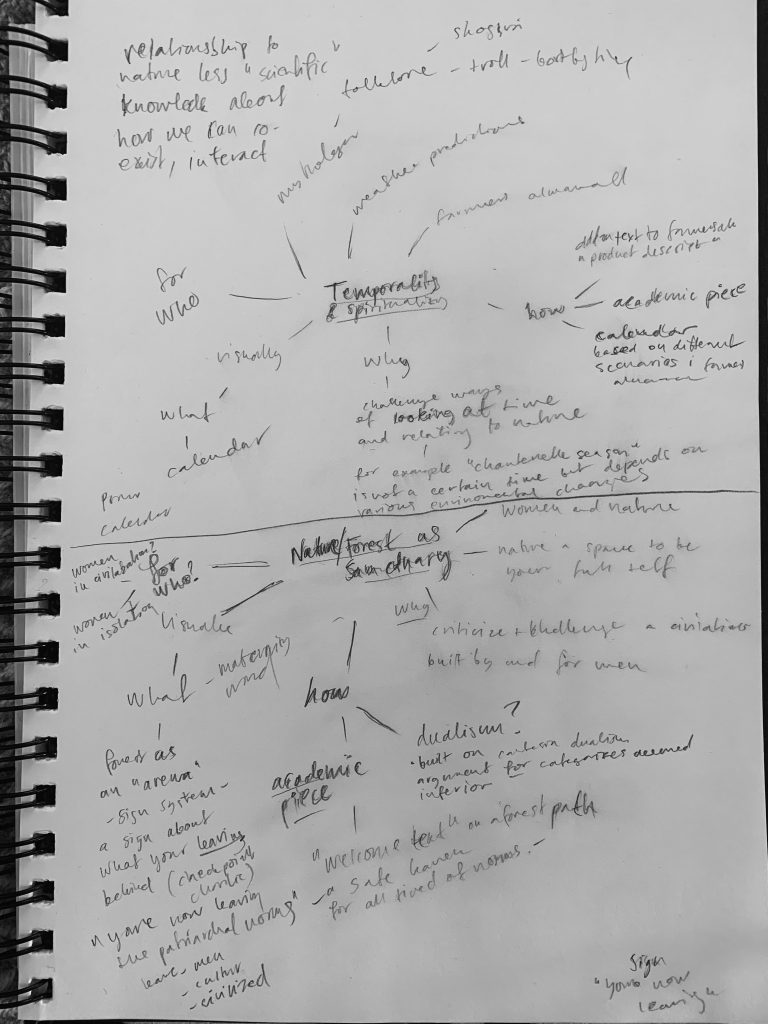
Some idea generation on these two directions. I want to include the first, first idea (forest as a mythological place) in the revision of the second idea.
[translation and extract from an interview is coming]
As I reflect on this topic and my idea. I approach at some posthumanist themes, this got me thinking about Alex Garland’s Annihilation that I have written about in GDE710 but from a different perspective. But Annihilation touches upon the subject of human biology and genetic mutation in relation to “nature” or what title one can ascribe the sort of organism they encounter in the movie. Posthumanism can also be a theme that challenges the concept of human as superior. Maybe this will form. as a sort of anti-anthropocentrism. Maybe the direction of this written piece leads to a literal melting with nature?
What if being full as a woman means merging with and being part of the organism, nature, earth.
Workshop challenge–visualisation
Time and temporality in nature: inspiration
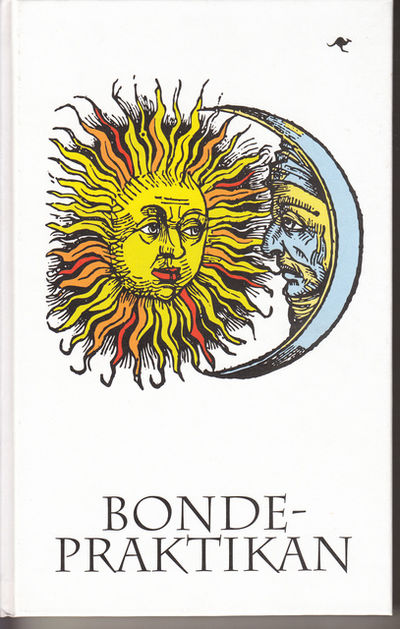
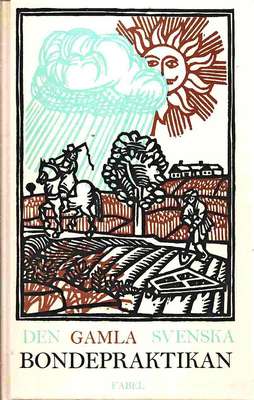
Looking at some older editions of the Farmers Almanac, the sun and the moon are highly present in both the predictions and visually.
Nature as a sanctuary: inspiration
This idea is very much about the spatial removal from civilization into nature. I thought the Charlie checkpoint.
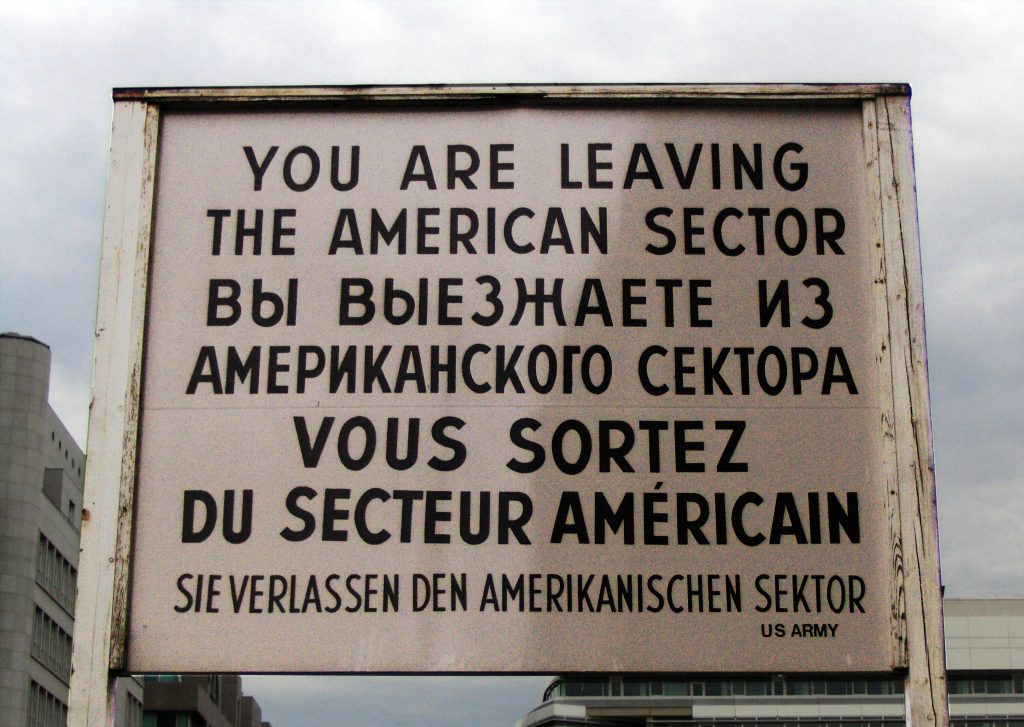
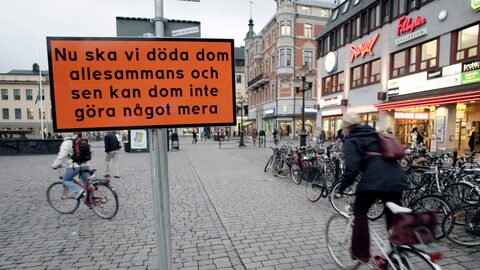
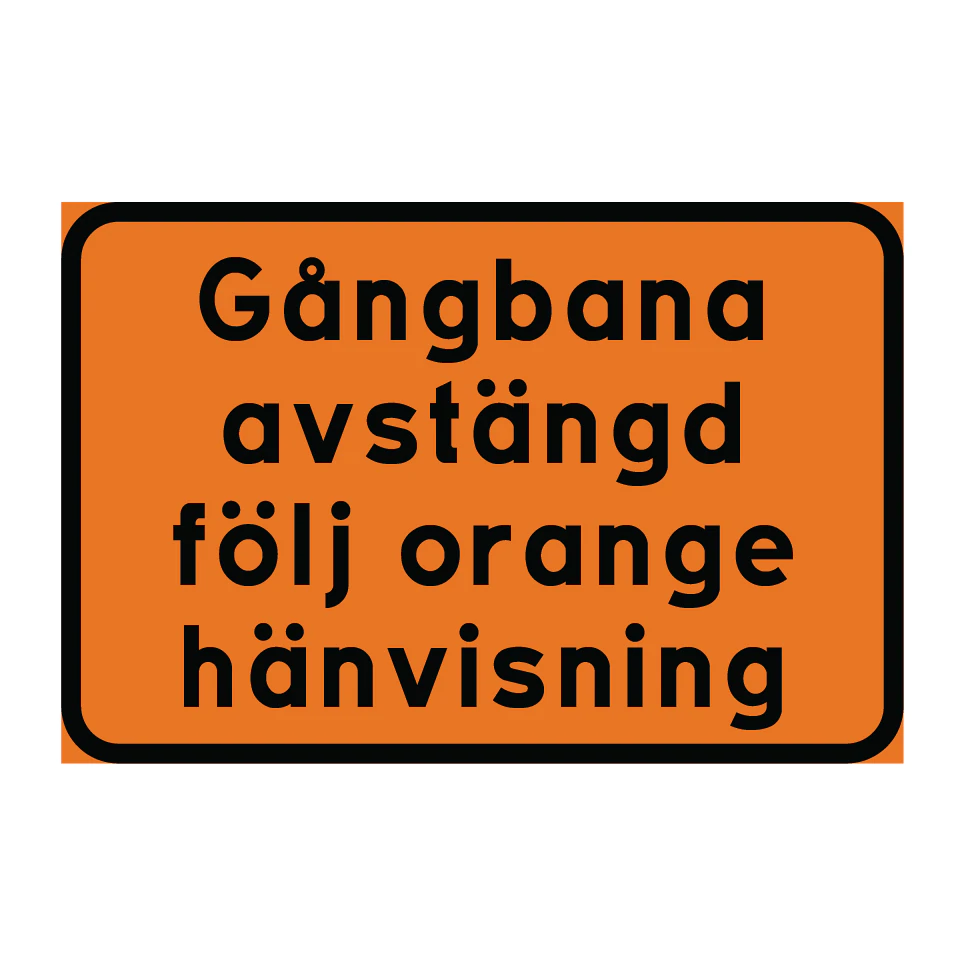
I wanted to explore a bit with some of the themes mentioned previously in this module, about road signs. Road signs being such a strong signifier for this place. But also create a discrepancy when putting a message that don’t belong on a road sign .
My final two
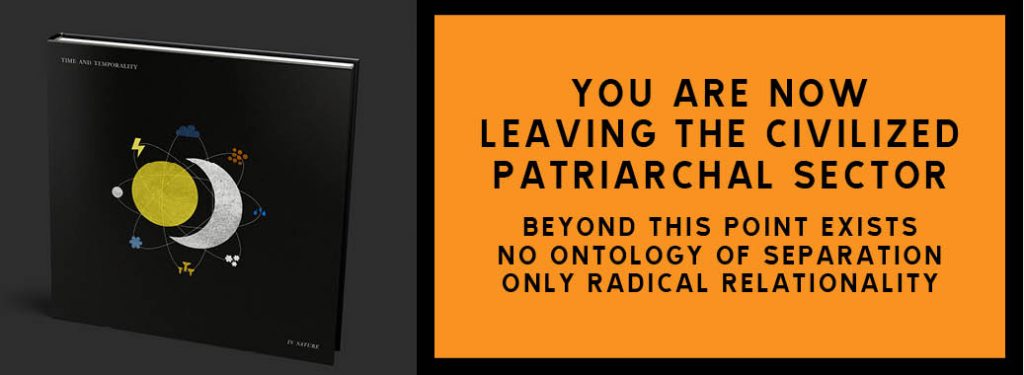
Time and temporality in nature
When living close to nature, time exists beyond the regulations of man. Such as: rainfall during the second half of July is often persistent, and after fourteen days of rain the chanterelles will come. The Swedish Farmers Almanac is built on superstitions and possible scenarios for the year, depending on how the environment has behaved in previous months. Henri Bergson speaks of a perspective on time where the task at hand fills the time from within, instead of time that is regulating us from the outside. Can alternate ways of relating to time serve as a guide on how to better relate to our environment and connect with nature?
Nature as a sanctuary
Can nature be a space for women to exist in full? As many societal norms and interactions require an adaptation and reduction of the female self, can nature serve as a sanctuary?
A place drawing on radical relationality, where all entities are connected and melting with the environment can be a way to persist. When studying the dualist ontology in which both women and nature are deemed inferior, the possibility must exist to create a place beyond this separation. Where nature can be a place for women to be free of any constructed roles and integrate themselves in the relational web of life, beyond the patriarchal civilization.