Where to publish Autopoiesis
For me, this writing and designing project has felt quite important as I want to investigate deeper into who I might be as a researcher, what my direction in a journey within Academia could be. Writing and publishing in an Academic context is something I would really want to do. But in free standing Academic(or non-academic) journals. Both Futuress and The Funambulist are platforms that I have been drawing a lot of inspiration from before.
But I think the subject of this essay and as well the transdisciplinary approach and its conclusion might make it hard to find a context for. I think the main discipline or theme in my text is feminism. If I could choose this would be a text for my own platform Temporal Tensions, as it also looks into history through the lens of decolonisation. One alternative is to start my own “journal”, Temporal Tensions.
During a tutorial with Ben, he mentioned Sternberg Press as a possible publisher, and e-flux if I want it to be online. I believe both of those are a suitable context for what I have written, the visual outcome is definitely adaptable to a digital context as well.
Design development
The text is basically about how there is no hope as a woman and the only way to endure life as a living entity is through becoming non-human. So there is a certain sci-fi feel to it, but rather a slow and gradual feel of something changing. I wanted to capture the feeling of nature taking over, but I did not want it to look pretty or be beautiful. I wanted it to feel like something that consumes whatever it encounters.
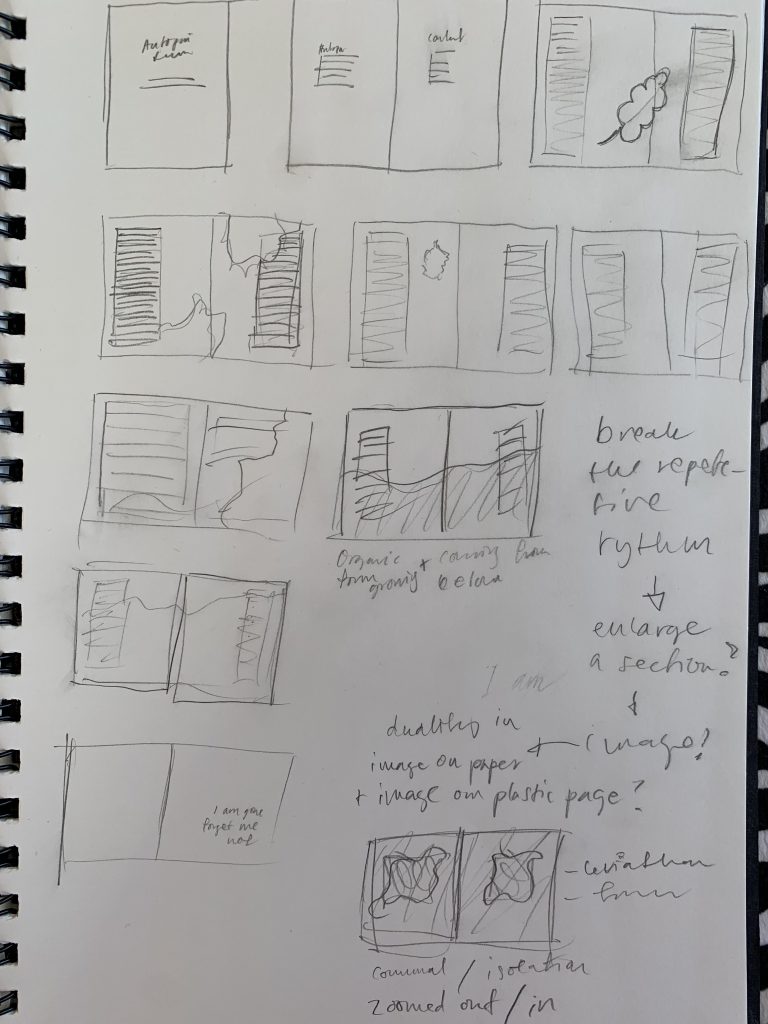
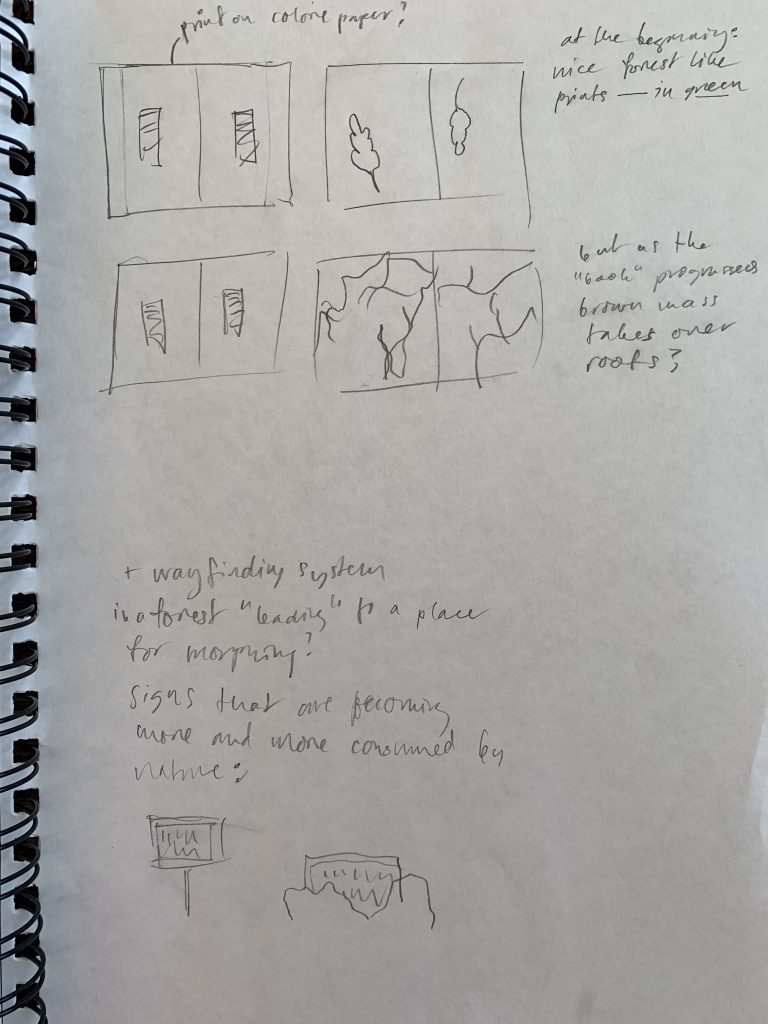
I looked at a lot of possible visual metaphors for this, I did not want to print or do any of that analog approach that I so often do.
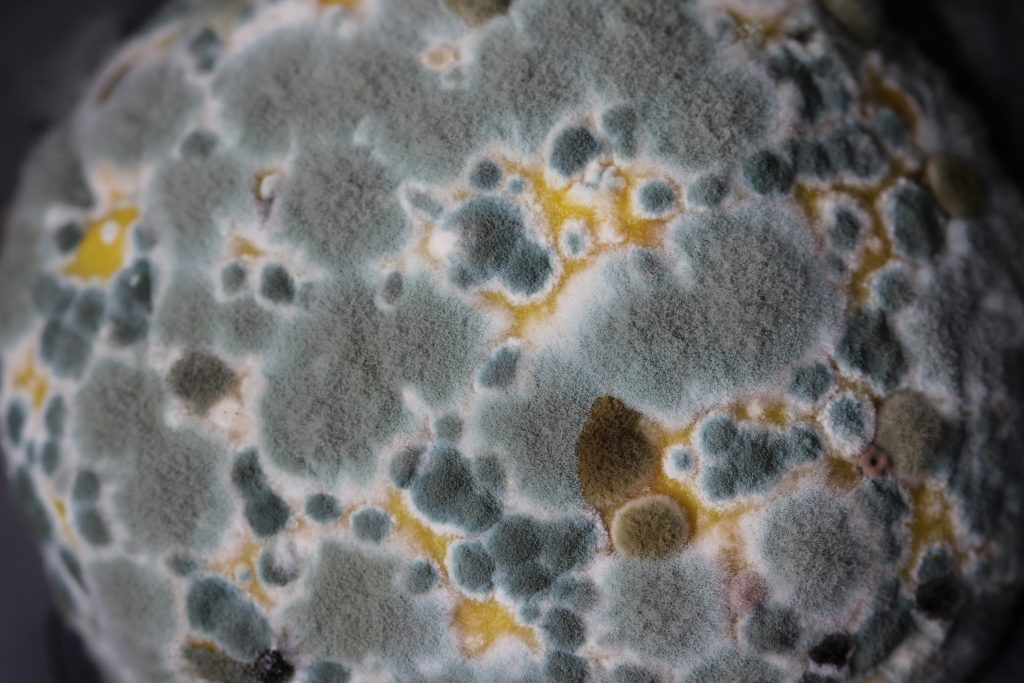
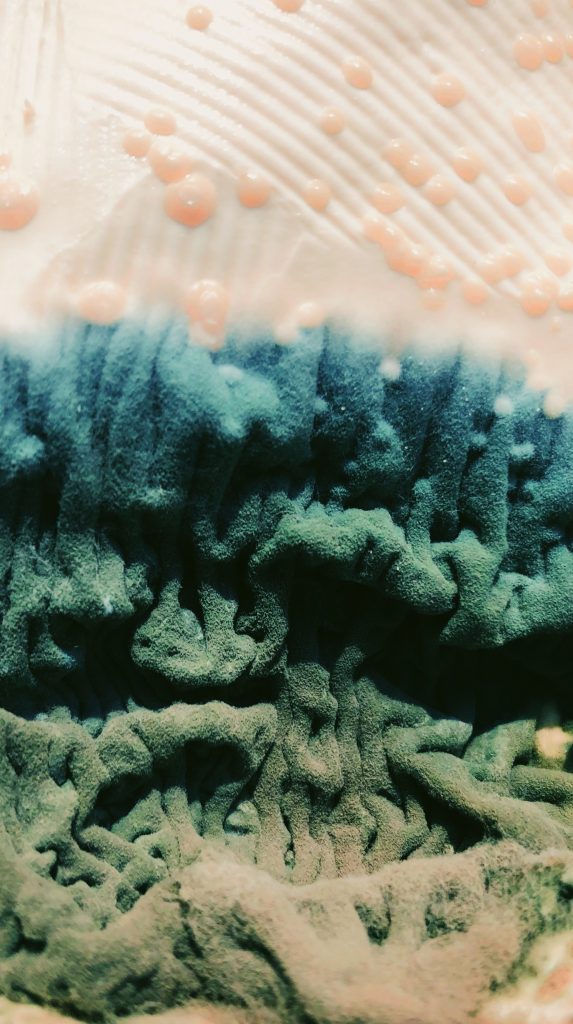
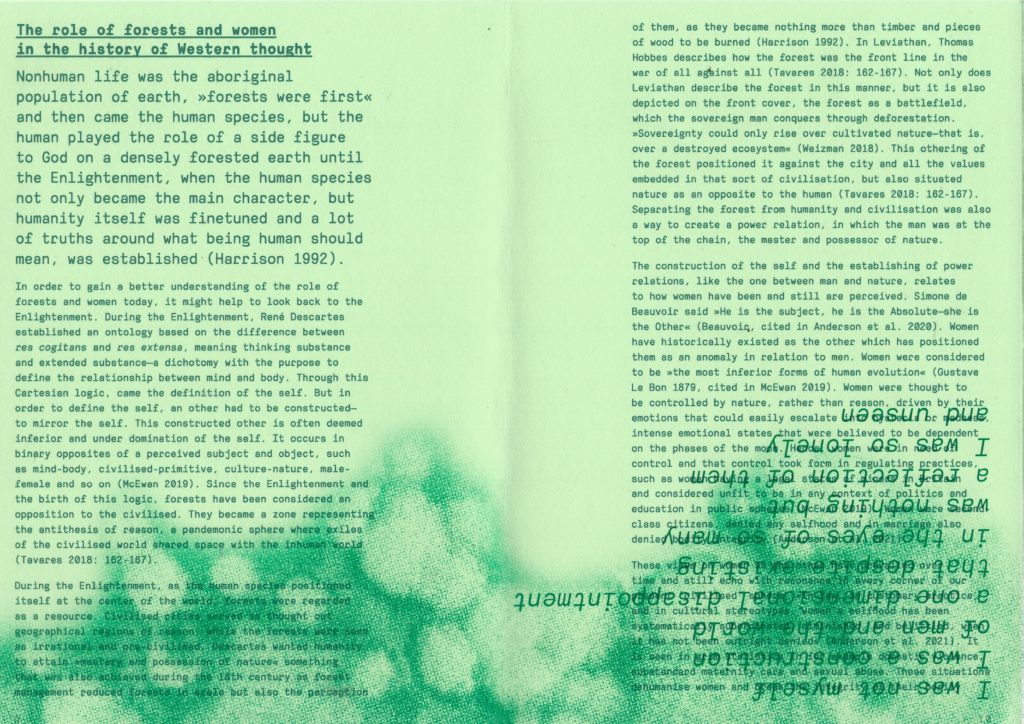
Prowled the web for photographs of organic forms that could work. Tried a few ones out, but it was the mold above that made the cut.
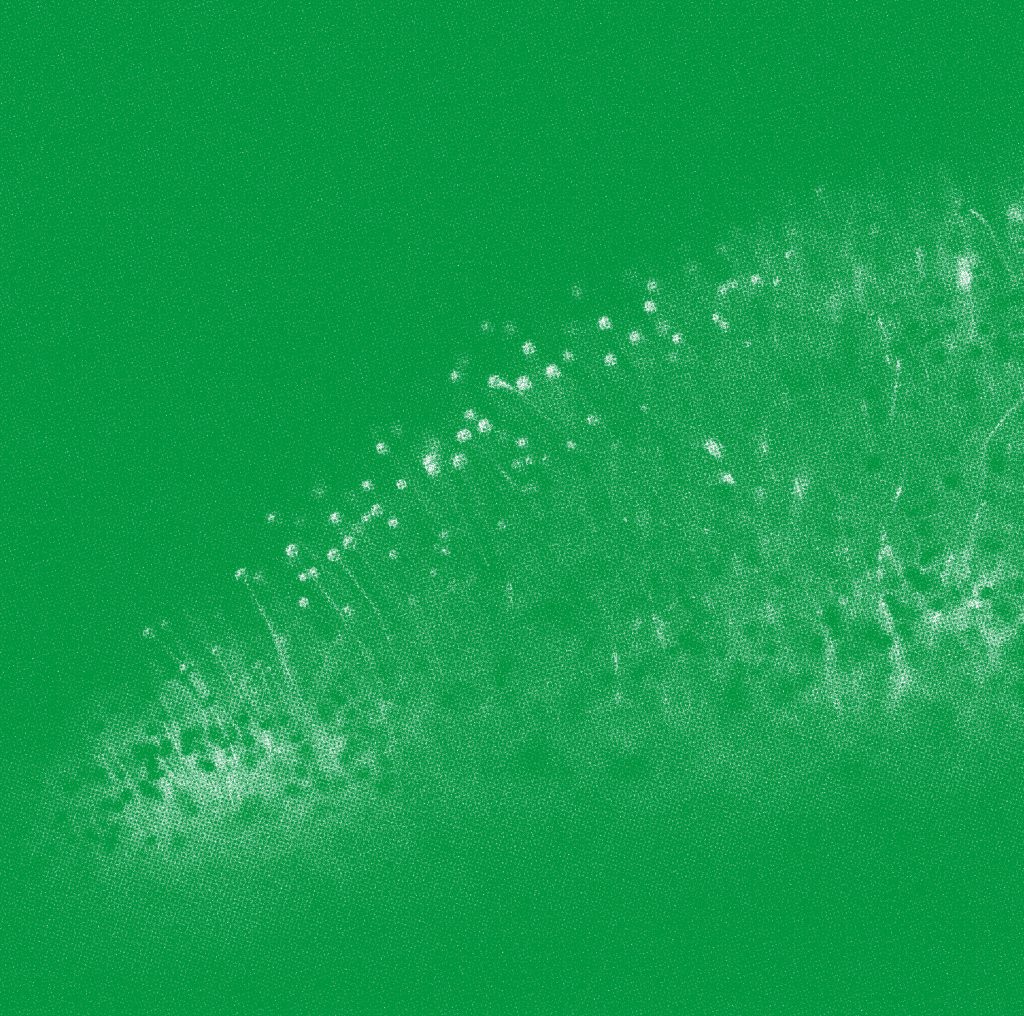
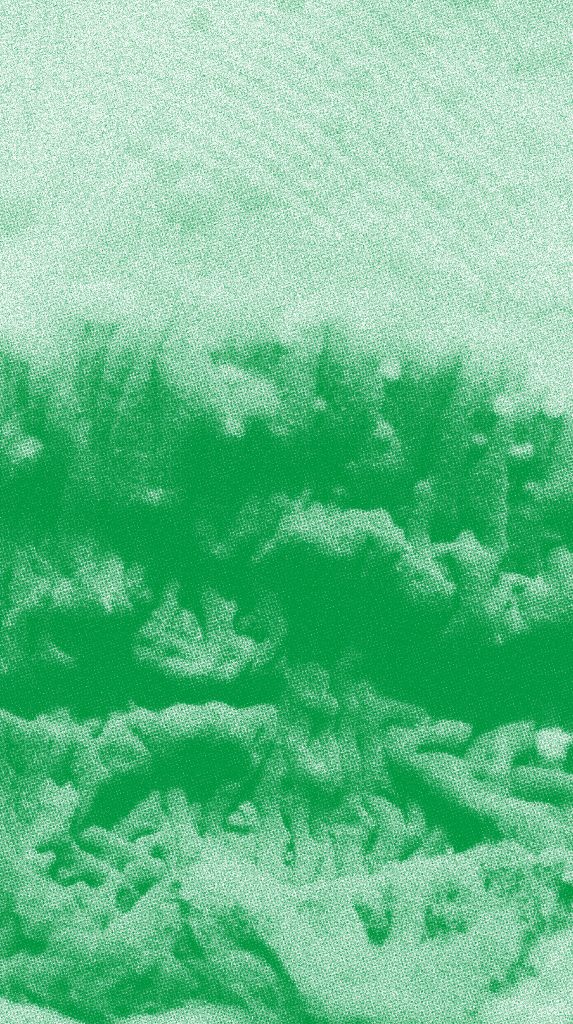
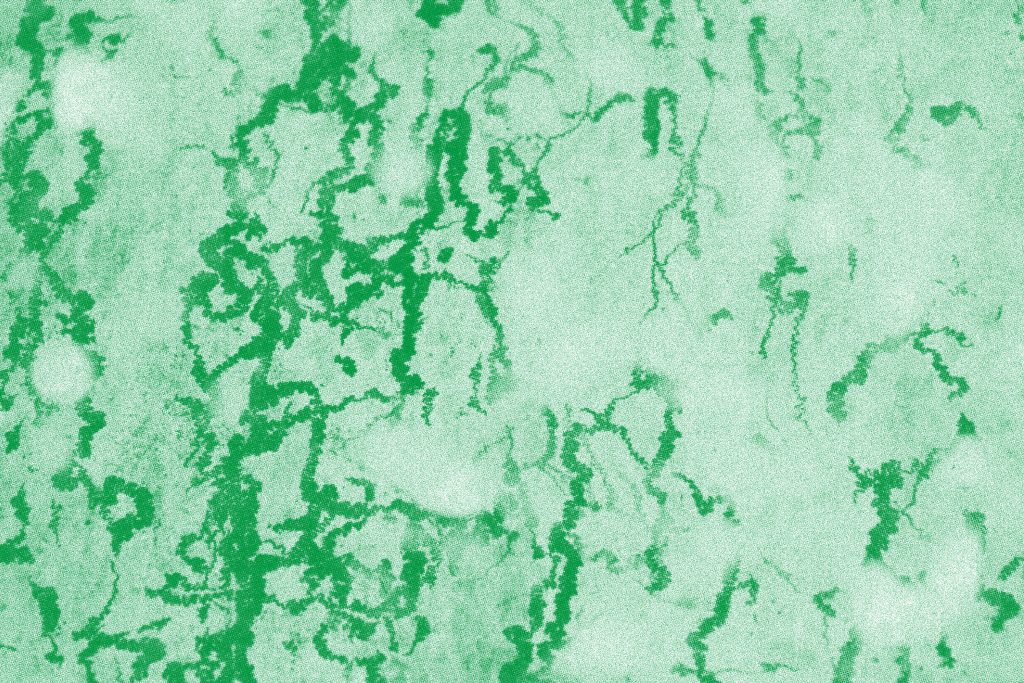
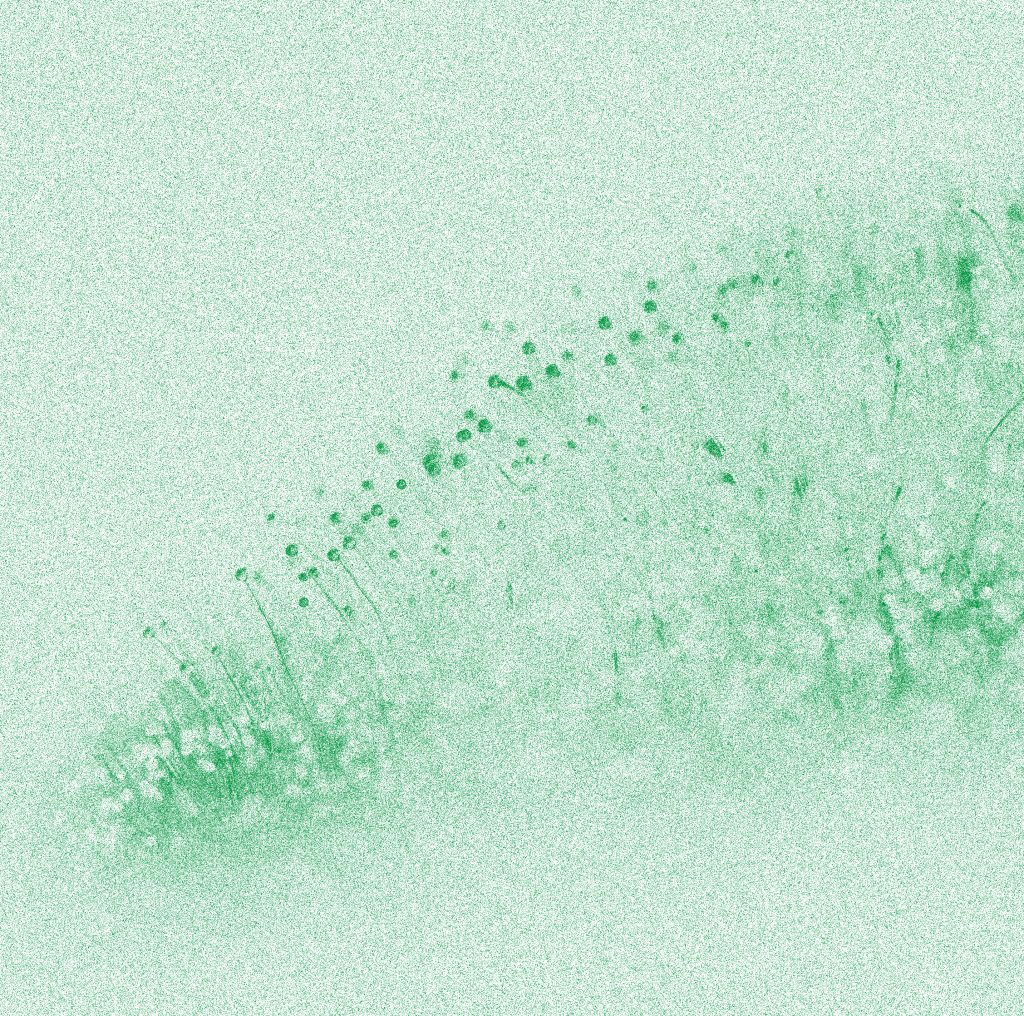
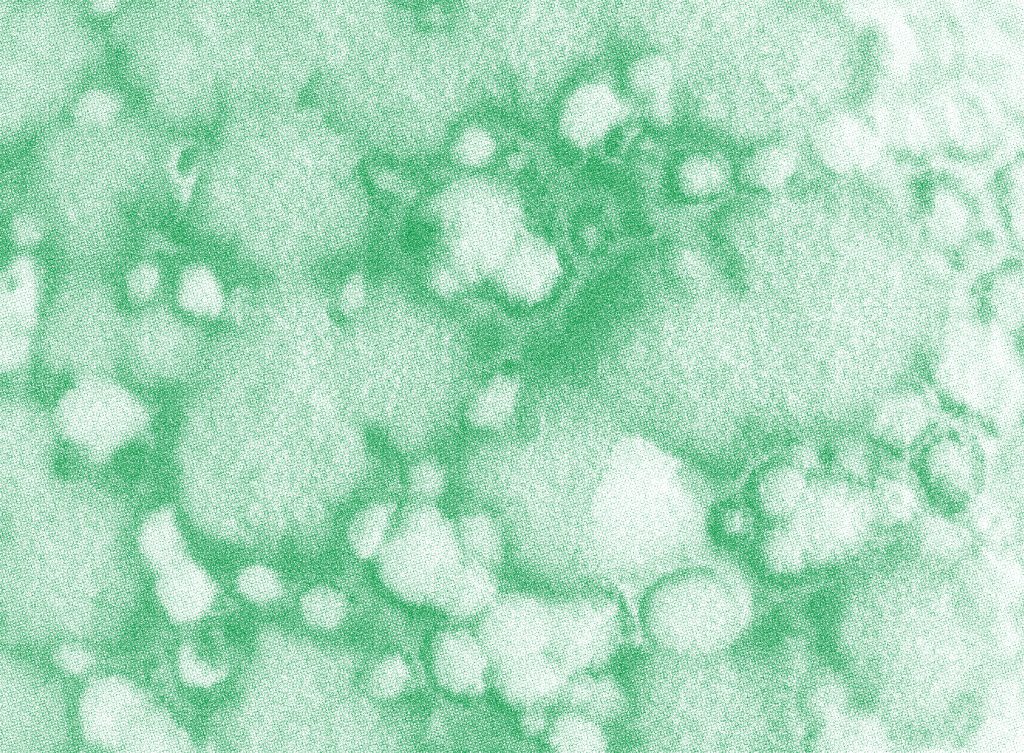
I experimented some with the photographs to find the one that suited the idea best. I wanted the visual feel of organic texture, but a printed organic texture–if that makes any sense. Max Bloom mentioned on the ideas wall that I should look into riso printing, and having looked into that I think that is the sort of visual expression I was looking for in these images.

The visual framework was important. I wanted to visually re-create this uncomfortable invisible framework that the text discusses, that we involuntarily relate to. I set up a five column grid, and let the margins only be 1 cm. Making the pages feel a bit cramped.
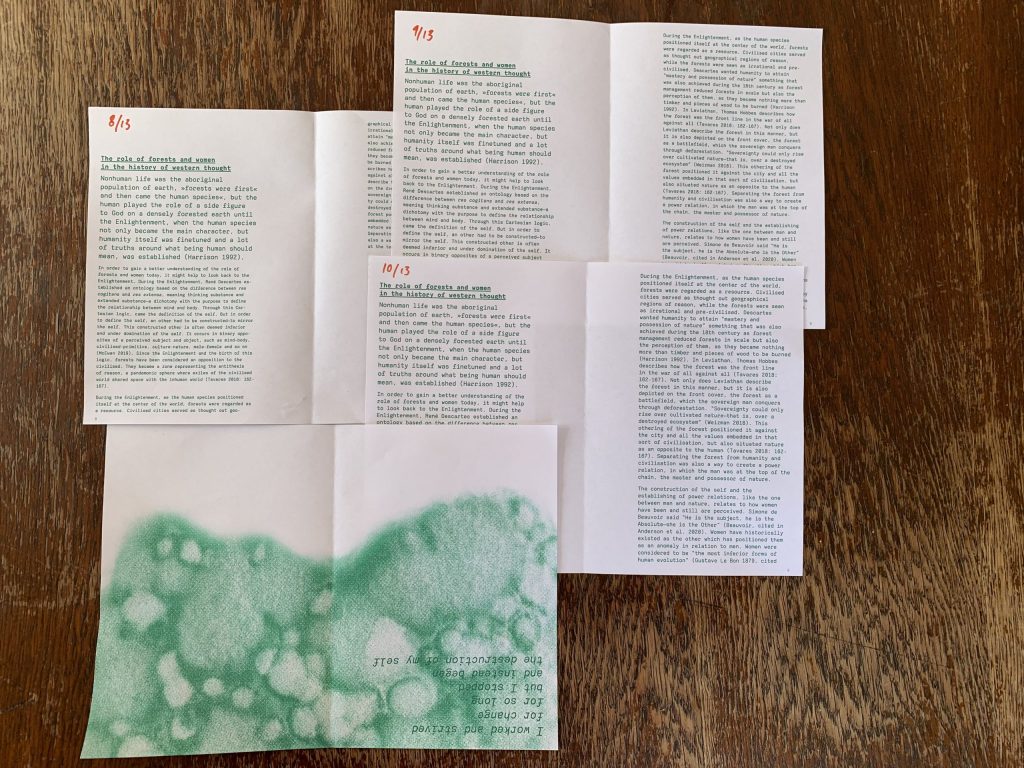
I tried enhancing the feeling of the pages being cramped with letting the type size come up to 10 in my chosen typeface (ATC Harris) but it did not look to good. The typographic hierarchy was not clear enough, it was not very legible. I did some print tests to see what type size worked better. Went for 8/12 pt. The mold is supposed to be on plastic pages, so that it folds over the regular pages. On the plastic is also the second narrative of the voice of someone who has made this transition–this journey.
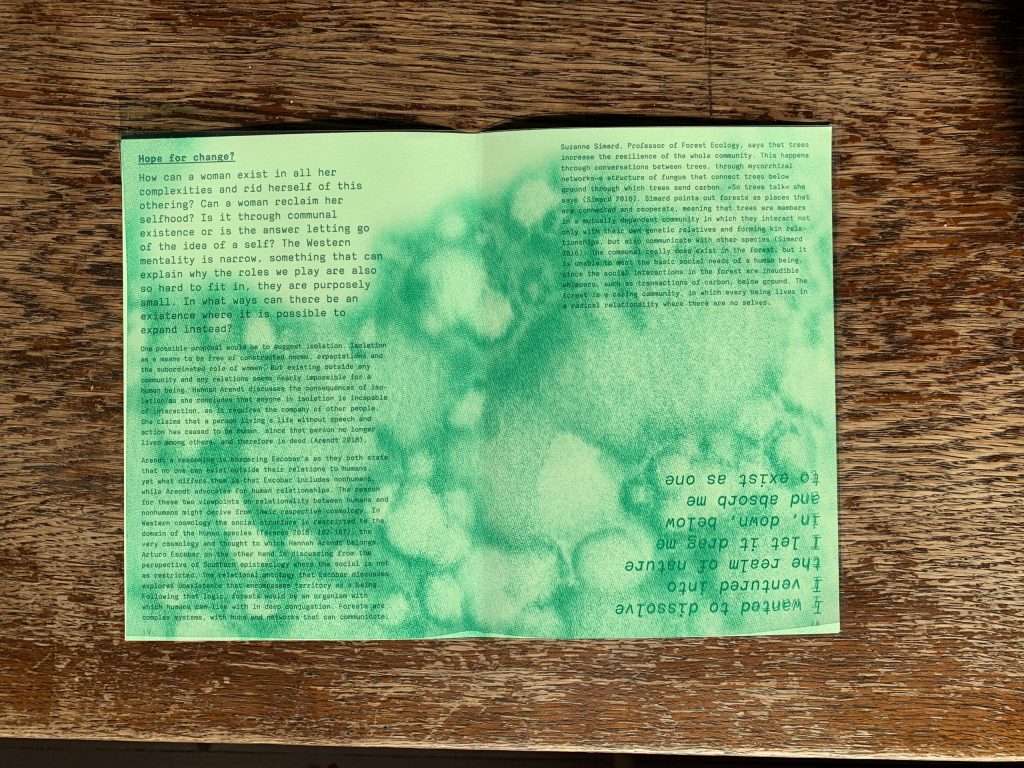
Tried printing to see how the different pages looked overlapped.
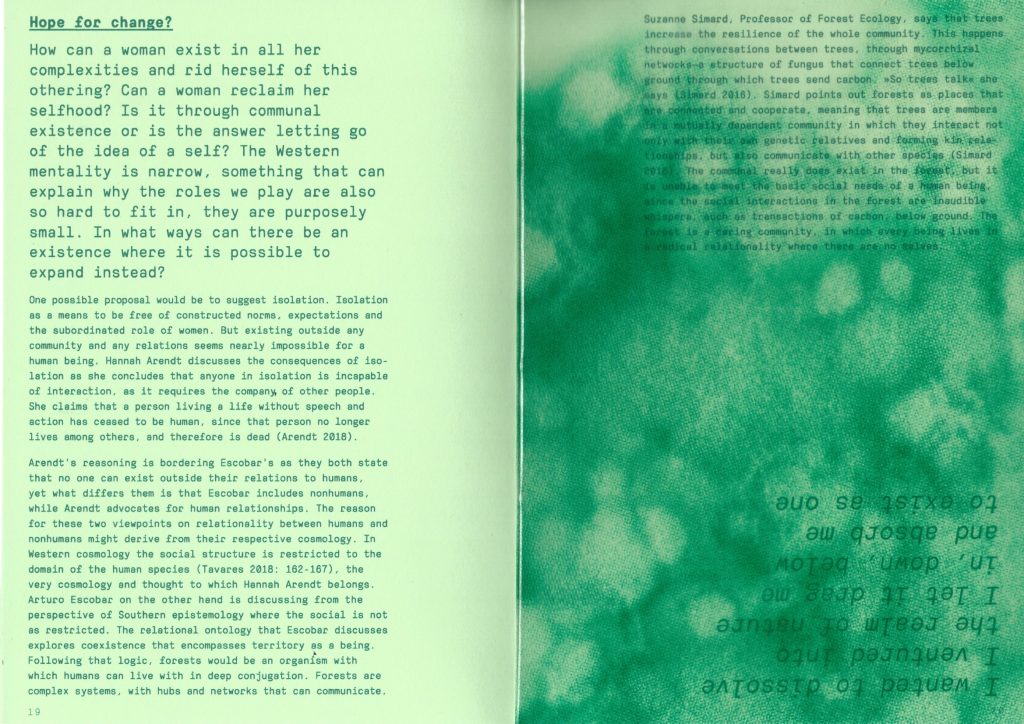
Autopoiesis // Förgätmigej
A transformative journey towards becoming complete through the destruction of the self.
“To be alive, an entity must first be autopoietic—that is, it must actively maintain itself against the mischief of the world. Life responds to disturbance, using matter and energy to stay intact. An organism constantly exchanges its parts, replacing its component chemicals without ever losing its identity. This modulating, “holistic” phenomenon of autopoiesis, of active self-maintenance, is the basis of all known life. All cells react to external perturbations in order to preserve key aspects of their identity within their boundaries” (Clarke 2020).
Think of me
Remember
Who do you see?
Introduction
Forests and women share a history of harmful narratives that are still today undermining and limiting them and our common understanding of them, their capacity and complexities. Forests and women are two very different things, a physical place of nonhuman life and a human being, yet they have a lot in common and the former might be the salvation for the latter.
The modern patriarchal civilisation is a place where there are many constructed norms that are building up an invisible framework, a social contract of constraint, specially designed for women. These constraints are positioning women in a one-sided role, that is so small and hard to fit in for so many. The forest on the other hand is a place of radical relationality, connecting all living organisms in it, growing complex networks underground to become more resilient, together, as a whole.
Can the forest be a place for women to exist and to be free of any constraints and to be complete? Can women and the forest exist in symbiosis in a reality where it is bearable to persist? Is it possible to dismantle the self and exist in a fully intermutual relationship in a nonhuman formation?
The role of forests and women in the history of western thought
Nonhuman life was the aboriginal population of earth, “forests were first” and then came the human species , but the human played the role of a side figure to God on a densely forested earth until the Enlightenment, when the human species not only became the main character, but humanity itself was finetuned and a lot of truths around what being human should mean, was established (Harrison 1992).
In order to gain a better understanding of the role of forests and women today, it might help to look back to the Enlightenment. During the Enlightenment, René Descartes established an ontology based on the difference between res cogitans and res extensa, meaning thinking substance and extended substance–a dichotomy with the purpose to define the relationship between mind and body. Through this Cartesian logic, came the definition of the self. But in order to define the self, an ‘other’ had to be constructed–to mirror the self. This constructed ‘other’ is often deemed inferior and under domination of the self. It occurs in binary opposites of a perceived subject and object, such as mind-body, civilised-primitive, culture-nature, male-female and so on (McEwan 2019). Since the Enlightenment and the birth of this logic, forests have been considered an opposition to the civilised. They became a zone representing the antithesis of reason, a pandemonic sphere where exiles of the civilised world shared space with the inhuman world (Tavares 2018: 162-167).
During the Enlightenment, as the human species positioned itself at the center of the world, forests were regarded as a resource. Civilised cities served as thought out geographical regions of reason, while the forests were seen as irrational and pre-civilised. Descartes wanted humanity to attain “mastery and possession of nature” something that was also achieved during the 18th century as forest management reduced forests in scale but also the perception of them, as they became nothing more than timber and pieces of wood to be burned (Harrison 1992). In Leviathan, Thomas Hobbes describes how the forest was the front line in the war of all against all (Tavares 2018: 162-167). Not only does Leviathan describe the forest in this manner, but it is also depicted on the front cover, the forest as a battlefield, which the sovereign man conquers through deforestation. “Sovereignty could only rise over cultivated nature–that is, over a destroyed ecosystem” (Weizman 2018). This othering of the forest positioned it against the city and all the values embedded in that sort of civilisation, but also situated nature as an opposite to the human (Tavares 2018: 162-167). Separating the forest from humanity and civilisation was also a way to create a power relation, in which the man was at the top of the chain, the master and possessor of nature.
The construction of the self and the establishing of power relations, like the one between man and nature, relates to how women have been and still are perceived. Simone de Beauvoir said “He is the subject, he is the Absolute–she is the Other” (Beauvoir, cited in Anderson et al. 2020). Women have historically existed as the ‘other’ which has positioned them as an anomaly in relation to men. Women were considered to be “the most inferior forms of human evolution” (Gustave Le Bon 1879, cited in McEwan 2019). Women were thought to be controlled by nature, rather than reason, driven by their emotions that could easily escalate into hysteria or madness, intense emotional states that were believed to be dependent on the phases of the moon. Hence, women were in need of control and that control took form in regulating practices, such as women having a legal status of minors in Britain and considered unfit to be in any context of politics and education in public spheres (McEwan 2019). Women were second-class citizens, denied any selfhood and in marriage also denied bodily integrity (Anderson et al. 2021).
These views on women as the ‘other’ have prevailed over time and still echo with resonance in every corner of our present ‘civilised’ sphere. “In law, in customary practice, and in cultural stereotypes, women’s selfhood has been systematically subordinated, diminished, and belittled, when it has not been outright denied” (Anderson et al. 2021). It is seen in grim statistics in for example domestic violence, substandard maternity care and sexual abuse. These situations dehumanise women and break the integrity of their bodily domains. The body represents the “dynamic site of the self”, meaning that reducing the body to an object, and especially through sexual violence, changes the sense of self (Anderson et al. 2021). Experiences relating to the kind of abusive situations that forcibly break women’s integrity can lead to their death as either inclined by another person, the circumstances of the situation, or by suicide. Whether in an abusive situation or not, all women still remain limited within the invisible framework that was so meticulously outlined during the Enlightenment.
Today the dualism of what is norm and what is deviant is not only present, but also extended beyond the stereotypical binary roles for women, for example madonna–whore, mother–monster, into a range of false dichotomies. These female tropes compose a matrix so complex that it is impossible to navigate, while women themselves seem to lack any kind of complexity and are only allowed to exist in one of these unilateral roles. Women have internalised this way of the Western mindset into their self, meaning that women may unknowingly be responsible for maintaining an oppressive structure (Anderson et al. 2021). This internalisation of patriarchal norms is detrimental for the sense of self, it can lead to women questioning whether their own perception of an oppressive existence is in fact real. This means that denying and internalising the narratives of Western patriarchal norms might leave women gaslighting themselves into losing their sense of self and becoming depressed (Anderson et al. 2021).
The forest remains a resource and anyone occupying it is either nonhuman or a social outcast. The forest is still viewed as something separated not only from society and civilisation but from humans. Forest territories near any cities or communities are kept by foresters to prevent them growing too wild, in an ambition to sustain ‘civilised’ order in something that inherently is in defiance of civilisation.
Both women and forests are controlled and restrained with the purpose to conform to their role as the other, which is nothing but a reiteration from the Enlightenment.
I was not myself
I was a construction
of men and the world
a one dimensional disappointment
that despite existing in the eyes of so many
was nothing but a reflection of them
I was so lonely
and unseen
A different view
In order to challenge the logic of Cartesian dualism, it is of great importance to look at these themes with a different lens, namely that of radical relationality. While modern Western epistemology acts in favour of separation between every being, radical relationality works toward a logic where all entities are connected to such extent that they do not have an isolated existence from one another.
There are places where radical relationality is an integral part of the way of life and where the view on relationality differs greatly from the western one. Ubuntu is a Southern African concept that proposes that humanity is at its best when expressed in relationships to others and that it is not possible to express one’s self through exploiting others or treating others unjustly. Ubuntu also includes in this consensus that the self is existing in the bond one creates to other beings and not only other human beings, but also from “the more-than-human world”. This way of reasoning is further established in the Ubuntu saying: “We are, therefore I am” (Le Grange 2019), a saying that in itself forms a critical comment on Descartes’ “I think therefore I am” and makes a clear distinction of their respective perspectives of the world and way of life. This philosophy opens up a broader lens that makes the mindset of Europe seem quite narrow.
Looking deeper through that lens, the approach of Buen vivir reveals itself, a South American perspective beyond the separation of humanity and nature. Buen vivir presents the possibility of territory based communities with inhabitants that are mixed in terms of being human and non-human. Buen vivir is an approach that exists in plural, meaning that it is applicable on different communities’ ways of living, and can serve as an expanded way of being and living (Chuji et al. 2019). This perspective presents a sort of community, beyond being connected to nature and rather accepting the role of humanity being an extension to a multitude of beings.
Escobar claims that we are defined by our relational coexistence, not only with each other but with nonhumans and that our existence is thoroughly connected. He suggests that what hinders this coexistence to flourish is the strong belief of a single objective reality in which there are autonomous individuals. Escobar argues that there is no such thing as “the individual” and that no one can exist outside their relation to either human or nonhuman connections. “Likewise, there is no notion of nature as separate from the human realm; instead, life is thought of as a complex web of human and non-human” (Escobar 2020).
I worked and strived
for change
for so long
but I stopped
and instead began
the destruction of my self
Hope for change?
How can a woman exist in all her complexities and rid herself of this ‘othering’? Can a woman reclaim her selfhood? Is it through communal existence or is the answer letting go of the idea of a self? The Western mentality is narrow, something that can explain why the roles we play are also so hard to fit in, they are purposely small. In what ways can there be an existence where it is possible to expand instead?
One possible proposal would be to suggest isolation. Isolation as a means to be free of constructed norms, expectations and the subordinated role of women. But existing outside any community and any relations seems nearly impossible for a human being. Hannah Arendt discusses the consequences of isolation as she concludes that anyone in isolation is incapable of interaction, as it requires the company of other people. She claims that a person living a life without speech and action has ceased to be human, since that person no longer lives among others, and therefore is dead (Arendt 2018).
Arendt’s reasoning is bordering Escobar’s as they both state that no one can exist outside their relations to humans, yet what differs them is that Escobar includes nonhumans, while Arendt advocates for human relationships. The reason for these two viewpoints on relationality between humans and nonhumans might derive from their respective cosmology. In Western cosmology the social structure is restricted to the domain of the human species (Tavares 2018: 162-167), the very cosmology and thought to which Hannah Arendt belongs. Arturo Escobar on the other hand is discussing from the perspective of Southern epistemology where the social is not as restricted. The relational ontology that Escobar discusses explores coexistence that encompasses territory as a being. Following that logic, forests would be an organism with which humans can live with in deep conjugation. Forests are complex systems, with hubs and networks that can communicate. Suzanne Simard, Professor of Forest Ecology, says that trees increase the resilience of the whole community. This happens through conversations between trees, through mycorrhizal networks–a structure of fungus that connect trees below ground through which trees send carbon. “So trees talk” she says (Simard 2016). Simard points out forests as places that are connected and cooperate, meaning that trees are members in a mutually dependent community in which they interact not only with their own genetic relatives and forming kin relationships, but also communicate with other species (Simard 2016). The communal really does exist in the forest, but it is unable to meet the basic social needs of a human being, since the social interactions in the forest are inaudible whispers, such as transactions of carbon, below ground. The forest is a caring community, in which every being lives in a radical relationality where there are no selves.
I wanted to dissolve
I ventured into the realm of nature
I let it drag me in, down, below
and absorb me
to exist as one
Posthuman state of existence
What if it is not possible for women to be either free or complete in this world, where every human thought is drenched in a logic limiting women and underestimating the complexity of nature? A female separatist existence of a community away from civilisation could be one solution but would possibly mean a restraint of selfhood as the logic of separation is so deeply imprinted in us as human beings and the norms of society so effectively internalised. An existence in complete isolation is another solution, but it is difficult to live such a life. Being without a social context, according to Arendt, would most likely mean death. The human self needs the community, but can be restrained in human-to-human relationships.
What if the following suggestion then would be that the problem does not lie within the matter of living in isolation or communal, but rather in the human or nonhuman? It is impossible as an ‘other’ to be free of the constructions of Western thought, and even more so using the same reasoning aligned with Western cosmology. In order to be free or complete, one will have to become nonhuman.
Having established an understanding of how the West have shaped the relationships between human and non-human life, different perspectives from Southern cosmologies has also broadened the understanding of the possibilities of that relation. The Western framework for understanding the world is so narrow that it does not even possess the linguistic capacity to comprehend the complexities beyond its own ontology of separation. Being ‘connected to nature’ is a narrative still within Western thought, but it is not enough to describe the relationships that exist between human and non-human life and the possibilities of these relationships. From the human body’s trillion cells, only 10 per cent are of the human-animal variety, meaning that the rest, the bulk of our bodies, is coming from different organisms. Making us, humans, as “microbiotic multi-species”, Åsberg claims that “we are as much in nature as nature is in us” (Åsberg 2018) which makes the perspectives from radical relationality in for example Buen vivir and Ubuntu into (bio)logical conclusions.
Radical relationality presents an opportunity to connect these strands of thoughts where nature and humanity is so deeply integrated and speculate on a transformation. A transformation that not only bridges the ontological divide between humans and nonhumans, but merges them into a speculative posthuman future where human genes may mutate and evolve into a new living entity. Or as this essay would like to propose, be absorbed into an existing entity: nature and more specifically the forest. By ridding the self and dissolving into the forest as one single organism, where there is no social contract of constraints nor a small one-sided role to play, one can ultimately become complete. Through this way of melting into a biospheric non-human existence in a forest, one can live in a boundless and eternal autopoiesis.
I am gone
Forget me not
Matter and meaning are not separate elements. They are inextricably fused together, and no event, no matter how energetic, can tear them asunder. (Barad 2007)
REFERENCES
ANDERSON, Ellie, Cynthia WILLETT, and Diana MEYERS. 2021. “Feminist Perspectives on the Self”, (ed.)Edward N. Zalta The Stanford Encyclopedia of Philosophy. Available from: https://plato.stanford.edu/archives/fall2021/entries/feminism-self/
ARENDT, Hannah. 2018. The Human Condition. 2nd edn. Chicago: The University of Chicago Press.
BARAD, K. M. 2007. Meeting the Universe Halfway: Quantum Physics and the Entanglement of Matter and Meaning. [e-book] Durham: Duke University Press (E-Duke Books Scholarly Collection). Available at: https://search.ebscohost.com/login.aspx?direct=true&db=nlebk&AN=599313&site=ehost-live (Accessed: 4 March 2022).
ESCOBAR, Arturo. 2020. Pluriversal Politics. Durham and London: Duke University Press.
CHUJI, Mónica, Grimaldo RENGIFO and Eduardo GUDYNAS. 2019. ‘Buen Vivir’ in KOTHARI, Ashis, Ariel SALLEH, Arturo ESCOBAR, Federico DEMARIA and Alberto ACOSTA (ed). Pluriverse A Post-Development Dictionary. New Delhi: Tulika Books. 111-114.
CLARKE, Bruce. 2020. Gaian Systems : Lynn Margulis, Neocybernetics, and the End of the Anthropocene. [e-book] University of Minnesota Press. Available from: ProQuest Ebook Central.
HARRISON, RP. 1992, Forests : The Shadow of Civilization. [e-book] Chicago: University of Chicago Press. Available from: ProQuest Ebook Central.
LE GRANGE, Lesley. 2019. ‘Ubuntu’ in KOTHARI, Ashis, Ariel SALLEH, Arturo ESCOBAR, Federico DEMARIA and Alberto ACOSTA (ed). Pluriverse A Post-Development Dictionary. New Delhi: Tulika Books. 323-326.
MCEWAN, Cheryl. 2019. Postcolonialism, Decoloniality and Development. 2nd edn. Oxon and New York: Routledge.
SIMARD, Suzanne. 2016. ‘How trees talk to each other’ [online lecture]. TedTalks. Available at: https://www.ted.com/talks/suzanne_simard_how_trees_talk_to_each_other
TAVARES, Paulo. 2018. ‘Forests’ in BRAIDOTTI, R, & HLAVAJOVA, M(ed). Posthuman Glossary. [e-book] London: Bloomsbury Publishing Plc. 162-167. Available from: ProQuest Ebook Central. [9 March 2022].
WEIZMAN, Eyal. 2018. ‘Are They Human?’ in Nick AXEL, Beatriz COLOMINA, Nikolaus HIRSCH, Anton VIDOKLE, and Mark WIGLEY (ed). Superhumanity: Design of the Self. [e-book] University of Minnesota Press. 77–88. Available at: https://doi.org/10.5749/j.ctt1zctt3b.11.
ÅSBERG, Cecilia. 2018. ‘Feminist posthumanities’ BRAIDOTTI, R, & HLAVAJOVA, M (ed), Posthuman Glossary. [e-book] London: Bloomsbury Publishing Plc. 157-160. Available from: ProQuest Ebook Central.