Since both the literature and lecture refer a lot to laws in the UK I felt the need to research what the premises are in Sweden.
https://www.prv.se/en/ provides a lot of knowledge but also a very valuable database over all registered trademarks, patents, designs etc.
For my (hopefully) future as a researcher I found this page quite valuable:
https://www.prv.se/en/students-and-researchers/doctoral-student-and-researcher/
Notes from the Swedish Intellectual Property Office on IP in University research
PRV’s purpose is to strengthen innovation capacity and competitiveness throughout the country. I have gathered some of their information on IP at Universities, that is regarded as knowledge assets, the results of human knowledge eg: characteristics, design (there is a clear framework that is regulated in intellectual property rights ), technology, data, cutting-edge knowledge, research methods and more.
Intellectual property rights is an exclusive right that gives the holder the right to prevent anyone from commercially exploiting an intangible asset. Can make a license with agreements and conditions and fee for others to use the asset, can be sold for one-time income. With intellectual property rights, you can control the use of the intangible assets you create. An intellectual property right is an investment and should be treated as such.
The intellectual property toolbox
Patent: gives exclusive right to commercial use of a new technical solution valid for 20 years as long as the annual fee is paid. It may prevent others from using the solution and gives a great competitive advantage.
A consideration: the technical solution must be described in detail with the patent application, the application is published 18 months after the date it was filed. This means that all patents are searchable. Decide whether you want the invention to be made public or not. The invention may be used for experimental purposes.
Design: Exclusive right to commercial use of a new design (design, appearance) digital and physical, it is valid for 5 years, but can be renewed 4 times for a maximum of 25 years of protection. There is an unregistered protection within the EU, that is valid for 3 years from the date the design is made public.
Trademark: a registered trademark gives exclusive right to commercial use of a sign, logo, product name, sound mark, hologram, etc. The right remains as long as the registration is renewed every 10 years and actively used. If a researcher would want to create a company for my research, it is good to think about branding early in the process, even if the researcher does not intend to pursue the idea as a commercial company, brand building can be important when wanting to reach wider circles with a project.
These three must be registered by applying to PRV, who does registrations that are valid in Sweden.
Copyright is different, the right to the asset arises as soon as it has been created. It can not be registered, it is formless. Copyright gives exclusive right to commercial use of works of art such as literature, computer programs, visual arts, music, film, architecture, applied art and applies until 70 years after the author’s death.
Patent is an idea protection while copyright is a design protection, it means that in a research context, the copyright can not give exclusive rights to technical solutions described in a scientific article e.g. But you have the exclusive right to HOW you described the technical solution.
Research in collaboration with external parts
In research in collaboration with for example the business community:
Reconcile the purpose and goals of cooperation agree from the beginning how the project will handle intangible assets and intellectual property rights, before, during and after the project. Who owns / who can use.
Agree on which results may be published and when.
The researcher should ensure that he does not write off the right to continue his research and the right to publish his research in scientific journals.
Workshop challenge
Research
Olle Eksell is a design icon in Sweden. He wrote a book called Design=Economics that is a very significant piece in the Swedish Design history. He brought branding to Sweden. But he also designed a pair of eyes for a chocolate company in the late 50’s that came to be a design classic. So many homes have the poster below. But the copyright owner is not Olle Eksell, but Fazer, a Finnish food company producing cocoa amongst other things.

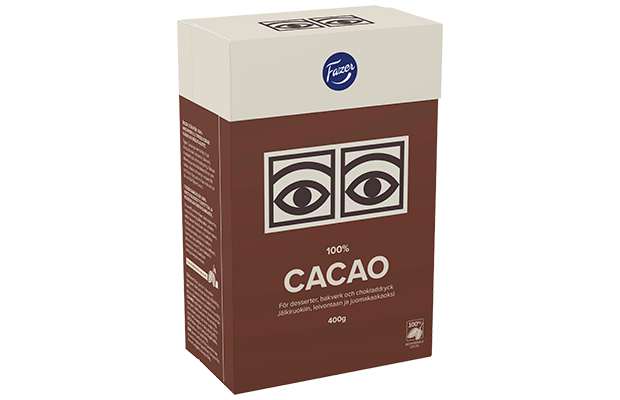
ÖGON and the ÖGON design are trademarks of Oy Karl Fazer Ab, usage is possible through obtainment of license.
Trademark: https://euipo.europa.eu/eSearch/#details/trademarks/003985091
Design: https://euipo.europa.eu/eSearch/#details/trademarks/012154531
Fazer: https://euipo.europa.eu/eSearch/#details/trademarks/011567575
Final outcome
