My initial thoughts from week 1 were:
Could my project be to visualise a method to analyse ideologies in visual communication? A lens that utilises postcolonial semiotics, historical and ideological processes in a multimodal social semiotic approach?
It can be abstract, like a caleidoscope. How is the lens that shows according to norm for example and how can that be refracted? Is it possible to deconstruct semiotic regimes, and break apart the chains of signs in them?
Rethinking aesthetics of empire? Can I find a way to visualise this and create some kind of method that opens up for pluriversal outcomes?
Research and inspiration
This week I will try to figure out where I could position my project through the navigation of existing, similar, projects.
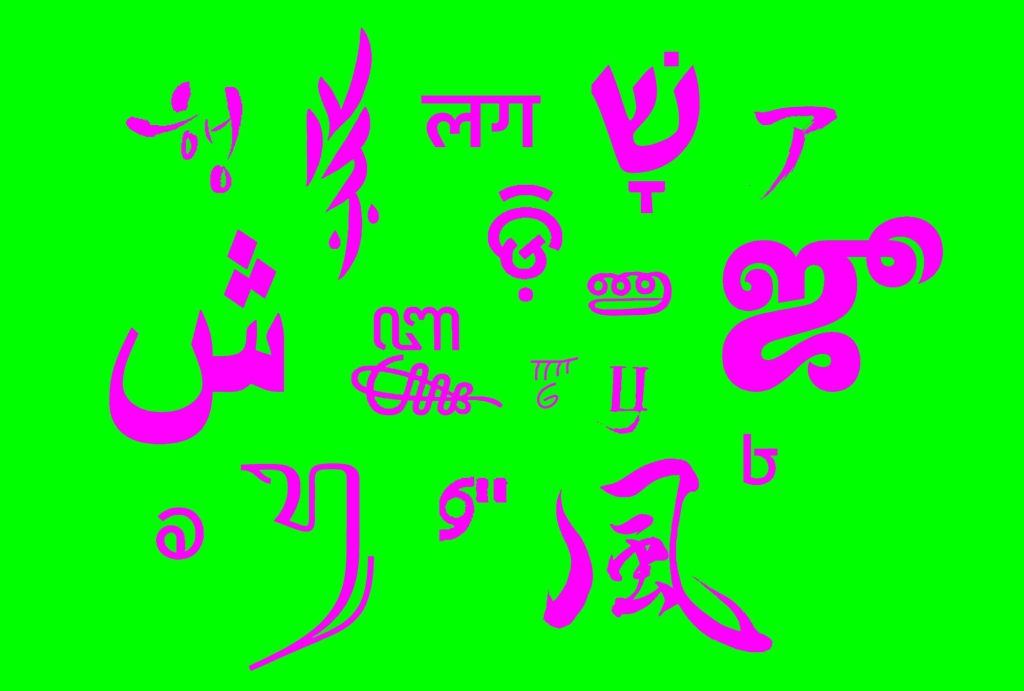
Futuress Decolonising Typography Hub
https://futuress.org/stories/decolonizing-typography-resources/
Futuress Decolonising Typography Hub. Futuress has launched a resource hub for decolonising typography with the ambition to disrupt the Eurocentrism in type design education and practice.
It may be worth noting is that this project does not aim to decolonise type. The core of my research and its aim is to rather look at the colonisation of sign carriers and how the inflict on present perception. This MA project would look at how that perception can be altered. How those regimes of signs in those sign carriers can be decontructed/modified/etc. Futuress work can serve as a great asset in the research of my own project. I also perceive my project as a part of a larger research scope that can feed into other research projects, for example the Futuress projects.
Incomplet–a podcast about design history
This piece of inspiration is maybe more about how to make important conversations available and also about fragmentising subjects in order to be more specific. Something I struggle with, since I often want to tell all at once. How can I find a good focus in this project?
CREWS & VIEWS Projects
CREWS=Contexts of and Relations between Early Writing Systems.
VIEWS= Visual Interactions in Early Writing Systems
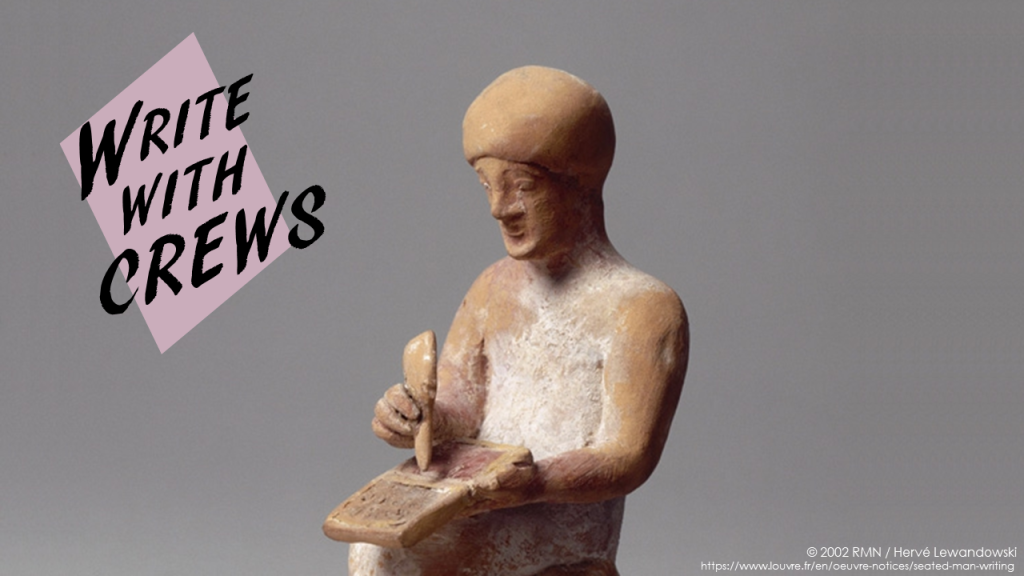
The CREWS project can provide great insight on how the research can be fragmented and extended through the application in different media. Crews uses the different applications as different openings to the research depending on the level of knowledge of the audience.
The VIEWS project is more recently set up and is not yet as rich in resources as CREWS. However, it is a great resource.
CREWS offer resource packs, education material and writing sheets. Both CREWS and VIEWS are very generous and open with their research, they create resources that are not only accessible but also fun and usable. They blow life into research through encouraging interaction.
CREWS offer material on different levels of knowledge and understanding.
For example through some of their videos that offer a fun tutorial on how to write in Alphabetic Cuneiform:
And through some videos that is more for an audience that may already have some knowledge on the subject:
The material has a range of entry points for different kind of target audiences.
IMS
For this project I am participating in the seminars of the research group Centre for Intermedial and Multimodal Studies at Linnaeus University.
The seminars are presentations of research projects. I have so far attended the “Storytelling in Rock Art “ That presented aspects of narrativity in Scandinavian rock art, such as paintings, engravings and petroglyphs.
These seminars can provide some insight into the work of research groups, and how research projects are constructed and also presented. These seminars can give me a better understanding of the vocabulary of multimodality and more specifically for this project.
Books
These are the books I will use to begin my journey. I have already read some of them, but will revisiting them to find my bearing in this project.
Writing Without Words by Walter Mignolo and Elizabeth Hill Boone
The Darker Side of The Reinassance by Walter Mignolo
Orality and Literacy by Walter J Ong
Inventing the alphabet by Johanna Drucker
Articles etc by Jürgen Spitzmüller and his writing on ideologies.
Ways to approach this
What kind of project could this be? I just want to examine some possible outcomes for my thoughts so far.
Book on ideologies of visualisations of written language
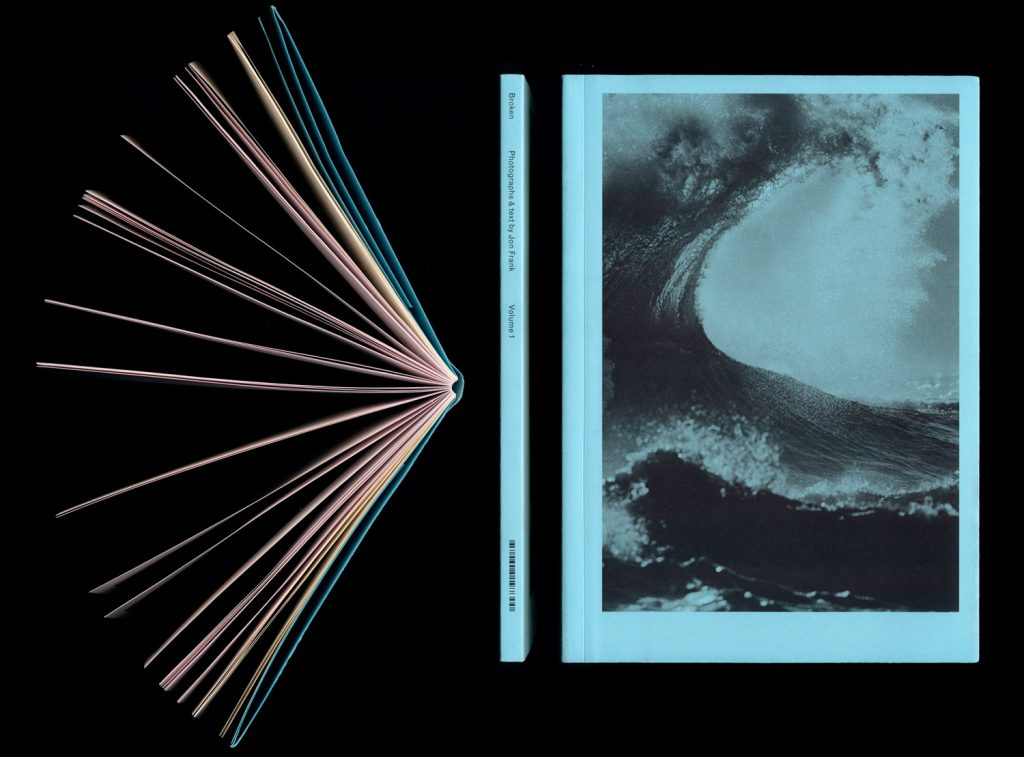
Write and design a book on the ideologies of visual language (most likely focusing on the latin alphabet), that would demand for the process to be responsive between the theoretical and practical–how can that be done?
This kind of outcome does not have to exclude a participatory exercise, it can either showcase the results from such a workshop or it can be the foundation of one, or fragmented into a participatory exhibition.
Signs as building blocks with Eike König
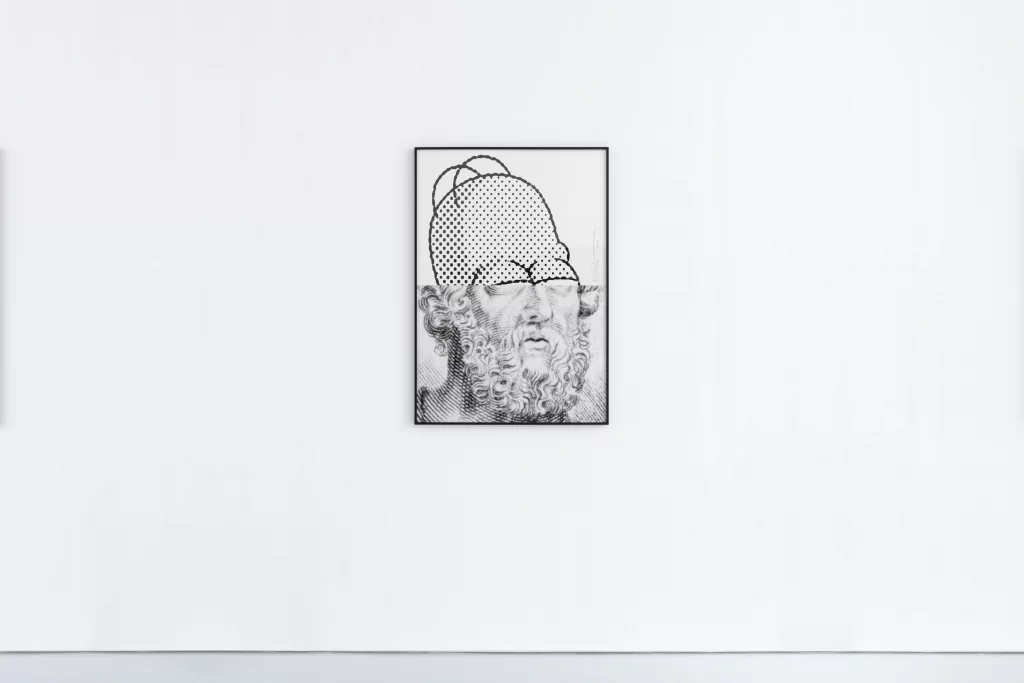
Eike König’s Homer is in its simplicity a fun combination of signifiers of two Homers.
I was thinking about making possible to deconstruct the sign/s of the letter and the alphabet. Can I curate a paradigm shift for a user? Where the user deconstructs a collection of signs, not just from their original context but also from their original modality?
Can I find a text/similar that connects strongly to their ideology and culture and encourage a shift? Remember the paradigm shift from 710, can it be something where a comment/critical reflection is made or enhanced?

I also noticed that Eike König works with combining his exhibitions differently from place to place. Maybe that can connect to my work so far as that is something that relates to context, to sites and location. In terms of ideology that clearly inflict on the perception of signs and maybe look at what signifies ideology in that particular place? Or context?
Notes from peer to peer
During our peer to peer on Thursday, Georgia talked about her wanting to make her research from her phd come to life. Some of her thoughts really helped me make sense of my own project.
She said she wanted to “Bring to life the theories to communicate that in quite an accessible way” that is a very straightforward statement, so concrete and really in its simplicity all I wish to do. I have been discussing visualising methods, models etc. Georgia also recommended the book Lo—TEK. Design by Radical Indigenism by Julia Watson.
Julia Watson says she “Looked really seriously, through the lens of an architect” at indigenous technology. I think this is an interesting approach and it can surely be adapted to my own work, but how does one avoid it to become a Western commodification of Southern epistemologies? Maybe this perspective can serve as an inspiration on alternate perspectives of visual language in different modalities? That inspiration can also come from pre-colonial contexts, or from primarily oral cultures
Final reflections this week:
Can I create layers of understanding? Where the first layers are available for most and the next layers demand some more understanding in for example semiotics, history, ideologies to unpack.
Can I create something participatory where new expressions can be generated through this new “caleidoscopic/refracted” lens? Can the lens be similar to the “recipe” that I constructed in week 12 of 710? Is my work then providing building stones for completing that sort of “recipe”? What are those building stones?
I think I want to look at ideologies of the visualisation of written language. How can I break that down in semiotics? What are the signs in written language? How can I make that into something participatory?
What if the refraction of this lens is physical? At the hands of a potential user?
I am to let the project make a more theoretical inquiry accessible through practical application. A few projects from this weeks research highlighted how different components of a project can provide entry points for different audiences. Can I enable my research to do the same thing through the practical application?