Starting with definition to have a clear platform and then navigate from that.
Who are you?
Tove Martens, BA in Media & Communications, ran a studio for 8 years with a friend, now running my own firm working with the local university combined with practical projects. My influences are usually found in history: an event, a manuscript, a person, or a method. Sometimes it’s from the middle ages and sometimes from the 1930’s. I love history, and explore how to visualize time and temporality.
What is it that you do?
I connect the past with the present. A pivotal moment in my practice was when I bought a German bible from the 19th century, it was set in blackletter and had handwritten notes and marks in it. Then I realized that it was not only a source for visual research but a clue on how someone had owned, loved and used it. I wanted to investigate more, and did through a course in Book History, that made me begin to understand the deeper connections to history and typography. Connections that I would like to devote the rest of my life exploring.
Where are you?
I’m in the forest. The name of my location is literally “sudden forest” – Tvärskog. I live in a very small (400 people) village south east of Sweden. Close to the coast and the city Kalmar. The impact it has on my work is that I read a lot, which is something I value and consider an important part of my work. Mainly it is the isolation and solitude that gives me the energy and courage to investigate my self as a designer.
I need solitude. I need space. I need air. I need the empty fields round me; and my legs pounding along roads; and sleep; and animal existence.
Virginia Woolf
Why Design?
Initially I was attracted to design being such a strong vehicle for thought. The ability to convey a feeling through typography, or to uncover layers of meaning in compositions. That is still the reason, perhaps a bit more deepened now. And in rare moments, every once in a blue moon, feel enlightened.
Ideas
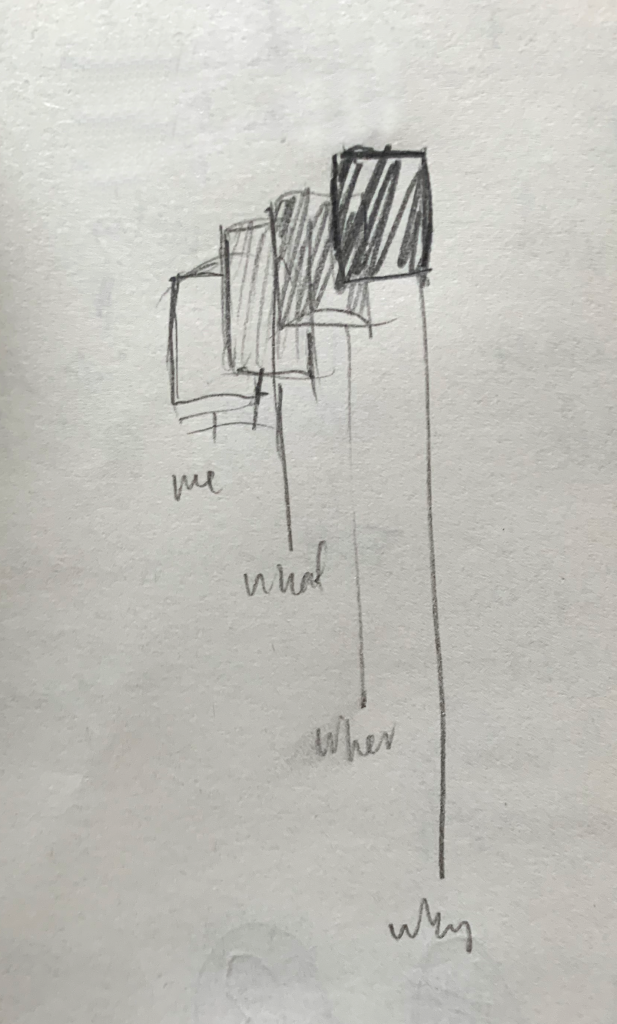
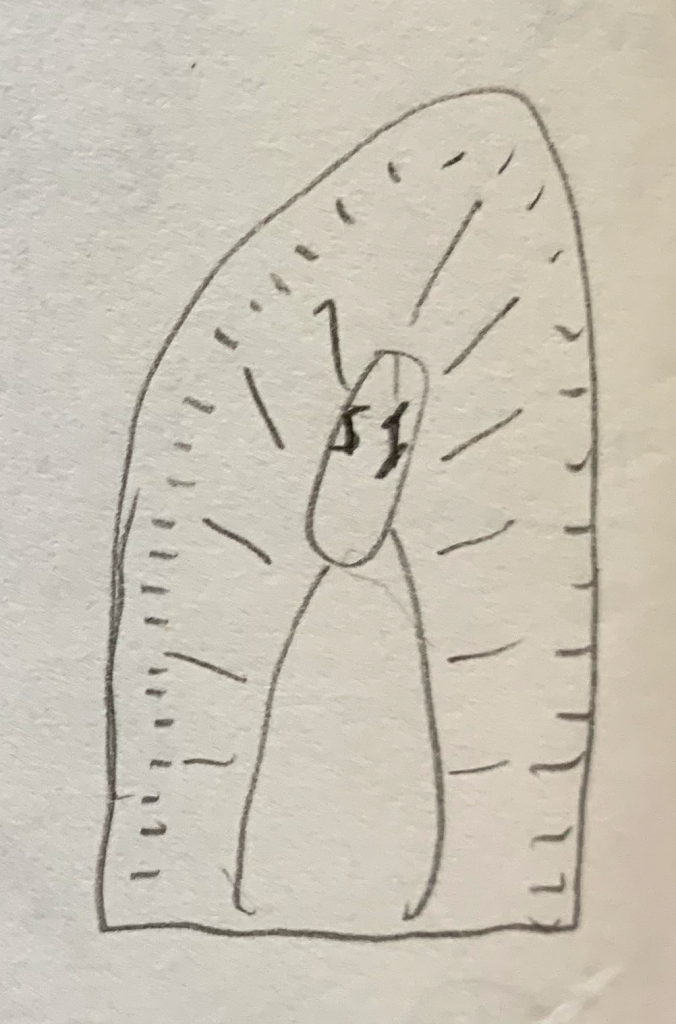
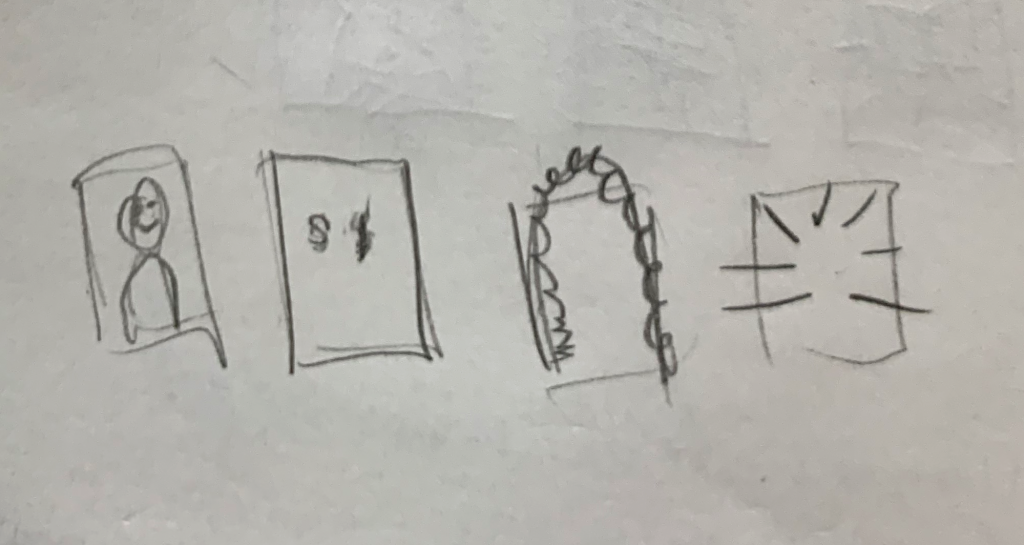
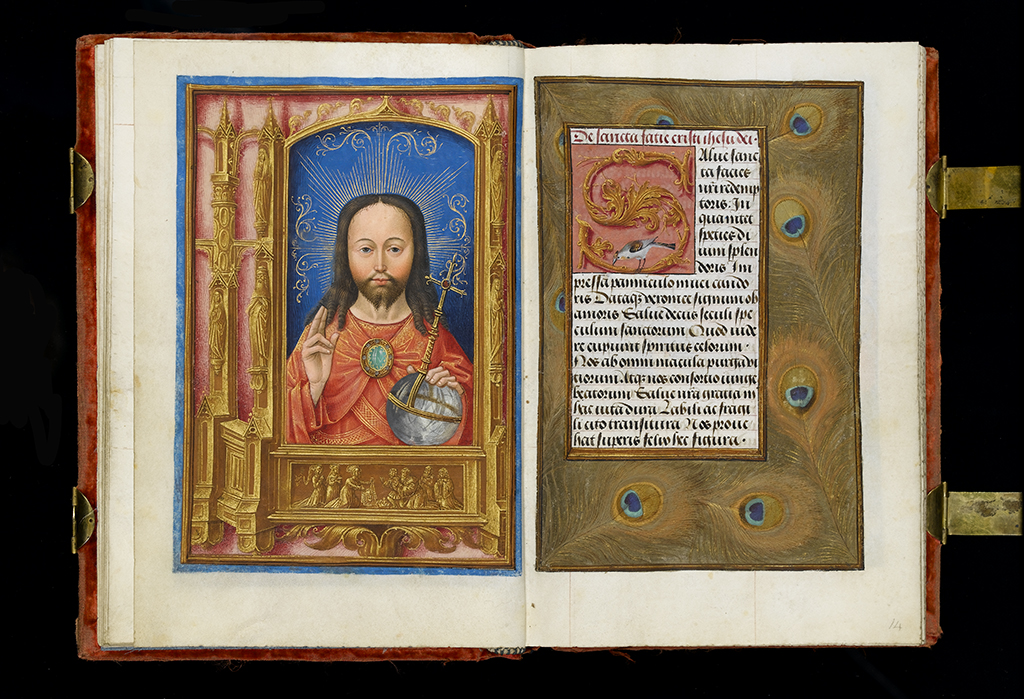
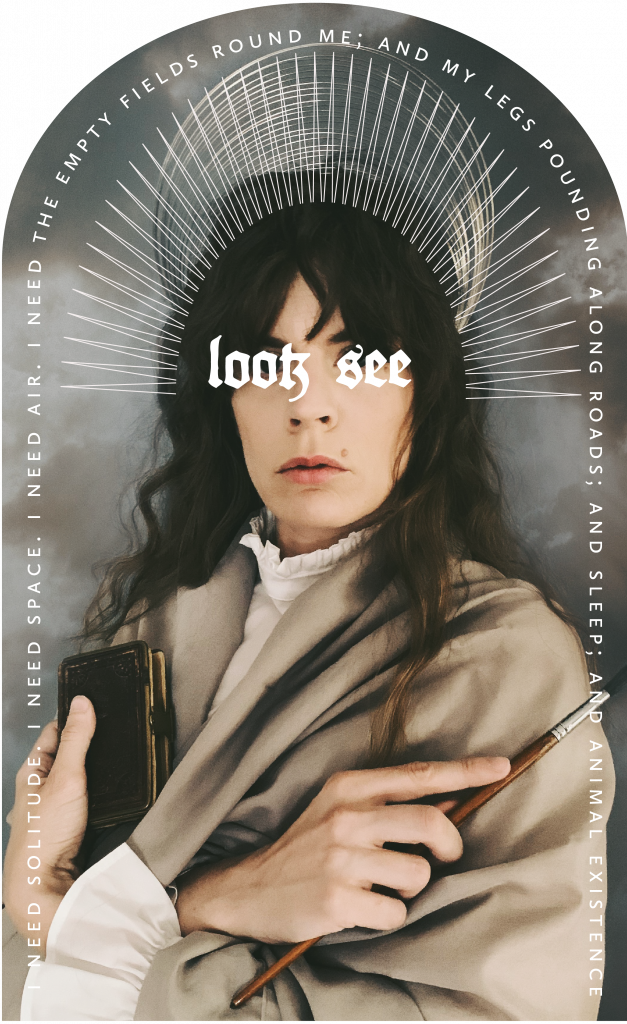
How can I combine these aspects into something representative? I’m interested in keeping the quadriptychs original function, icon like. As well initial thought went to Hieronymus Bosch The Garden of Earthly Delights, depicting heaven – earth – hell. Could perhaps be interesting finding some sort of movement or process in the different pieces? These definitions of me are not fragments, but rather layers. So translate to actual layers and when they are combined they make me “enlightened”?
Inspiration
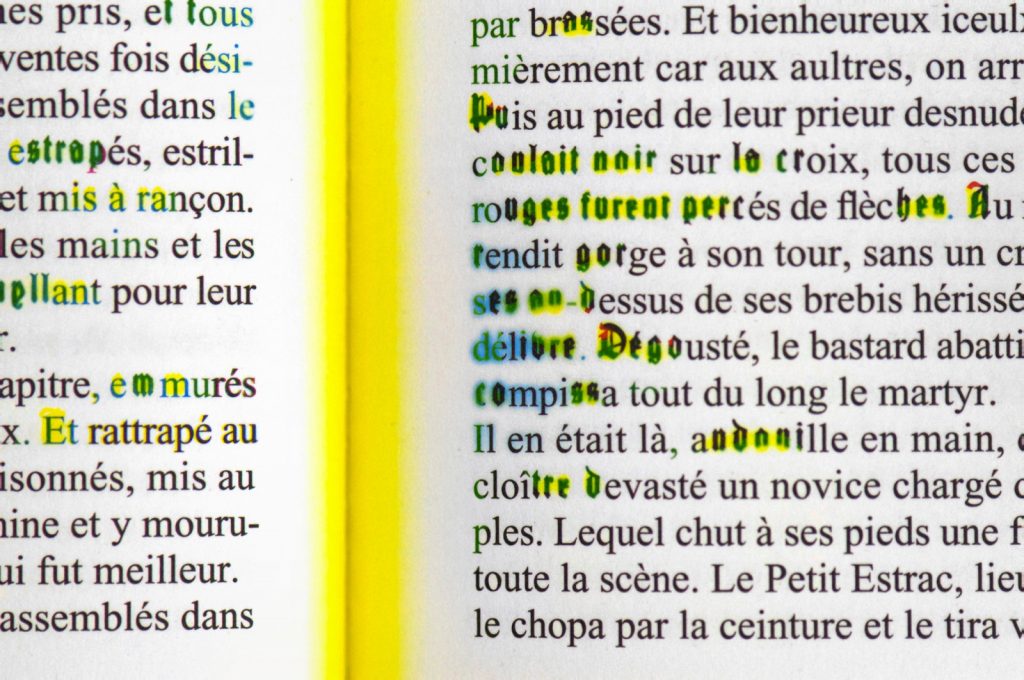
First results



Some really valuable feedback came when posting the layers each on their own. Seing the layers un-stacked exposed a repetitive expression. Which is clear in the feedback seen to the right.


Final outcome
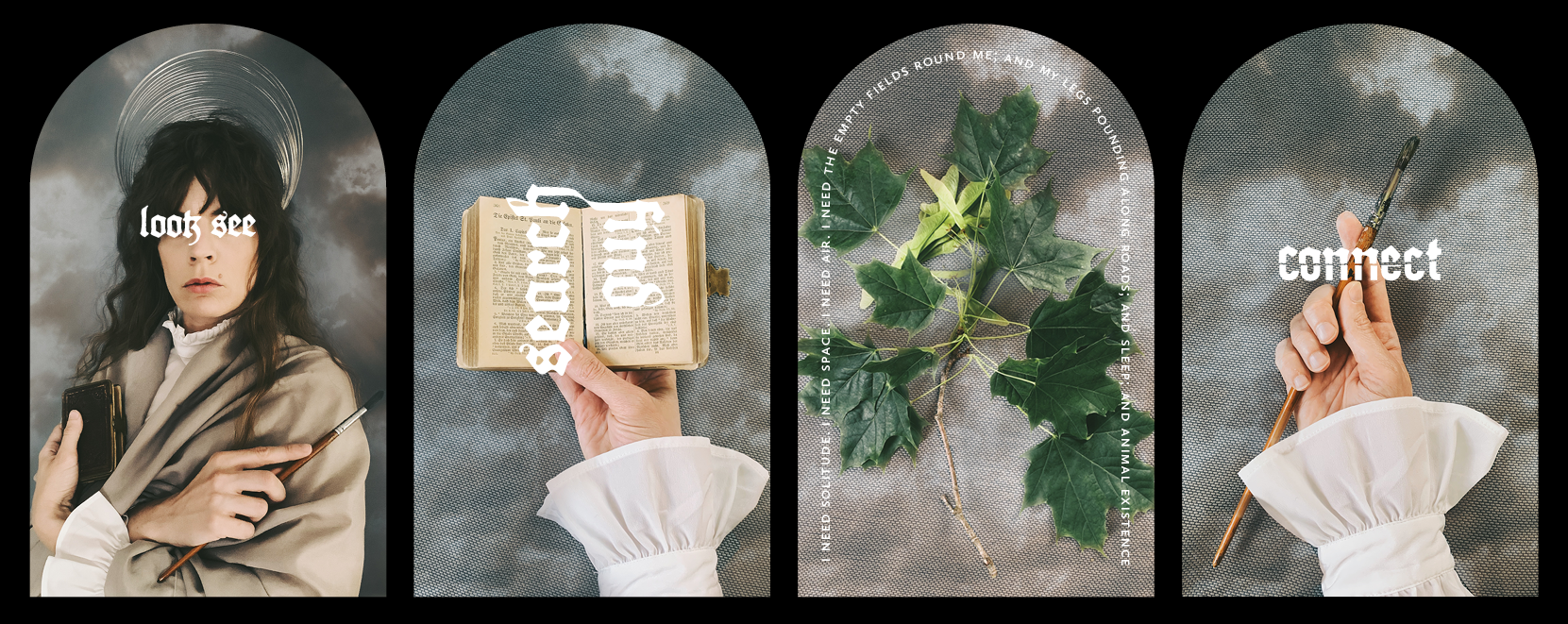
Reflection
James reflection on my quadriptych told me that it was too repetitive and I had felt that too. Alli mentioned that I could use the background for more variation. I agree that what it needed was more dynamic use of images. I had to abandon the idea of layers completing the image. Instead the photos of my hands holding representative objects seemed to do the job, but after some nightly reflection I felt that the “where” is not really a part of me, as well – two hands is what I have – anatomically speaking. So to break that repetitiveness as well, I just used a piece of my maple tree on it’s own. First image is who – me, I look and see. Then what – I search and find, where – in the solitude of the forest, why – to connect the previous steps and make visual conclusions. The typography there is divided into a gothic style on top and a sans serif on the bottom.
I know this is not a grid in the way that was asked for in the task, but I thought the form and shape of these images were enhanced by the typical biblical arch. One problem with borrowing so many traits from a book of hours for example is that the material overall looks very religious, which I’m not. Writing search and find on a bible can be misinterpreted into thinking I’m navigating my belief. For upcoming projects where I work with historical references similar to this I will have to make sure the discrepancy between historic/religious and contemporary is clear. It could specially have been further enhanced in this challenge that is given within the module “Contemporary practice”. But I would also like to argue that in this particular challenge, it is a conscious choice reaching so deep into the past since that, and specially the bible from a historical perspective, is a fundamental part of who I am, what I do, and why.
Ideas wall feedback


Brook & Shaughnessy – Studio Culture
Some reflections on this weeks reading, deriving from collected quotes.
“Design history is written from the perspective of the individual designer, and most discussion of contemporary design centres on individual personalities.” (Brook & Shaughnessy, 2009, p 13)
Reading this section by Adrian Shaughnessy I thought of an article in Eye on Design by Aggie Toppins on the graphic design history being told through design heroes https://eyeondesign.aiga.org/can-we-teach-graphic-design-history-without-the-cult-of-hero-worship/
This discussion can be recognized from other contexts, but my experience is that it is quite confined to a design discourse. It is my interpretation, that other studies in history employ a perspective of causality and an ability to connect the layers of societal change. Historical navigation through people or assigned heroes is not only problematic from a representational and ethnocentric viewpoint but also gives a fragmented, almost anecdotal version of what has been. That can be an entertaining layer, but not a valid foundation.
“But the good ones, the ones we admire, do it by balancing the three vital ingredients that make up the successful studio: real estate, psychology and creativity.” (Brook & Shaughnessy, 2009, p 14)
That quote as well as the section on real estate turned my thoughts back to Sam Winston, when he said “I don’t let things into the space that easily because this is actually where the ideas come from. It doesn’t come from me thinking them, it actually comes from this space.” How come some creatives are so integrated in the physical space where they execute their work, that the space in question is an accessory in the creation? Brooks & Shaughnessy (2009) brings up Francis Bacons workplace that after his death was meticulously reconstructed and put on display. Something that aligns with the previous note on centering creative arts on individuals and portraying them almost icon-like. And their workplaces are a sanctum. But the definition for workplaces, and mainly studios is wider and more extensive than the sole designers sanctum, in Brooks & Shaughnessy’s reasoning. It is an environmental aspect that can help shape the perception of the business from both inside out. Without any apparent framework for the most successful way of shaping that setting. Unless you’re Erik Spiekermann.
Spiekermann have a vision of the perfect studio, which strongly resembles The Panopticon, Jeremy Benthams all seing prison. Not that Spiekermann’s vision is a prison, but rather possess the function of the self regulating public eye, which he also confesses “I want people to know that if they are slackers, or go to the toilet too many times, or take 50 smoking breaks, there is some social control.” (Brook & Shaughnessy, 2009, p 79)
The psychology of the studio is a matter of the inhabitants well being. An aspect of this can be found in the paragraph on trust: “Workers in all areas of professional life want to be trusted, and they want to trust the people they work for. It means that people have to be allowed to do their work without someone constantly – metaphorically or physically – looking over their shoulder.” (Brook & Shaughnessy, 2009, p 18)
This trust is usually regulated through methods for control, which can be necessary to be able to run a profitable studio, that also produces quality design. Logging debitable hours on projects matched towards the project plan and time plan is one of these methods. A way that raises concerns on the employees approach to his or hers working hours. When working 8h/day, for a break even you would need approximately 65% of those hours to be debitable, and above that to be profitable. In these cases, every project has a pot of money, converted to hours. But when a designer works fast, those hours can be reduced to half, increasing profitability on the project thus reducing the designer debitable hours/day, unless there is a constant flow of projects that can fill them. Something that can be regulated through control on the studios traffic. The range of tools for studios’ financial structure can be ways of establishing healthy work standards, or ways of looking over the shoulder. But as Brook & Shaughnessy also states “Studios who make money their primary goal end up doing second-rate work for second-rate fees.” (Brook & Shaughnessy, 2009, p 21) Something that confirms my reflections on this discussion. Both psychology and real estate play significant parts in the constituting of creativity.
There is an interesting discrepancy between Spiekermann and Lehni-Trüb’s way to obtain creativity in relation to being a profitable studio. Spiekermann proclaims: “…I hate graphic designers who roll their eyes when they find out that we’re working for financial institution. Of course I’d rather only work for world peace. I’d love everything sustainable and green. But I can’t just do art books.” (Brook & Shaughnessy, 2009, p 81) Lehni-Trüb’s way of working differs significantly from Spiekermann’s approach, and it seems to almost provoke the interviewer.
He writes in the intro: “They seem almost reluctant to promote their commercial design business, and instead focus on doing only the work that interests them, advancing their independent publishing ventures, and running a project space in Zurich called Corner College – not to mention swimming sessions when their studio becomes too hot in summer.” (Brook & Shaughnessy, 2009, p 115) Later in the interview Lehni-Trüb says “Probably the only reason we still can afford to work for no money is that our living costs are pretty low.”(Brook & Shaughnessy, 2009, p 115) In the next question the interviewer reconnects to this “I like the idea of designers living a monastic existence. But I wonder if it is sustainable? I wonder if you will feel the same way in five or ten years’ time?”(Brook & Shaughnessy, 2009, p 117) Lehni-Trüb replies: “We are not living a monastic existence at all. The meaning of ‘Iow living costs’ is relative. Hopefully, our current engagement is an investment for the future.” (Brook & Shaughnessy, 2009, p 117)
So is it possible to draw from this that their personal financial gain is put aside for a greater future good that is de facto sustainable as opposed to what the interviewer suggests. The difference between Spiekermann and Lehni-Trüb is that the pressure of Spiekermann is heavier since he is responsible for the financial support of all his employees, whilst Lehni-Trüb is only the two of them.
Reference:
Brook, T. & Shaughnessy, A. (2009) Studio Culture. London, Unit Editions.