3 practices/ businesses that I feel summarise my city today in terms of design practice.
I have chosen three quite different businesses that represent different ways of approaching and working with graphic design in my geographical area. Kalmar being a typical Swedish small town have a few larger advertising firms dominating the market, with business leaders strongly connected in the towns social network. That can make it hard for smaller design studios to survive. A common strategy for small studios survival in Kalmar is that the bigger firms merge with them.
Very Happy Agency
Company statement: We are proud and dedicated artisans that create meaningful stuff with our hearts and brains for clients we believe in.

This studio is located on the countryside, not really in Kalmar but rather in the province of Småland. It’s a couple who works with illustration, branding and web. Whats interesting with these two is that they are not really geographically bound, they do have a small studio on their farm. But they also travel and work a lot from their van. Digital nomads that use their small country house as a hub and then explore the world collecting influences from their van. I don’t wan’t to make too many assumptions based on my collected information on Veryhappyagency, but I do hope this is a part of future work life for more people. Being able to break free from traditional labour and instead finding a meaningful subsistence.
https://www.veryhappyagency.com/
Wilson Creative
Company statement: Loving communication for the digital generation.
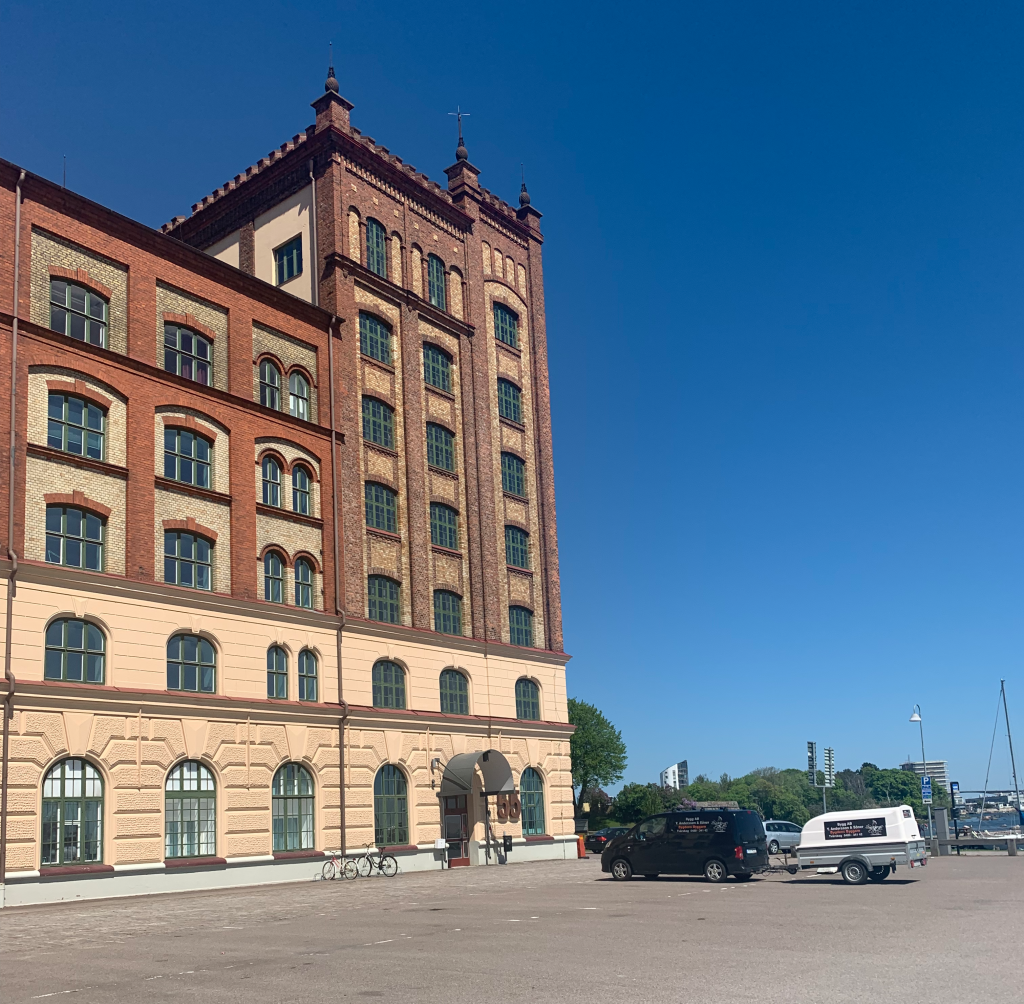
Wilson Creative work mainly with digital experiences. They have this concept called Digital Love where they help their clients conforming to the digital world. Wilson also has an office in Stockholm and they are in total 19 employees. This was originally a company started by two guys for “Young Entrepreneurship” (part of Junior Achievement) in 2005. The founders have no background in graphic design, but managed to get their business to grow to one of Kalmars most successful businesses in graphic design.
https://wilsoncreative.se/
ADDI
Company statement: A multidisciplinary design studio with focus on human centered design.
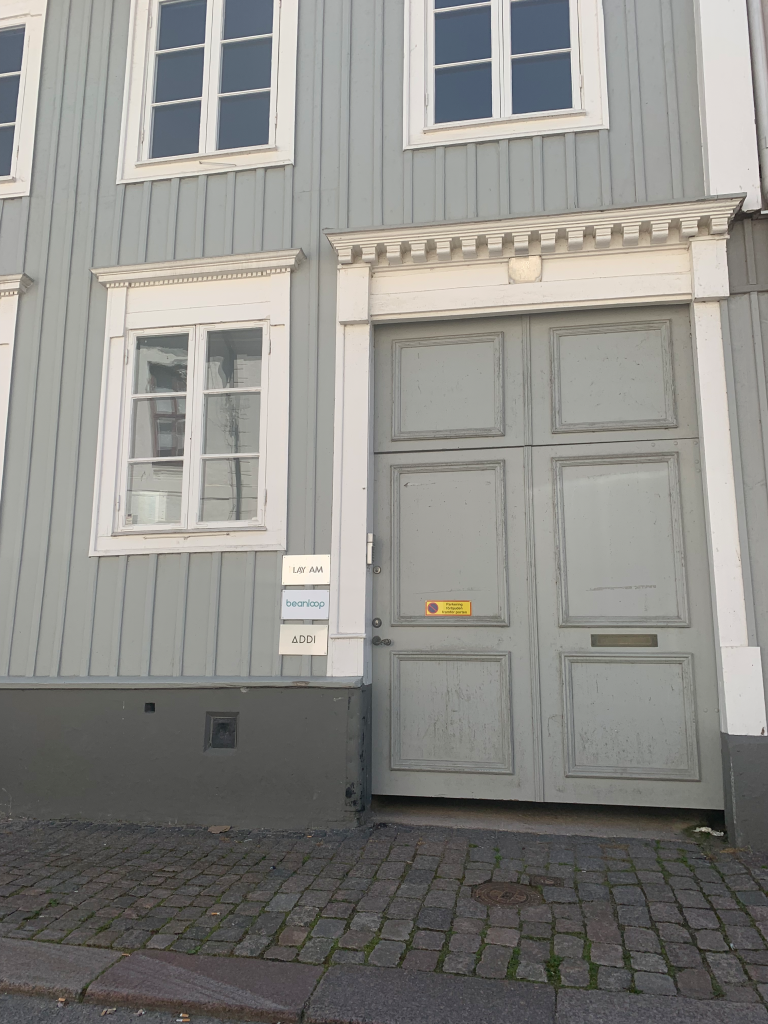
ADDI is an award winning design studio with a main focus on product and furniture design. They work with graphic design as well, branding a lot of their projects. They are process-focused and multidisciplinary, working on an international market with great success. Founded in 2007 with 3 employees. I have a personal connection to all of the practices presented here, but perhaps the strongest is to ADDI as our studio used to be located in this building below theirs for several years. ADDI is very grounded in the traditional way of working with design, hand sketching, prototyping, testing, evaluating and everything with a curious approach. On the bottom floor of this house is another designer, a 79 year old wooden toys-designer, Karl Zedig, and his company: Playsam.
https://addi.se/
Reflections
If I were to summarize my city or region from my perception of what kind of businesses in graphic design there is I would say there are mainly bigger firms, full-solution businesses. Typical small town businesses, working locally. And then there are a few small studios, for which I have a soft spot. The ones trying to achieve something, and change the course of the current structure. I think ADDIs long term survival despite going against the typical “Kalmar-way” is thanks to them staying small, being multidisciplinary and finding good collaborators within different fields globally. That way they can stay “the same” yet expand in different ways, to work with zestfulness on an international market and not bother about 15 minutes being chargeable or not. I think that way of working is also part of the reason they are so successful, winning them awards and having a very good reputation.
Design production/resource
Kalmar, located in the province Småland which is known as a design province. Mostly product and furniture design. Ikea being one of many companies deriving from these forests. Småland has a strong connection to handicraft with many practitioners who works traditionally. It is sometimes called The Kingdom of Crystal, since there are so many glassworks still doing traditional glassblowing. Some of these are glassworks that have been active more or less since the 1800th century.
Lessebo Hand Paper Mill
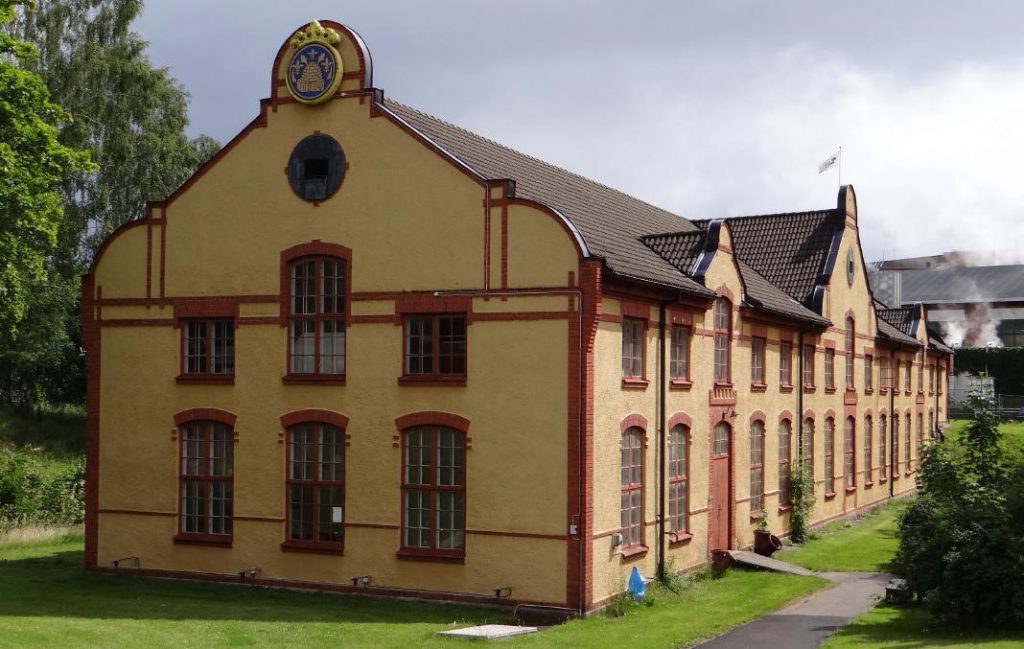
Lessebo Handpaper Mill making handmade paper since 1693. Next to this mill is the modern factory: Lessebo Paper making for example “Scandia 2000” which is sort of a house paper in many print shops in Kalmar. https://lessebopaper.com/
Capellagården
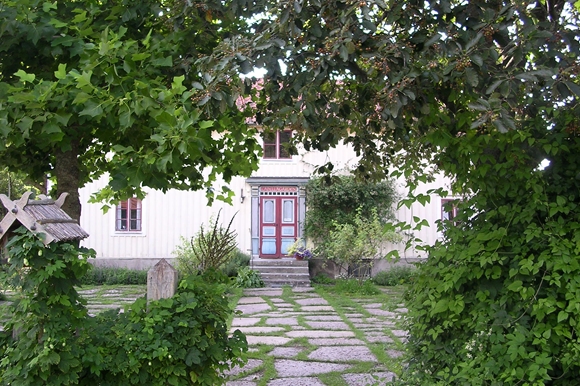
This is a bit of a wild card, including a school. But it’s not like any other school. So Carl Malmsten (Swedish Architect and designer) wanted to incorporate his beliefs in a school for creative work, where hand and spirit are placed in creative collaboration. With knowledge of materials and their conditions. Capellagården was founded in 1960.
Pukeberg
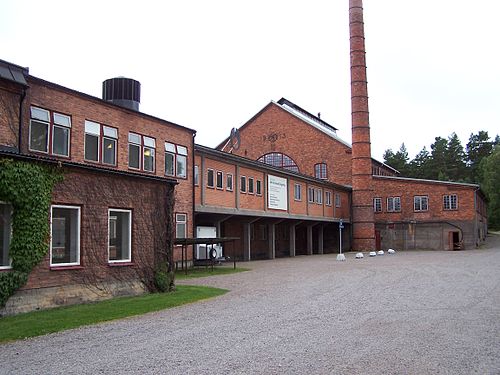
This is an area in Nybro, a small city 20 minutes from Kalmar. Originally Pukeberg is an old glasswork. But it has evolved into a hub for design, glass and art. This is where the university’s Design Department was located for several years (I went there!). There is for example a national design archive. They say they “collect knowledge about the Swedish design process” from the early 2000 century and forward, collecting material from furniture design, graphic design and product design. This archive also holds one of Swedens more important collection of textiles. When the Linnaeus University’s Design Department was housed out here there was an outspoken ambition to create a long lasting Design Center, a geographical location that hosted all the disciplines in Design with solid roots in the handicraft. One of the more driven parts in this was Andris Nolendorfs the founder of Zero Lighting and the owner of Pukeberg, in collaboration some of the professor on the department. But the university wanted to gather the departments in Kalmar and so they left.
Pukeberg: https://pukeberg.se/
Design Archive: https://www.kalmarkonstmuseum.se/designarkivet/
ZERO: https://www.zerolighting.com/
Glassworks: http://www2.glasriket.se/en/to-do/a58/pukebergs-glassworks/showdetails?filter=c%3D1359
National School of Glass: https://riksglasskolan.nybro.se/english/about-the-school/
Kalmar Handicraft: https://kalmarhemslojd.se/
Studio House Pukeberg: https://www.ateljehuspukeberg.com/
Reflections
Looking closer and wider at my region I realized there is more than meets the eye. In the second half of the task, looking at places that is not directly anchored in graphic design but rather the tradition of handicraft in a broad perspective.
Reflections from this week
Hearing the lecture and completing some of its reading got me thinking about the strength and unification of finding identity in a community and sometimes in social stratification. Something that is often anchored in oral culture. Even if we look at visualizations, the origin for writing and visualizing is often speech. Guila Garbin wrote in the project description (that Joseph posted) ”How to reproduce strident voices coming from pubs still murmuring in the quiet darkness?” Identity for a geographical place is so tied to language, accents, etc.
There is this viral tweet from a guy working as a writer for Vice Magazine, asking a friend to participate with a quote for an article about the Chicago accent being voted the least attractive in the country.
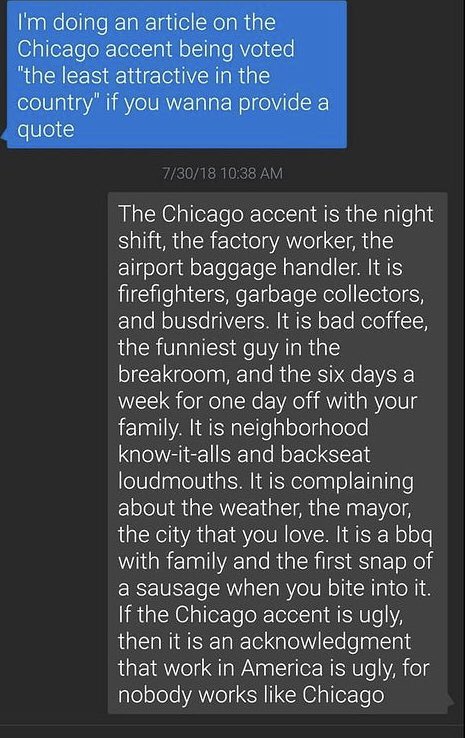
The response primarily tells me he is not gonna agree to the poorly concealed class hatred in that question. But also that this accent holds a distinctive identity for his community and the city of Chicago.
Lets dig deeper. For example Rosie wrote in week 1 in regards of where she is: ”it’s not proper if it’s not from Yorkshire” and adding in her journal ”Yorkshire sense of humor is basically playing with words, making new meanings from how the words sound with our accent. We make fun of ourselves and we are not too serious”.
It’s hard to translate that into a visual context, or typography for outsiders to completely comprehend. Yet it is such a vital part of what a place is, it’s essence.

Ellie wrote on the ideas wall about “Genius loci” a concept that I have never heard of before. In a western context that is an expression referring to a place’s atmosphere. Ellie asked “Can this principle also apply to certain graphic designers / practices?” Doing some reading on this I found a Swedish architect Christian Norberg-Schulz, who wrote a book about it Genius Loci: Towards a Phenomenology of Architecture, where he discuss the term in depth. But in a Swedish article on the subject he simply concludes that genius loci is basically identity. So what is the identity of a place and thus it’s genius loci? I would like to connect all of this to a book by Walter J Ong, Orality and Literacy, The Technologizing of the Word. There he explains how the written word restructures the consciousness and how the printed word introduces spatiality. “Writing had reconstituted the originally oral, spoken word in visual space. Print embedded the word in space more definitively.” Ong 2002:121)
I think my conclusion here is some kind of answer to Ellies question. That oral culture in a place, beyond accents and including how you share stories, keep memories and just connect, is a significant part of a place’s identity, it’s genius loci. In a graphic design practice then for example, part of the work is to embody those stories, to ”reconstitute the originally oral, spoken word in visual space” and share for others to understand: through graphic design, typography and storytelling.
4 key evolutionary design steps
List 4 key evolutionary design steps that contributed to the identity of your design culture today in your country in your opinion.
1. Folkhemmet – A word coming from The Swedish Prime Minister Per Albin Hansson 1928. It was an idea of Sweden as a home for all Swedish citizens, where everyone would be fine and no one is privileged or poor. It is a socialist vision for society. After the second world war this had a significant imprint on the architectural style and way of planning living areas in Sweden.
2. Connection between handicraft and industry in the beginning of the 20th century. The Stockholm Exhibition in 1930 officially established functionalism in Sweden, and later came to be called “Swedish Modern”. Functionality has remained a strong theme in Swedens design culture.
3. During the 50’s “Scandinavian Design” emerged, partially from the previous movement of Swedish Modern. Minimizing use of material but increasing the products usage.
4. Introducing interdisciplinary approaches, mainly visible on education platforms, Konstfack and Linnaeus University for example. A growing discourse of working with design from a social perspective. For example, the Master course in Visual Communication on Konstfack writes: Norm criticality involves the highlighting of power. For instance it implies to make visible and question norms that construct and support discriminatory attitudes and practices. Norm creativity embodies the aim to transform norm critical analysis into practice” https://www.konstfack.se/en/
GeoMap


Ideas wall


References
Ong, Walter J. 2002. Orality and Literacy: The Technologizing of the Word. London : Routledge.