This week I have finished reading Carey Jewitt and Berit Henriksen’s Social Semiotic Multimodality, from the book ‘Handbuch Sprache im multimodalen Kontext’. I have started reading Introducing Social Semiotics by Theo Van Leeuwen.
Here are some notes from that and some reflections. I am not yet completely sure if and even less so how I would go about a multimodal social semiotic approach, but I feel I have to navigate it a bit more before putting that part of the idea to rest.
Social semiotics is concerned with meaning making and meaning makers. It studies the media of dissemination and the modes of communication that people use and develop to represent their understanding of the world and to shape power relations with others. It draws on qualitative, fine-grained analysis of artifacts, and texts, as records of meaning making, to examine the production and dissemination of discourses across the variety of social and cultural contexts within which meaning is made. (Jewitt & Henriksen, 2016)
This is very much what I wish to do.
[Hodge and Kress, 1998] argued that societies develop and shape all semiotic resources to fulfil given social functions, express a social group’s values, systems of knowledge (i.e. discourses), structures and power roles. (Jewitt & Henriksen, 2016)
This is something my idea is implying has happened in the early modern age when Europe has constructed a range of ‘sign carriers’ to which we have then measured other social and cultural contexts semiotic resources.
A meaning potential, based on their past uses, and a set of affordances based on their possible uses, and these will be actualized in concrete social contexts where their use is subject to some form of semiotic regime (van Leeuwen 2005, 285).
This is quite interesting and could possibly relate to path dependency. The meaning making is a choice but from an existing system. This choice is always socially located and regulated, both with respect to what resources are made available to whom, and the discourses that regulate and shape how modes are used by people. These solidify into various kinds of normative discourses or ‘rules’ for the use of semiotic resources; rules that are socially made, and sometimes broken; rules that have the potential to be changed through social interaction. (Jewitt & Henriksen, 2016)
They discuss how signs are made–not used–by a sign maker and how meaning is always motivated rather than an arbitrary association between a form (signifier) and a meaning (signified). Social values can be materialised and shape that through modal choices and design. It is the social semiotic analysis that hopefully can identify these values in the artefacts I chose for my project.
Jewitt & Henriksson also discuss how the sign maker is important. Recognizing the agency of the sign maker is central to Social Semiotics, notably in relation to the concept of the motivated sign that is used to assert that a person chooses one signifier over another as the ‘carrier’ of a signified. In this approach, sets of such choices are then elevated to ‘design principles’ that the sign maker applies. (Jewitt & Henriksen, 2016) This is very interesting as ‘design principles’ is something our discipline is in part built on and something that could be adressed in part in this project, but maybe more so in an article or something written further on, when I am more comfortable with this way of analysis. However, reading these sections (and the text overall) feels like being reassured that this is the way to go. These are the exact assumptions and hopes I had about multimodal social semiotics.
Jewitt & Henriksson discuss the potentials and limitations of a social semiotic approach and i found some things particularly valuable to me.
Social semiotic multimodal analysis is a powerful tool with which to understand the social function and complexity of a wide range of texts. It provides conceptual tools that focus on the inter-connectedness between the people’s agency, the technologies in use, and the social context of meaning making. This enables a holistic and highly situated analysis of communicative and representational texts. Understanding texts as a material trace of its maker’s social action, as well as itself being a complex sign acting in and on the world, combined with social semiotic concepts that focus on the sign maker, their interests, choices and multimodal design, this approach enables the connection between text and sign-maker to be theorized. (Jewitt & Henriksen, 2016)
A social semiotic approach to multimodal communication is sensitive to the exploration of power relations and how these are materially instantiated. (Jewitt & Henriksen, 2016)
A note from Meggs’ History of Graphic Design
Typography created a sequential repeatable ordering of information and space that encouraged linear thought and logic. It inspired a categorization and compartmentalization of information that formed the basis for empirical scientific inquiry. It fostered individualism, a dominant aspect of Western society since the Renaissance. (Meggs & Purvis, 2016)
This quote is very interesting from the perspective of colonial logic. This tells me that typography is the tool through which Europe could not only realise its imperial idea but also effectively disseminate it. I think this discussed by Walter Ong, and I will revisit his texts next week.
Notes from Drucker
Historical origins inform contemporary practice.
Drucker writes about how technology have informed style choices and that some technologies have long aesthetic traditions associated with them.
Design shapes communication and communication systems exert an enormous force in constructing the world we believe in. (Drucker, 2013)
I have made thorough notes on Drucker’s chapters covering my intended period of research in my analoge notebook and I will not translate them onto here, but I have been able to begin identify some possible artifacts for analysis. I think her writing will be important in the analysis of the objects. I am also awaiting her new book ‘Inventing the Alphabet’ but it has been delayed by the Swedish reseller…
Gillian Rose’s Visual Methodologies:
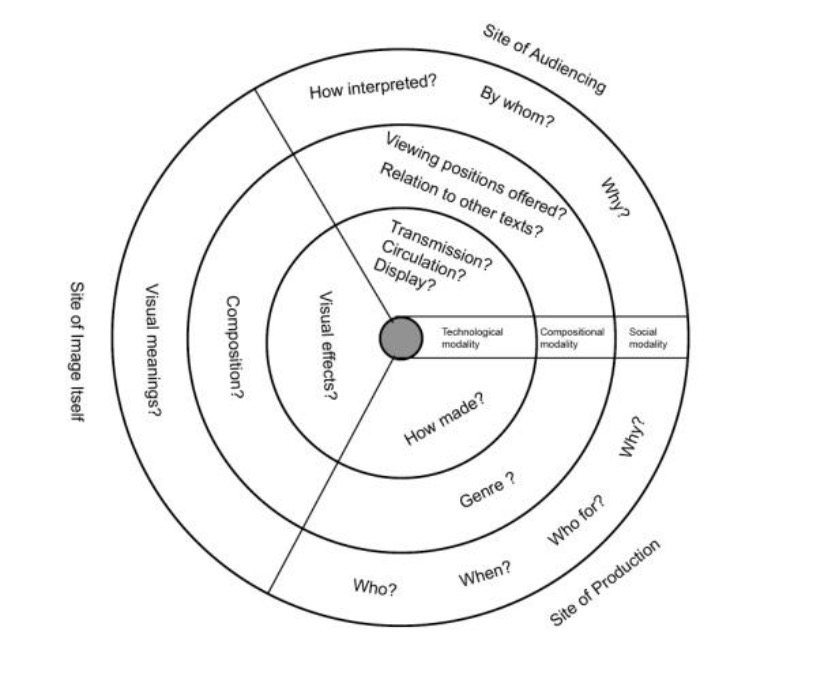
Inspiration
While reading I am also looking at ways to present the artifacts and create a collection.

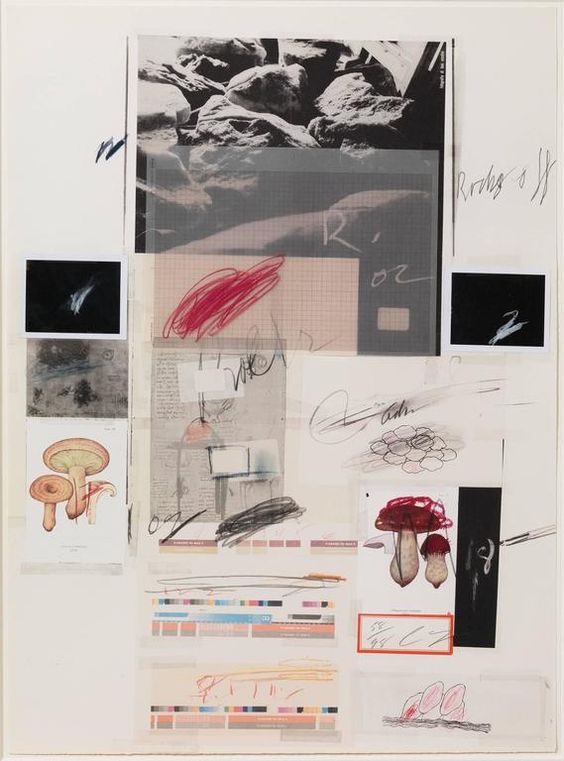
I have been thinking of the collection like some kind of bundle, but maybe each artifact will need its own collection of visual material along with text? Could that be packaged? In what ways can I strengthen my hypothesis about the ‘unified’ Western lens?


A mini gallery, something physical, movable, dynamic.
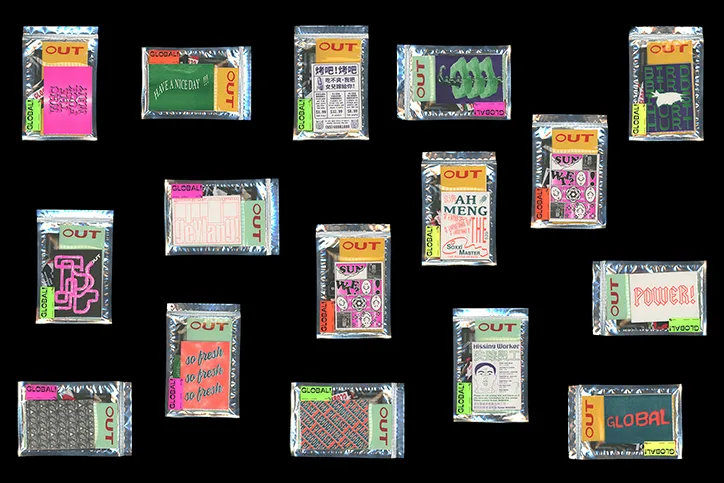
The packaging of each artifact can be made in a way that keeps the collection together yet makes possible of their own expression and extent.
Reflections
I was considering wether I could strengthen my hypothesis through constructing my own kind of timelines. Since the collection of artifacts will be in a bundle or something unorganised, this can be done through color coding for example. It does not have to be over explicit, but if I want to show that things correlate through time–maybe something in the visual can guide the reader despite the material not being ordered in a linear way.
References
DRUCKER, Johanna & Emily MCVARISH. Graphic Design History. 2nd edn. Pearson.
JEWITT, Carey and HENRIKSEN, Berit. “6. Social Semiotic Multimodality”. Handbuch Sprache im multimodalen Kontext, edited by Nina-Maria Klug and Hartmut Stöckl, Berlin, Boston: De Gruyter, 2016, pp. 145-164.
MEGGS, Philip B. & Purvis, Alston W. 2016. Meggs’ History of Graphic Design. Hoboken: John Wiley & Sons, Inc.