Research & analysis
Reflection on lecture & resources
In the lecture Susanna Edwards mention the color coded maps of London by Charles James Booth and Benjamin Seebohm Rowntree. This was one of several good examples in the lecture involving a solid collection of data, both qualitative and quantitative which then turned into a project of great importance to the same people represented in it. This truly shows the power interdisciplinary approaches in graphic design holds.
Challenge–research
I thought it would be a good idea to just establish where I am. As I live in a place where you might have to lower your expectations on what a street is. But that won’t be a problem for solving this task, might even make it a bit more intriguing or challenging.
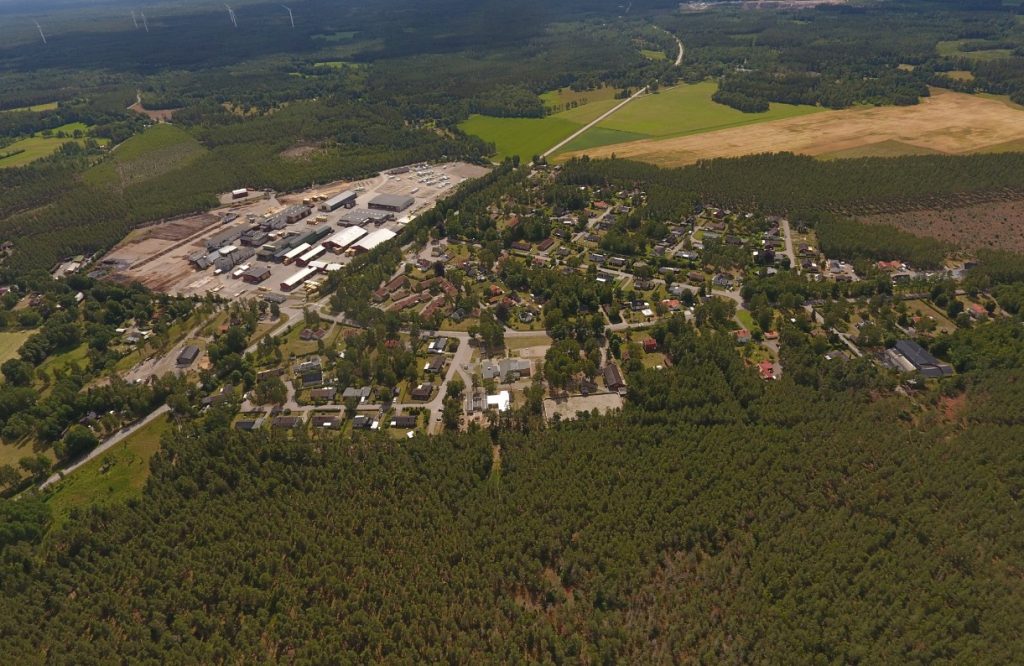
After some time I finally settled for one of the village streets that connect two well trafficked streets here. Every street basically looks the same, there are no shops here, nowhere to buy food or anything. Just streets connecting other streets that end up in the forest. I choose Fjärdingsmannavägen (Parish Constable Street), as it has quite a rich history. There is this man who writes historical anecdotes in the local facebook group — I have borrowed some of his materials. The house of the former Parish Constable is on this street and down the street is the old dairy that was founded 1914.
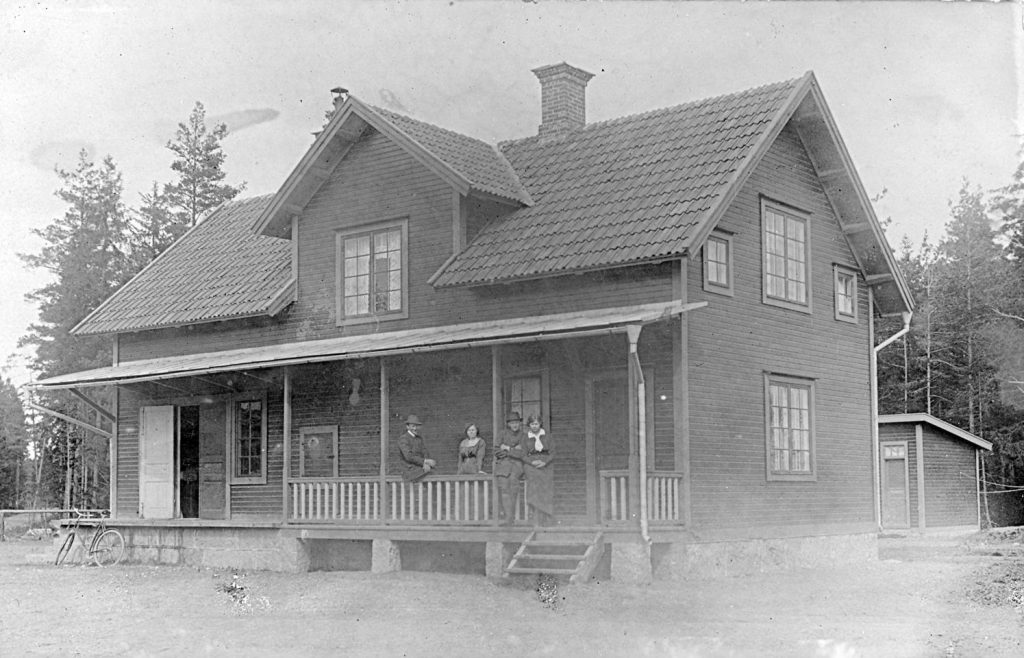
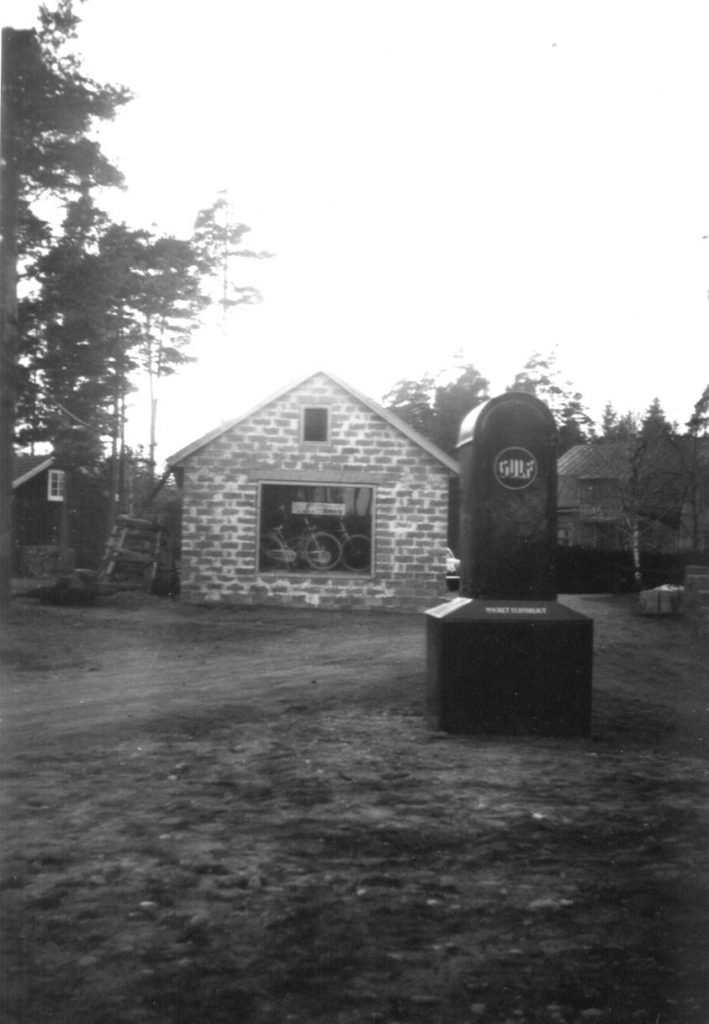
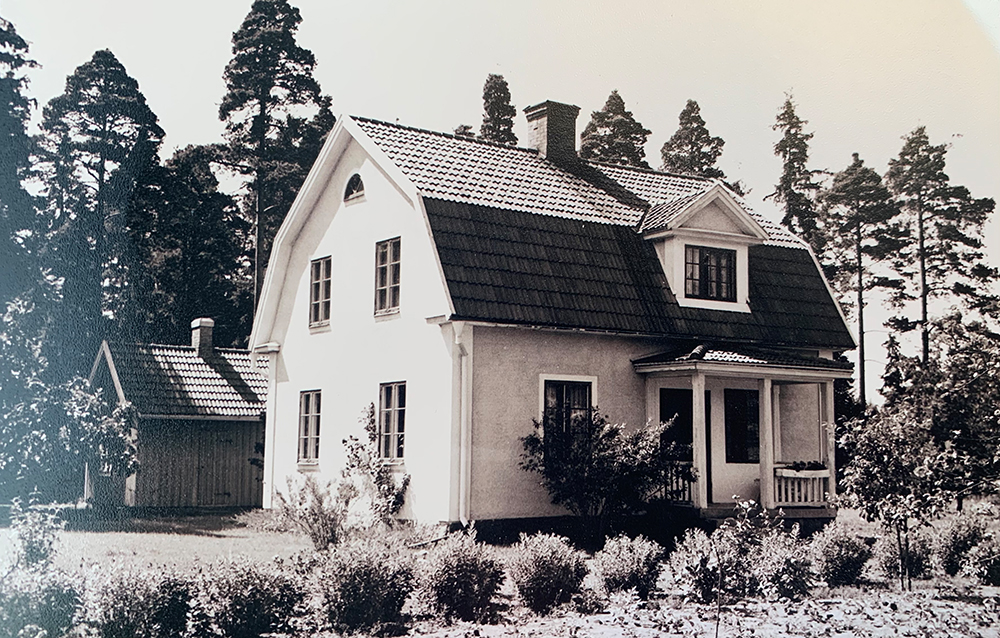
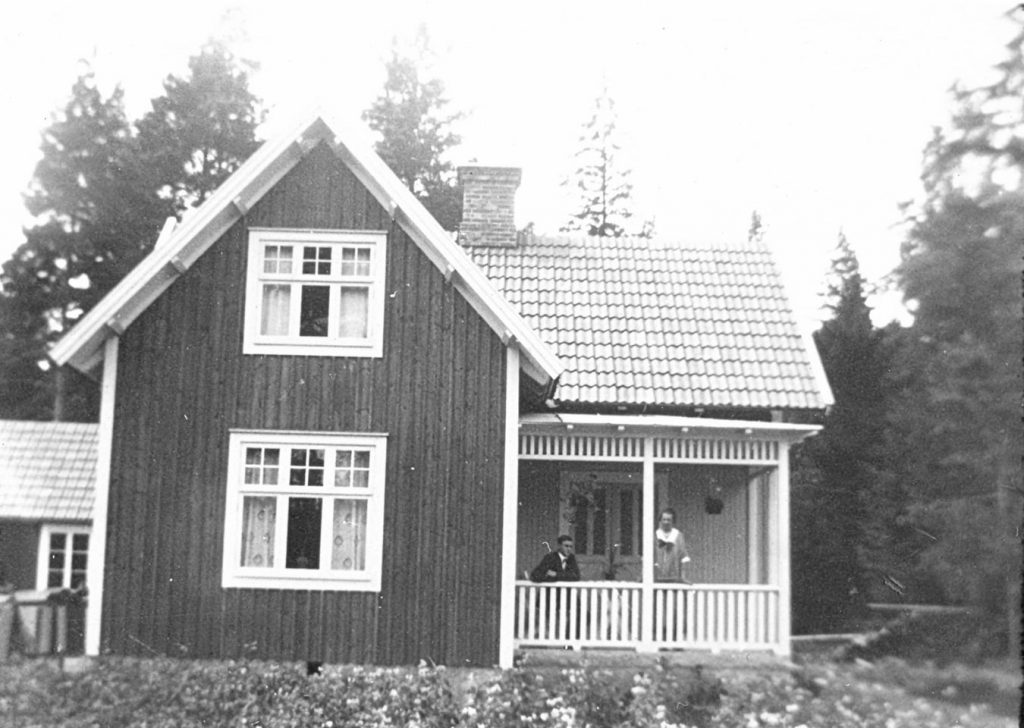
A curious fact is that the plot Skogsborg no.4 still houses a worker at the sawmill. His name is Christer and every summer there are some mysterious beetles everywhere in Tvärskog and the neighborhood calls them “Christers beetles” since they probably come from the sawmill. And that is quite a good definition of how life is here. We live in a civilized village, not completely off grid, but in constant dynamic with nature. Looking at the street with my bare eyes I captured some things that are designed to be invisible, electrical cabinets for example, manhole cover etc.
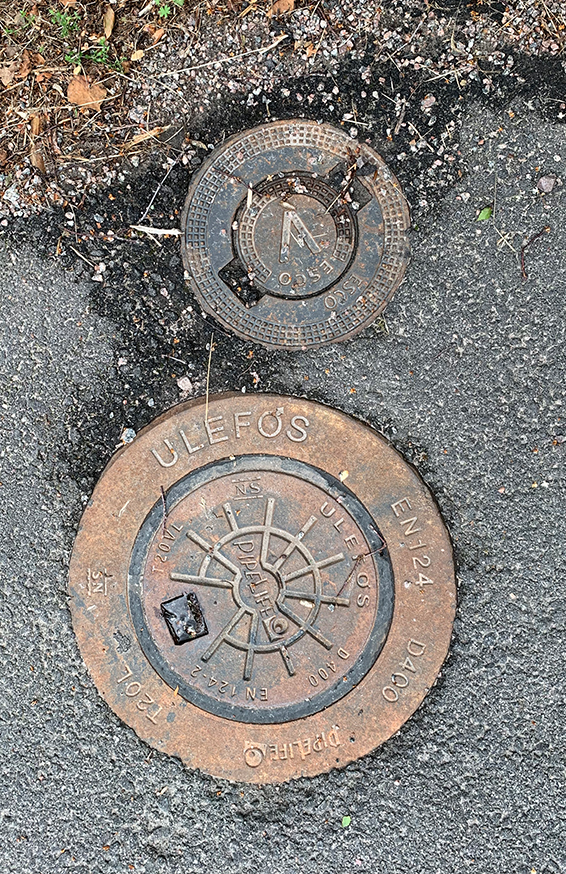
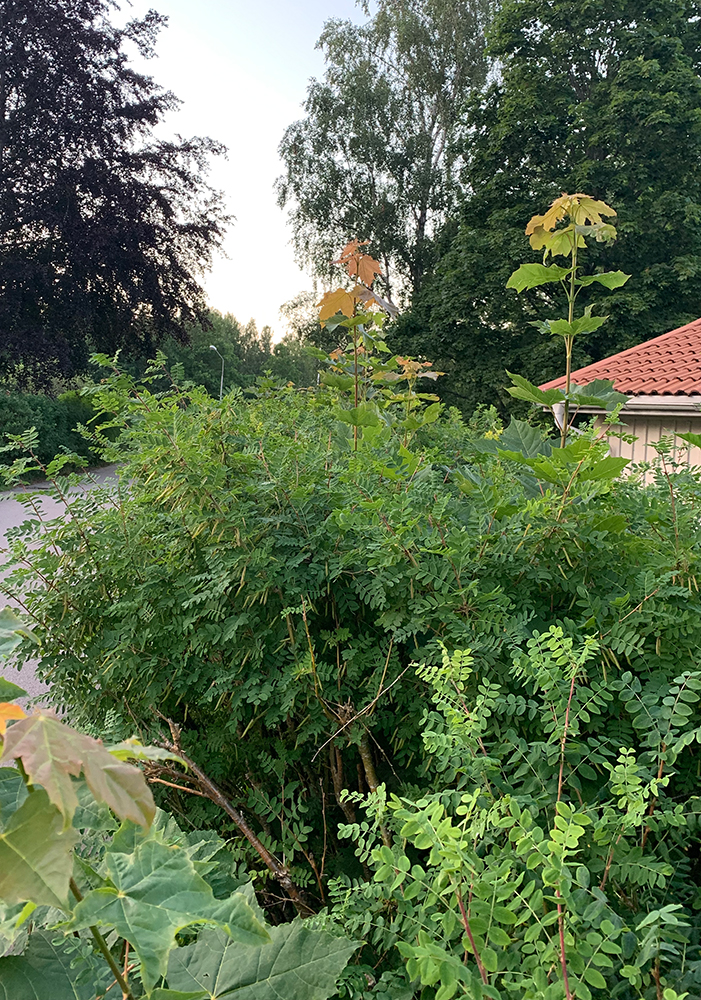
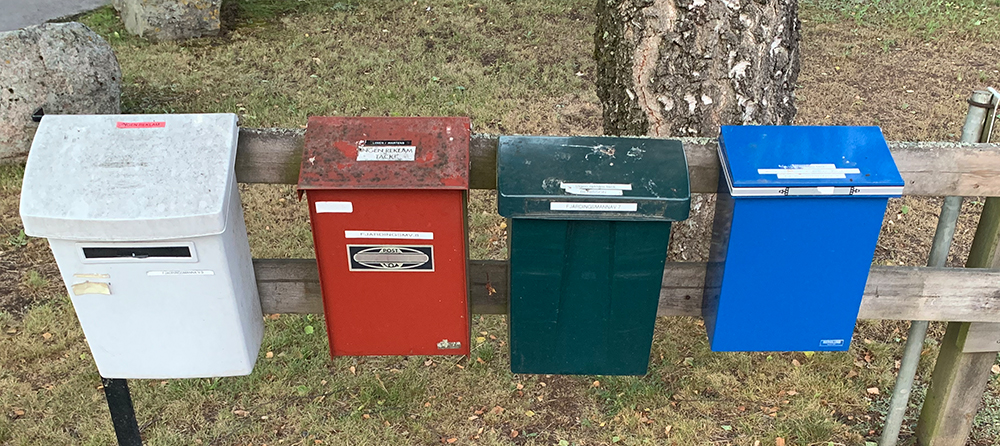

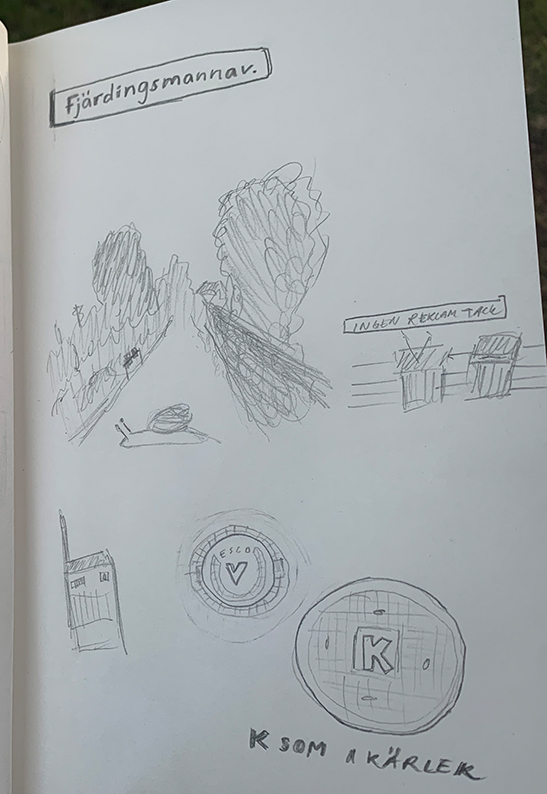
I spent Friday night sketching and reviewing the amount of photos taken. While looking at the photos of the street I noticed the maple leave trees sticking up in every hedge. Some more than others. Keeping your hedge on track out here is vital, otherwise it will get over taken by invasive species within a year and that causes a lot of work, a ruined hedge, etc. Invasive species. It stuck in my head. Also again recently read pieces from Arturo Escobar he mentions the tension between nature and culture, urban and rural. I found that so intriguing, since one thing I often think about since moving out here is how nature is constantly struggling to take back its land. I have become eeriely aware of the power of root systems. Mainly going straight through the houses piping, ruining them. And that a tree in one place can easily give 20 new ones 10-20 yards away, and they do, all the time, every week. The main thing when working in your garden out here is keeping after these invasive species. The maple leave tree being one of the most common ones. We all spend so much time keeping after them so that we can all just happily ignore them and the fact that we are living on borrowed land.
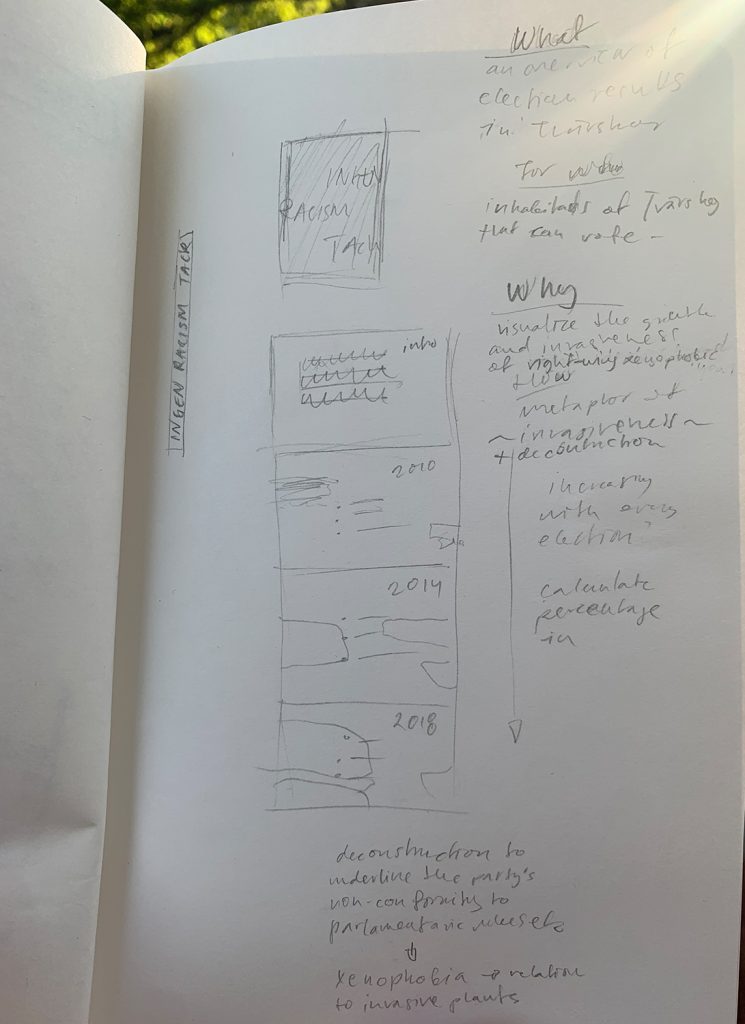
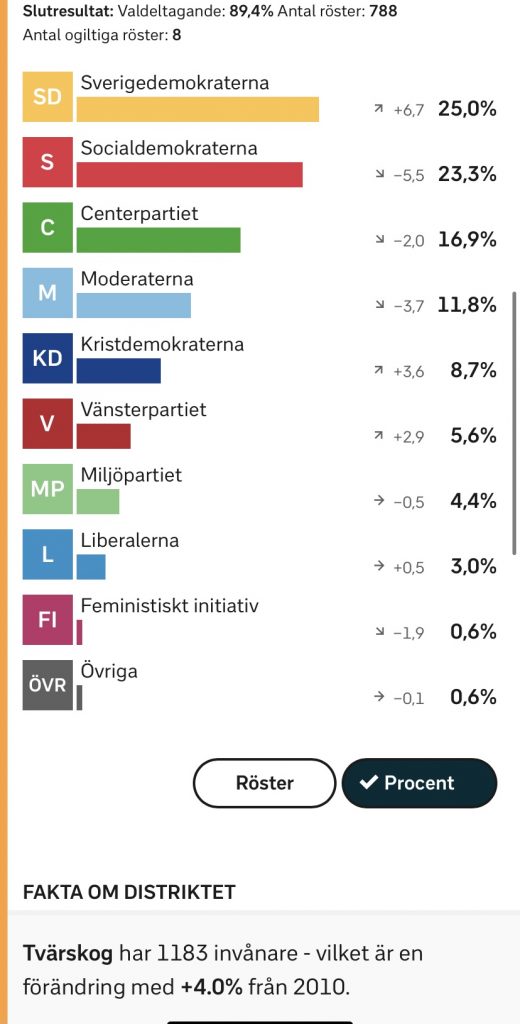
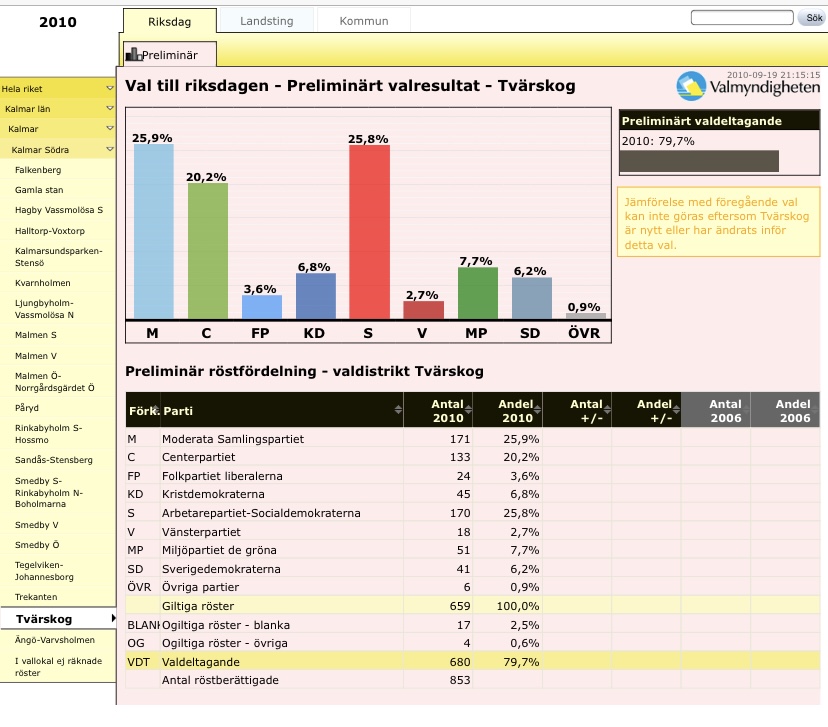
Spending some time with this thought, at first I wanted to find a metaphor in Tvärskog for this invasiveness. Work with a dichotomy where one is visualized as invasive. Being affected by our government’s recent fall, that might cause for a new election, got me thinking of the right wing xenophobic party that really has had a rise in this area past 10 years. Increasing it’s support with around 20%, this place is called a stronghold for that party. I thought of dangerous ideological ideas establishing in the minds of people in rural villages, socio economic aspects and everyday life causes these ideas to become invasive. Spreading quickly while slowly withering our democracy. I did this sketch of these ideas in a folder, slowly invading the paper, disrupting the current order.
Design development



Some printing with leaves and scanning of bars to my “statistics” wanted it to be a bit organic so cut them out. The leaves are meant as background for the front and intro page.
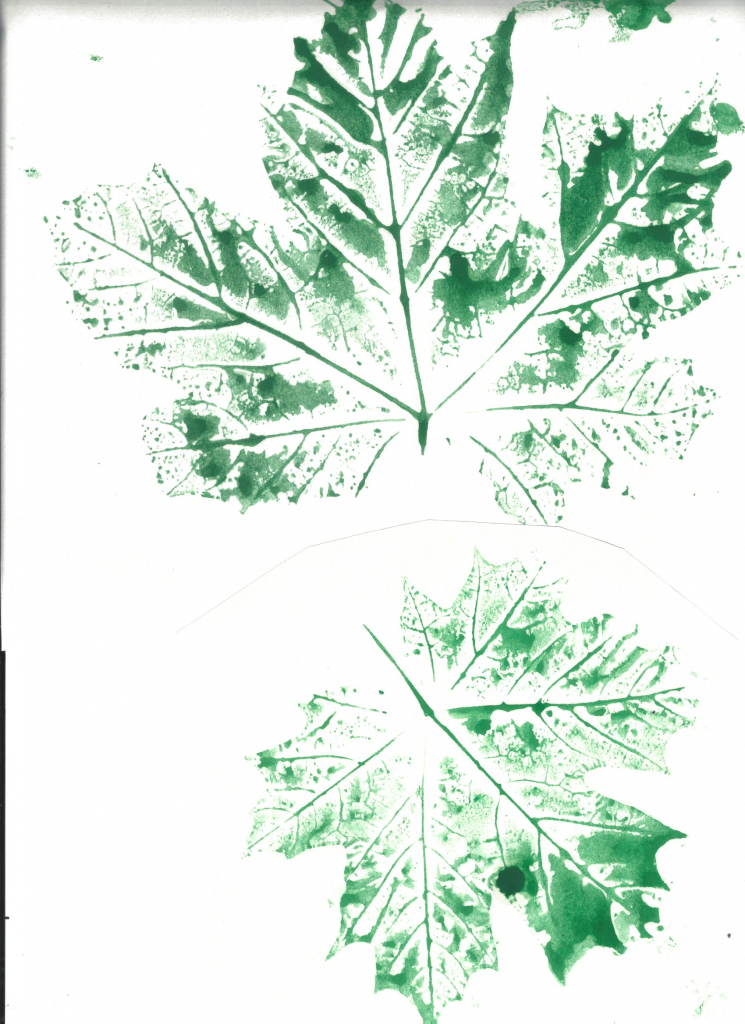
I scanned them but realised I needed more color to have a good contrast as background.
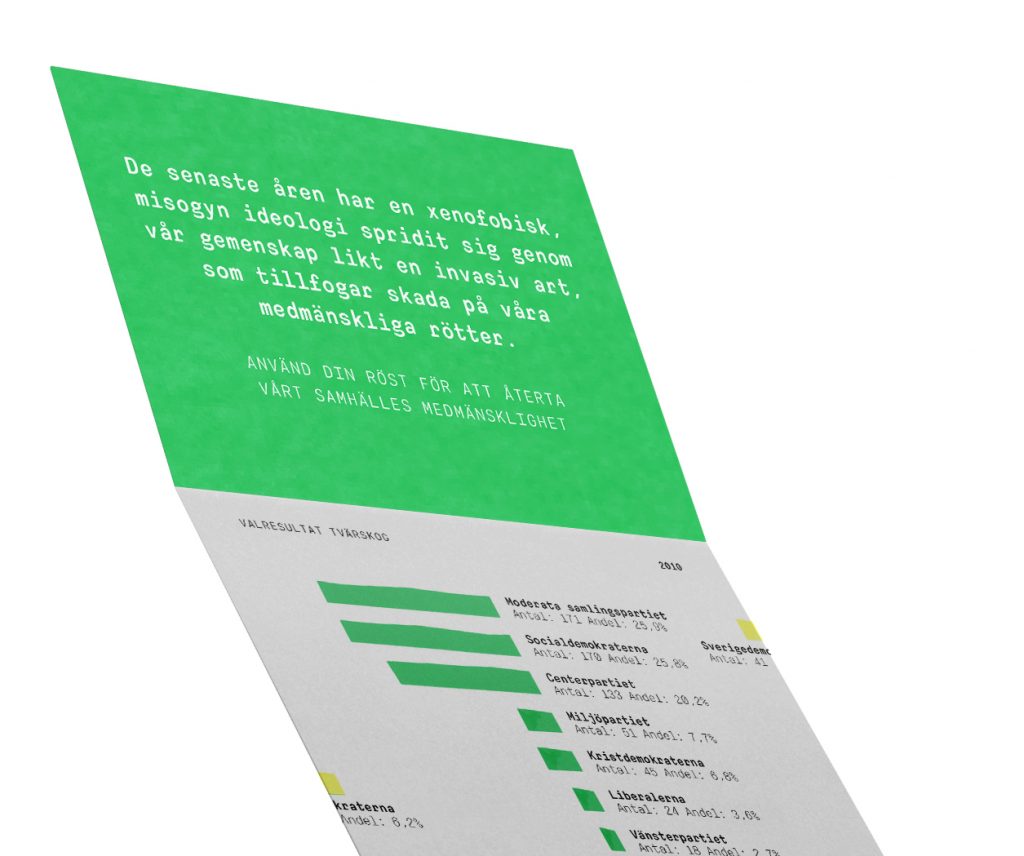
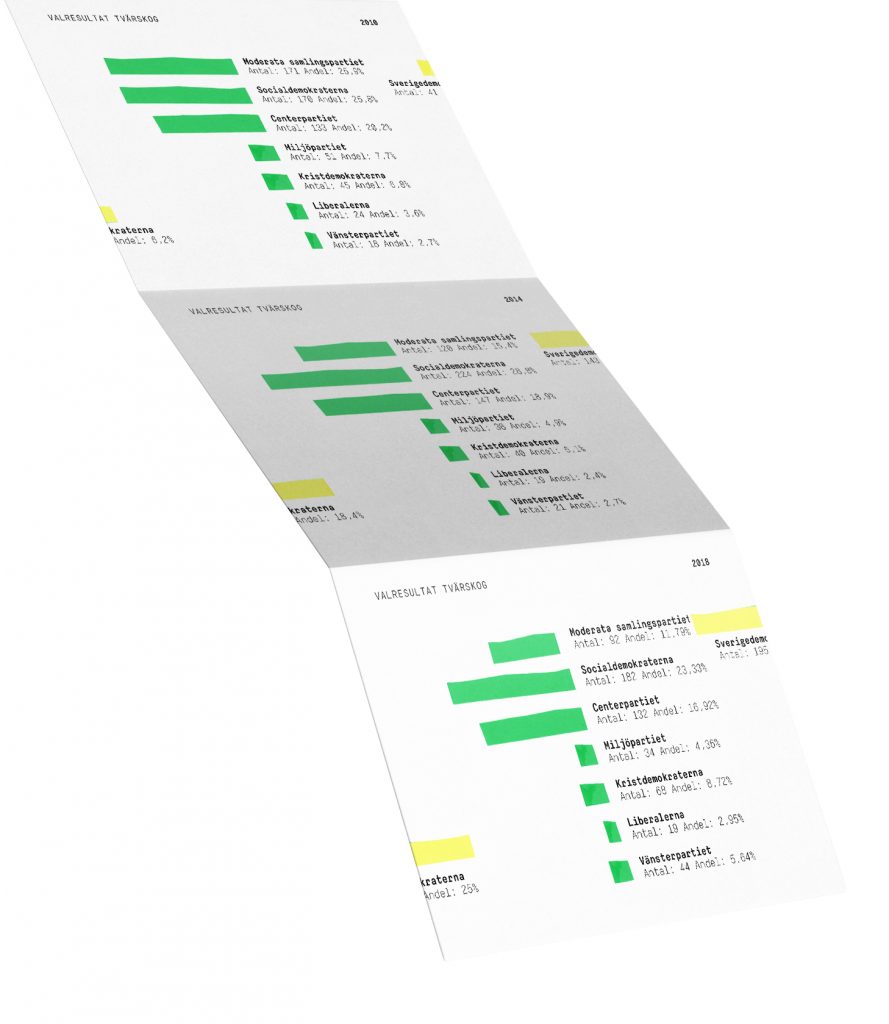
I used the same green for all the bars for all the parties except the one crawling in the edges. I wanted to visually use their own rhetorics against them, the us against them. A normal and an abnormal.
My text became more political than I intended, perhaps inspired by the relentless wording of Arturo Escobar.

Trying out the printed leaves with the typeface I had planned to use, it is Gaslight a lovely grotesk designed by a friend of mine. Holds a lot of character–but a bit too much for this project. I wanted something that could contrast the organic visualizations a bit. Went for ATC Harris, a minimalistic monospace perfect for this task.
Final outcome

A sidetrack challenge
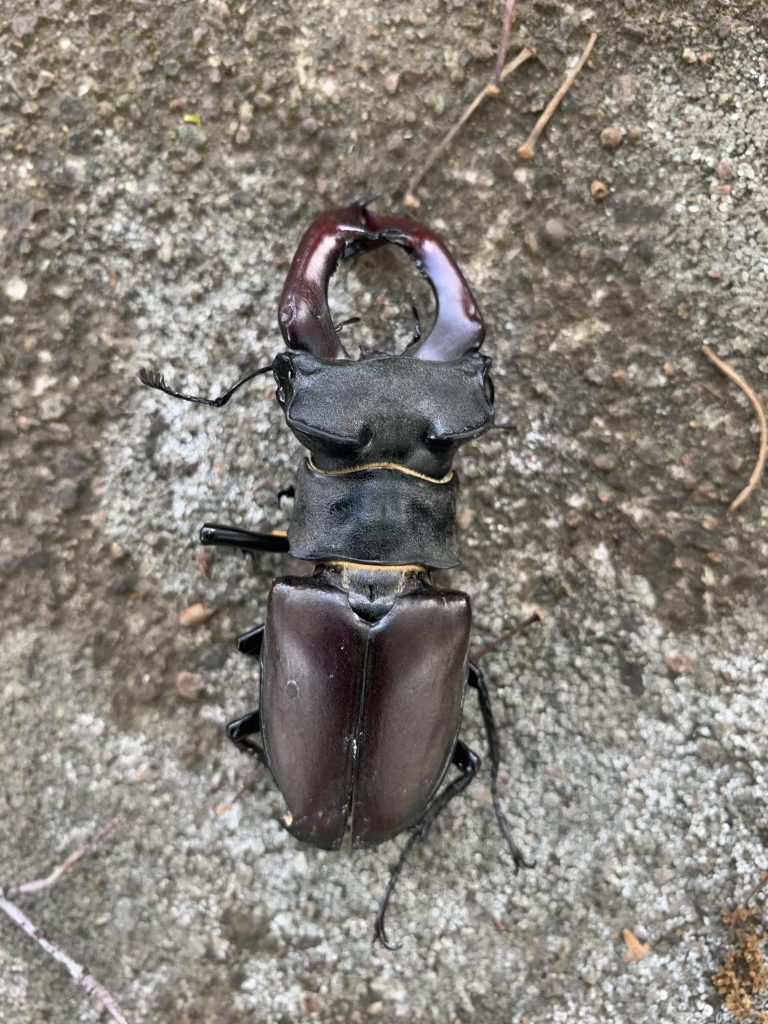
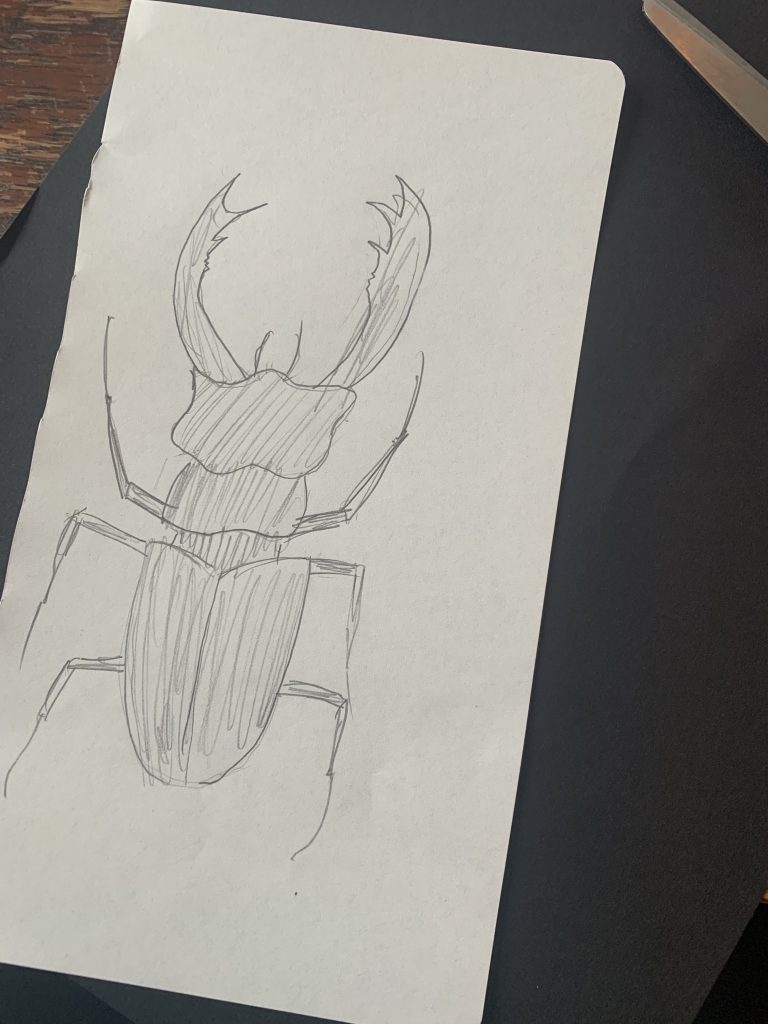
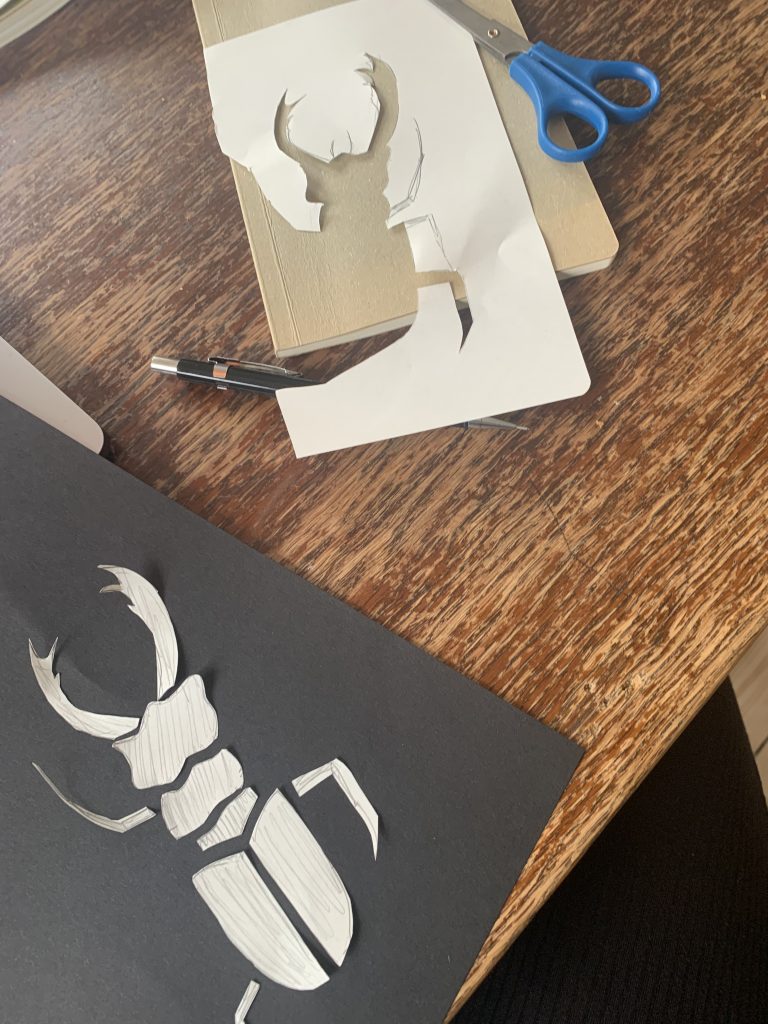
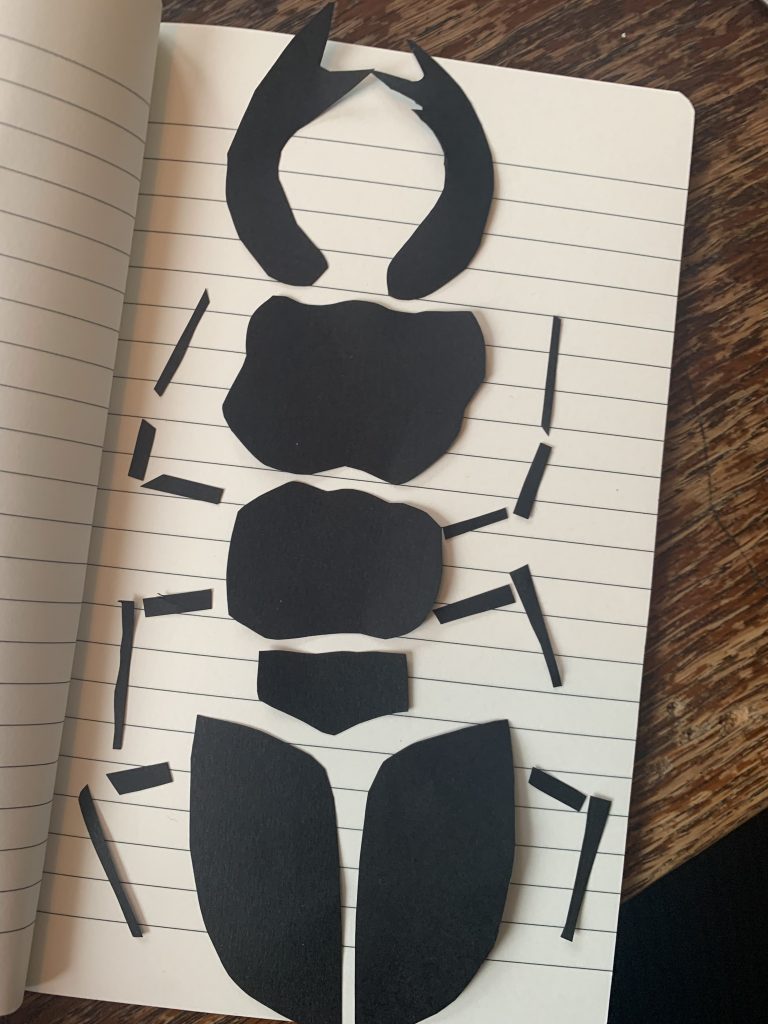
While spending some time on the street I found a dead Stag Beetle. They are protected in this area, they are rare and to be reported to the County Administrative Board. I love these, they are big, when they fly they are quite intimidating, but beautiful. I knew I had to do something with this.



Reflection
I am actually quite satisfied with the amount of tools and methods explored this week, printing with leaves, cutting bars, cutting as a tool for sketching, sketching with pen, sketching layouts with pen, deconstruction of mentioned scissor-sketch and so on. I had an urge to work practically this week, with my hands and see where that took me. It resulted in two challenges, one deriving from an invasive species and the other from a protected one.
The outcome of the folder worked fine, perhaps if developed further it would have been interesting to look at possible ways to further visually enhance the “alien” invasiveness in the statistics. Different material for the bars? Perhaps even a different shape? Different typeface? Etc. Could it be translated into an exhibition and the the invasiveness further enhanced through animation for example? The idea of turning the tables on rhetorics is a cunning idea, but I wonder how it would work in real life? It is possible that it would function as an agitator causing anger projected at a plausible sender. I can also feel there is a naive tone to this approach, do I really think I can fix racism through a folder 🙁 no I really don’t. I think the problem is on a more fundamental level. I would also like to underline that I don’t think this party is a bunch of “evil” people. Some are. Some come from nazi roots and spent the 90s roaming the streets causing great fear and pain for many. But some are family fathers and mothers, perhaps feeling ignored themselves, if referring to this weeks theme. So it is not a matter an ignorant graphic design student can solve with a folder. But it is a way to explore the politics, their narrative and translate that into a visual world.
The outcome for the extra Beetle challenge could definitely have been a bit more refined. Color use and perhaps finding the shape of a heart in those overlapping beetle… bums..? Then it would be more connected to the matter. Maybe two shades of red, or one red and pink would be enough for it to echo the shape of a heart.
Ideas wall


My reflection and arguments from this ideas wall post is mostly based on a text I have recently read on ephemera during industrialization. In that tex, Martin Andrews discuss how the usually short lived printed ephemera, wear-and-tear material that has instead lingered in time and offers a unique connection to the everyday life of ordinary people of that time (Andrews 2009). So In my personal view, even today, ephemera can give a qualified clue on daily life. I bet if I still had my old collection of contemporary ephemera it would differ from James’, perhaps provide sublime cultural differences in Swedish and English graphic design tradition and reveal details in our everyday behaviour?


References
https://valresultat.svt.se/2018/108801301.html
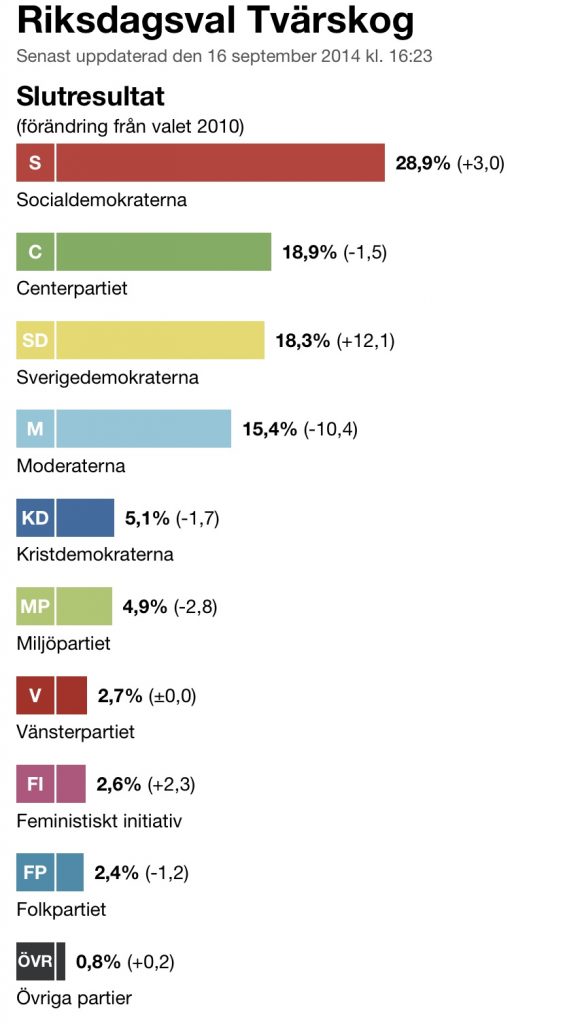
https://valresultat.svt.se/riksdag_2014/108801301.html
https://data.val.se/val/val2010/slutresultat/R/valdistrikt/08/80/1301/index.html
Andrews, Martin. 2009. The Importance of Ephemera. In Red. av Simon Eliot and Jonathan Rose. A companion to the history of the book. Chichester: Blackwell Publishing.