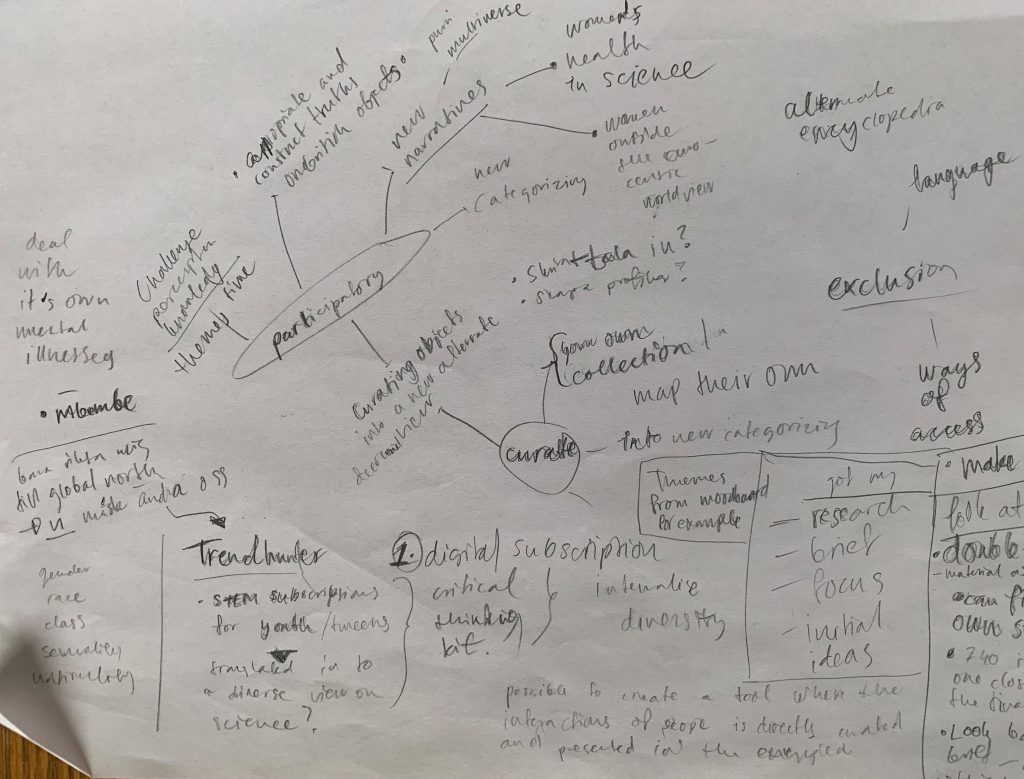
Leading up to the idea generation I created a mindmap to better investigate possible routes for ideas
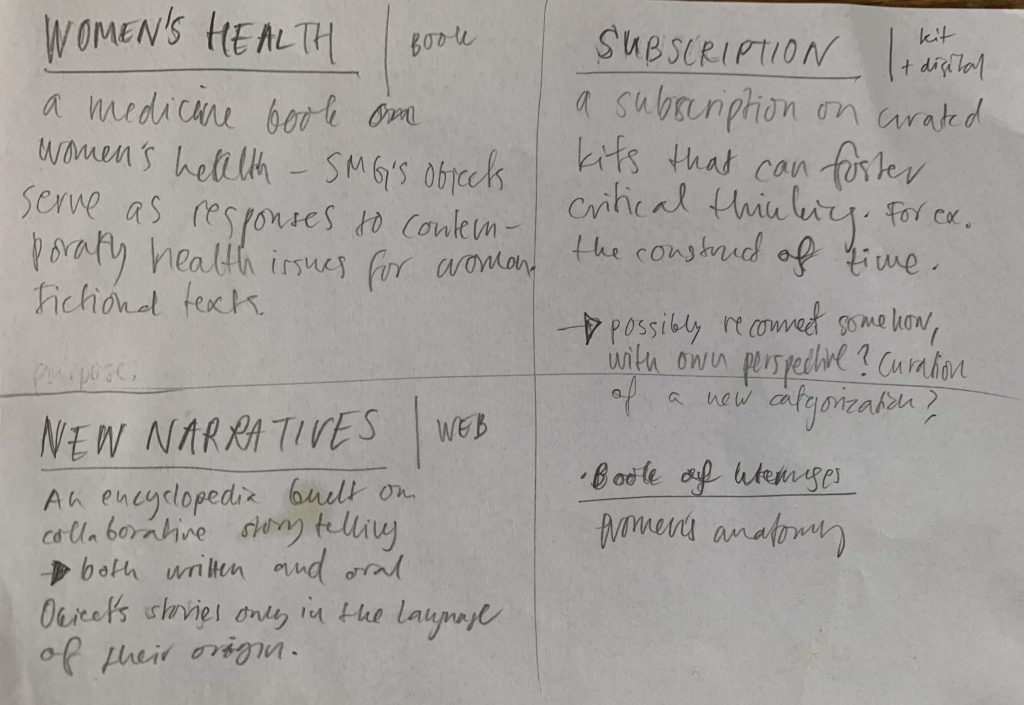
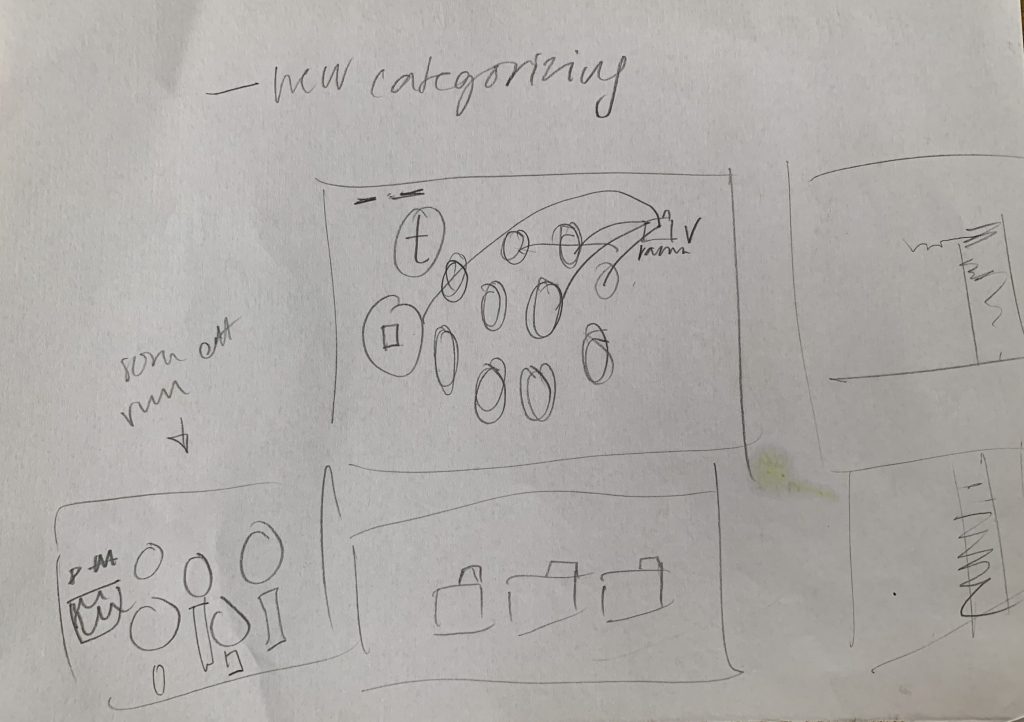
I had five initial ideas investigating ways of finding alternate narratives and new ways to approach the object’s.
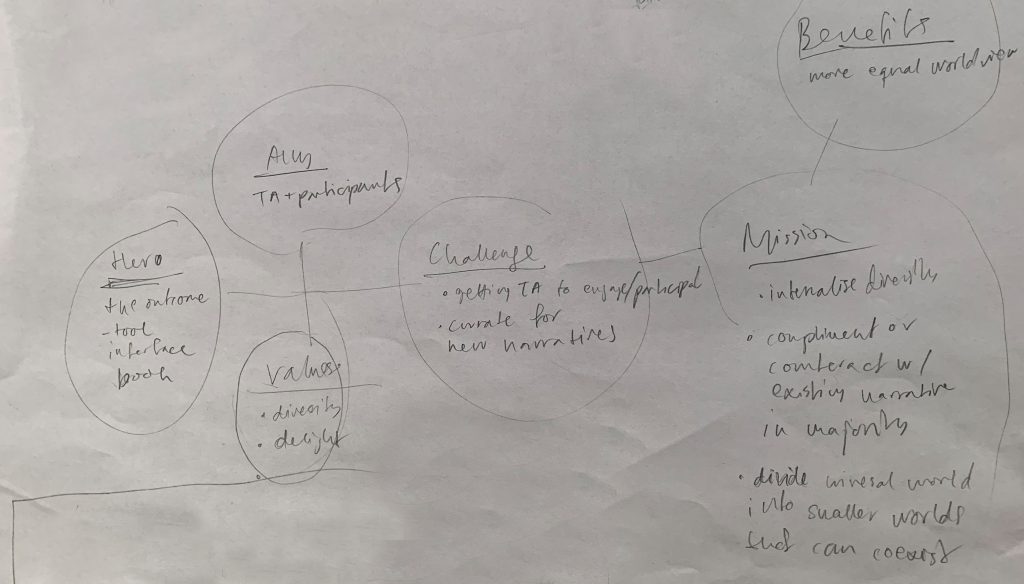
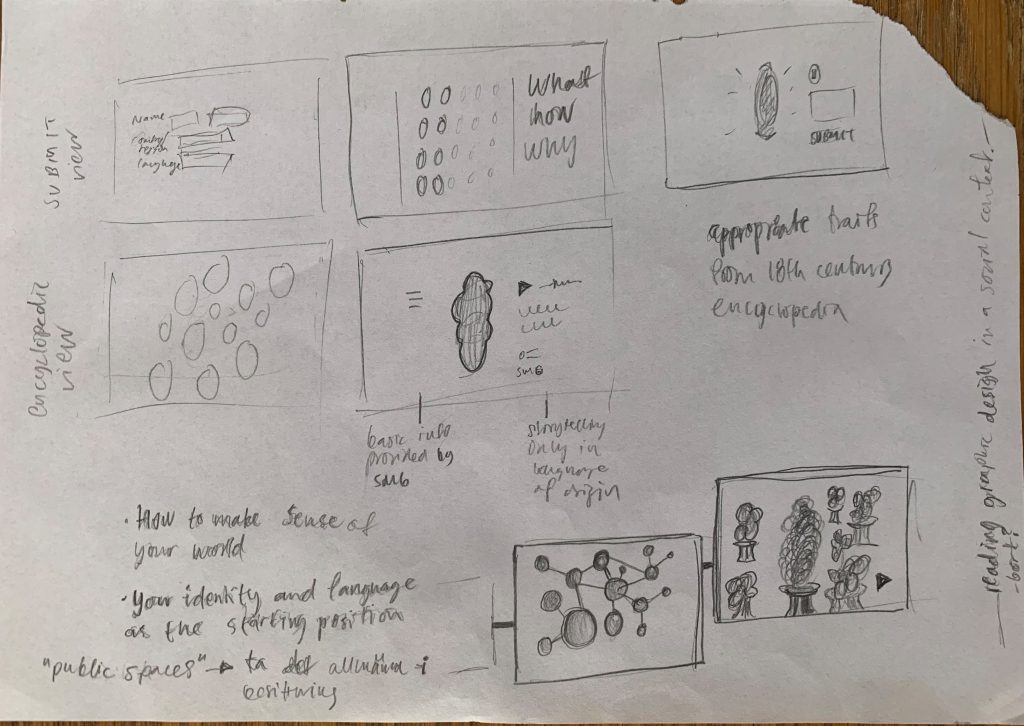
»We have the power to show language and identity. We have the power to allow someone to see their language but also to take it away.«

Tutorial Nov 10th
Some thoughts, questions and reflections from the people reviewing my idea in my own arranged tutorial with staff from the Linnaeus University on the 10th of nov:
– The idea allows people take take possession of the collection
– How can one open up to these worlds?
– It is not only private or personal it is about making a personal positioning public.
– The curating, is it possible to amplify the personal in order to avoid that people from the same culture/region feels like someone else is putting values and views of the world onto them?
– Could it be possible to look at the geographical locality? And the choices of objects from that perspective? Is it homogenous or hetergenous?
– Different population groups in different countries and regions, is that something worth pinpointing?
– Can conclusions be made from selections of objects in real-time? In a the museum or online? Another platform?
Dori Tunstall’s principles on Design Anthropology that might be useful to further navigate this project.
- Value systems and cultures ought to be accepted as dynamic, not static. Each generation goes through the process of negotiating the elements that make up their value systems and cultures.
- One ought to recognize the mutual borrowing that happens among value systems and cultures, and seek to mitigate or eliminate the unequal circumstances in which that borrowing takes place.
- One must look simultaneously at what is expressed as that to be gained, lost, and created new in the recombination of value systems and cultures by a group of people.
- One should seek to eliminate false distinctions between art, craft, and design in order to better recognize all culturally important forms of making as a way in which people make value systems tangible to themselves and others.
- One ought to create processes that enable respectful dialogue and relational interactions such that everyone is able to contribute their expertise equally to the process of designing and those contributions are properly recognized and remunerated.
- Projects should use design processes and artifacts to work with groups to shift hegemonic value systems that are detrimental to the holistic well-being of vulnerable groups, dominant groups, and their extended environments.
- The ultimate criteria for success of any Design Anthropology engagement are the recognized creation of conditions of compassion among the participants in the project and in harmony with their wider environments.