Lecture reflections
These design solutions are moving the responsibilities onto the individuals and shifting focus from the structure that caused the pollution to begin with. Is the “biblical red rain” discussed in this podcast really helping or is it building on a harmful narrative where the blame is distributed on the citizens, and thereby misplaced?
As a designer it can be valuable to understand that we are living in a civilization of late stage capitalism and what that means for us as a society and maybe more importantly what my role is and historically has been in shaping that.
I am sometimes under the impression that few designers working with a critical approach, ask why things are the way they are, where does this come from? And instead look for solutions in the immediate present. Is it not relevant to interrogate the past to get a clearer understanding of where these issues came from?
Interdisciplinary collaboration forming exciting partnerships in design
I always talk about Futuress, but it is such a good example of a collaborative platform that successfully does introduce an interdisciplinary approach to design and through that manages to open up the field for the better. Either through written articles but also through these discussions/lectures on topics, me being interested in post colonial feminism for as a theoretical framework for my own phd proposal for example–topics like these are really interesting and helpful in just understanding how to view and discuss things.
As design and graphic design has been growing a conscious new specialisms have evolved. One of them being Design Anthropology for example, where the designer often comes from the field of anthropology. Dori Tunstall is a great example, she holds a PhD and an MA in anthropology from Stanford University but is now a Dean at the Faculty of Design on OCAD. I think that reveals much on where our field is going. Since an anthropological approach to design demands a massive shift in processes and understanding of the discipline. It open up for entirely new branches such as Ontological Design.
It is interesting to reflect on what these movements might mean for our future work and for education in graphic design.
Workshop challenge
I was told to stick with the topics on the list and wanted to find one that could be more directed towards what I am working with in this module. I chose Promoting greater community cohesion and wanted to discuss this with Viktor as we often do discuss these matters. He is very well read and educated and I am not afraid to talk against him in any academic discussion, if that makes sense.
Is it possible to address any of these matters where there is a proposal of a design solution being able to make any importance within them. These issues derive from large structural problems, the foundation of our civilization–primarily in the west. They are such heavy weight matters often looked at with an insufficient pair of glasses. And now I am going to do that as well.
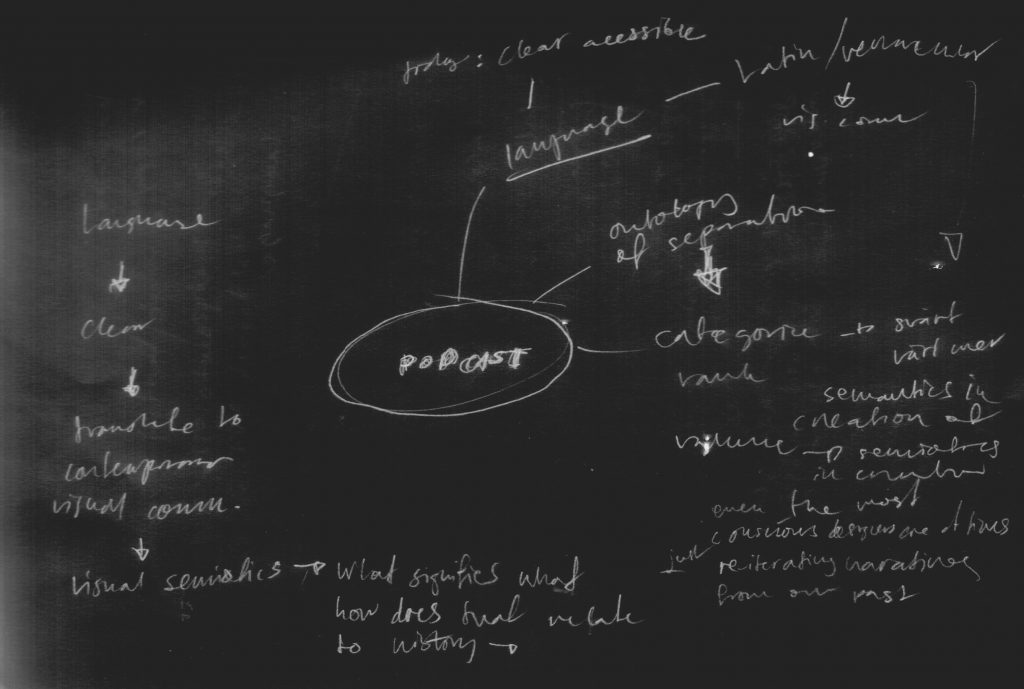
Before I found out we had to pick a subject of the presented list I examined possible subjects that could relate better to my work in general and in particular my recent development in this module. The mindmap explored written language and the signs systems that constitute written language and in what ways that is visible in contemporary use of but also the discourse on written language.

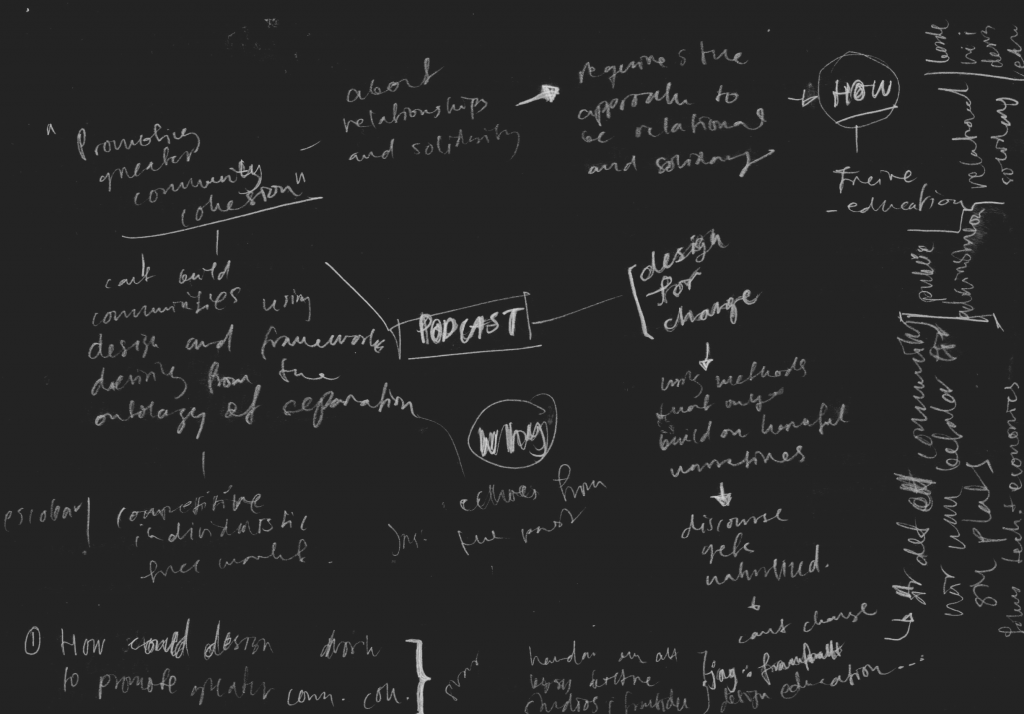
The idea generation took a new turn to better align with listed subjects.
Is it possible to address any of these matters where there is a proposal of a design solution being able to make any importance within them. These issues derive from large structural problems, the foundation of our civilization–primarily in the west. They are such heavy weight matters often looked at with an insufficient pair of glasses. And now I am going to do that as well.
I chose Promoting greater community cohesion and wanted to discuss this with Viktor Lovén. He is a Communication strategist within regional development and has over 10 years experience in public administration. He has a master in Communication for Development from Malmö University, and is moving on to take a Master in Social Policy and Practice at Trinity College this fall. I chose him as we often discuss our respective academic matters and this topic seemed a suitable one for him.
Final outcome
Conclusions
Problems with existing aims at promoting greater community cohesion:
→ The approaches often focus on technological solutions.
→ Design solutions can often put responsibility on individuals rather than the structure.
→ The solutions function within a liberal framework of addressing problems.
People, organizations, institutions and companies that work with trying to achieve greater community cohesion, might need to rethink how they work with that. Despite well-intended initiatives many rely on economical and technological solutions that are based on a neoliberal logic of competitiveness, individualism and free market. Results-based initiatives, numbers, free market economy and technological inventions will take care of everything, and without rannsacking the existing power asymmetries in society, there is no discomfort, yet anyone can claim they are doing something.
Is that way of working taking the focus away from what really must be done?
Existing design solutions addressing issues within for example community cohesion are aimed at the consequence of a structural dilemma instead of addressing the root cause. This places the responsibility on the individual rather than on the structure. Such initiatives may contribute to small improvements, but simultaneously impede any real structural change.
Western ways of being and living have been proven effective in maintaining inequity and unsustainability, could a Southern epistemology help approach these matters in a better way?