Existing platforms and insights
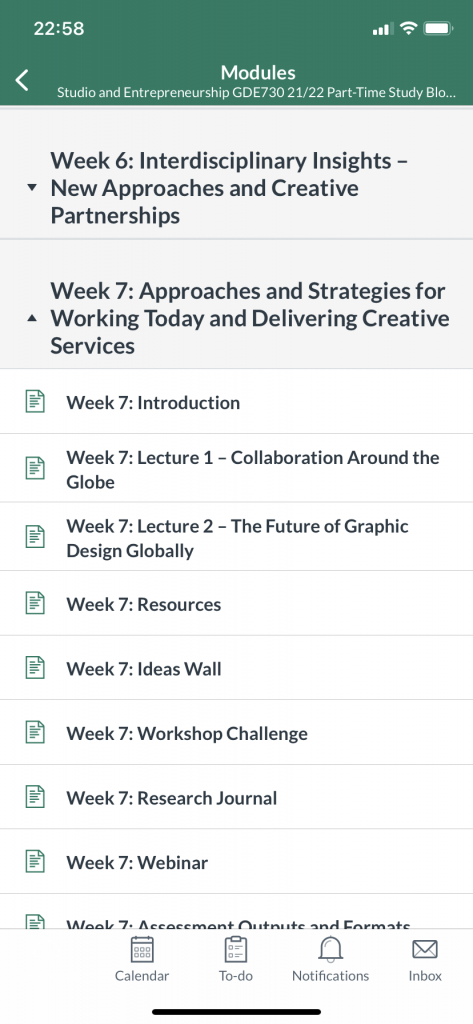
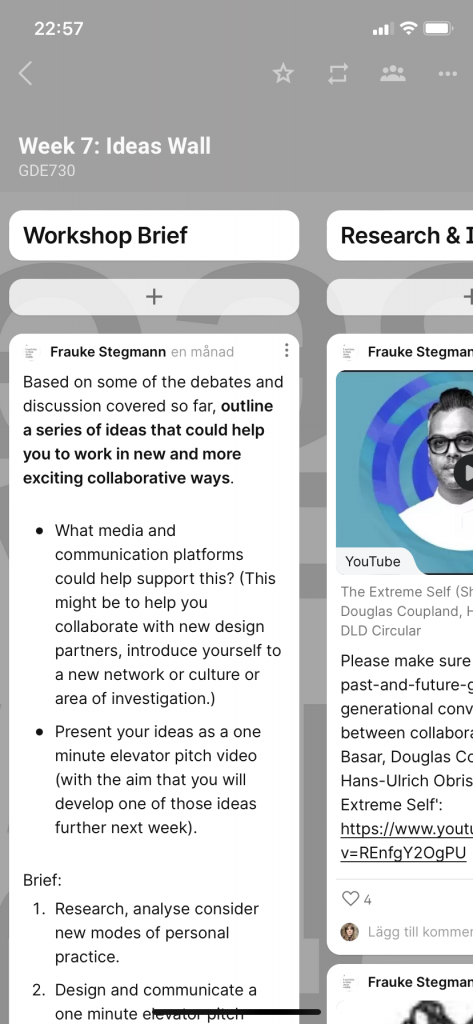
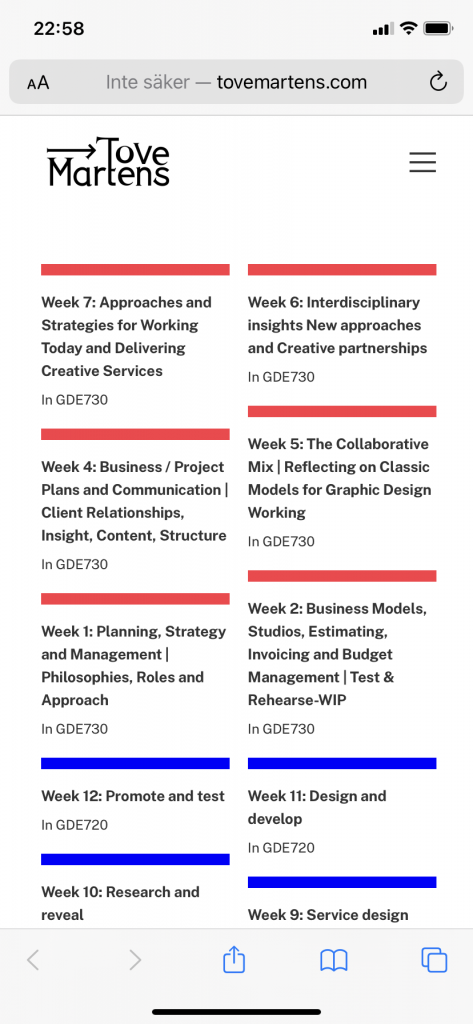
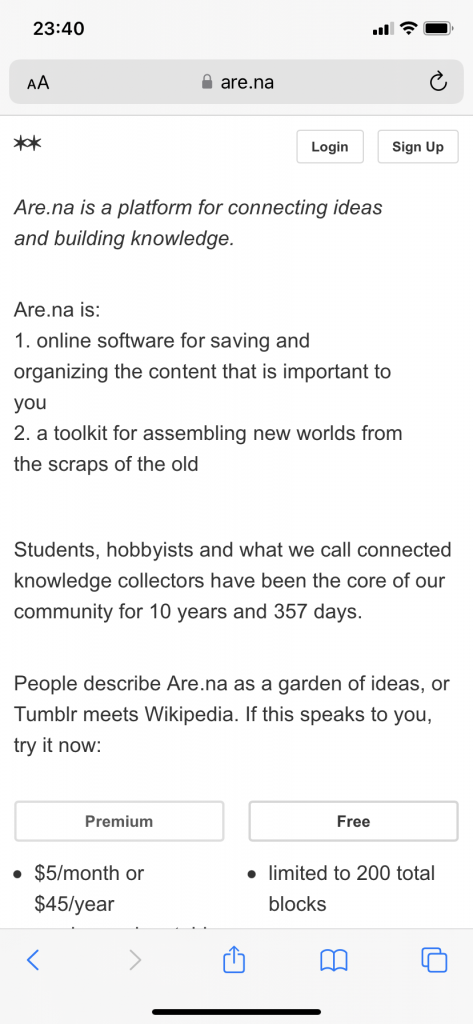
Looking at what exists for Falmouth Flexible students today in terms of accessing course material, collaboration and communication there are three primary channels: Canvas, Ideas Wall and the Research Journal.
Inspiration
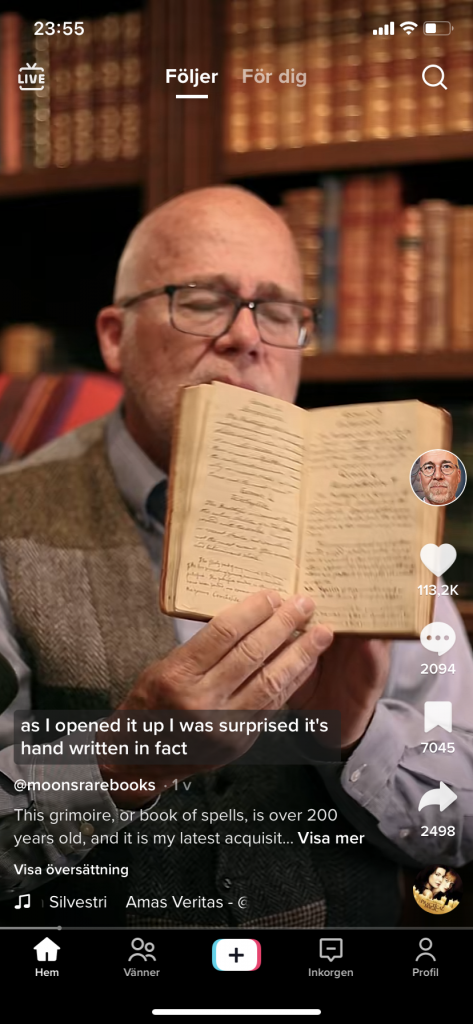
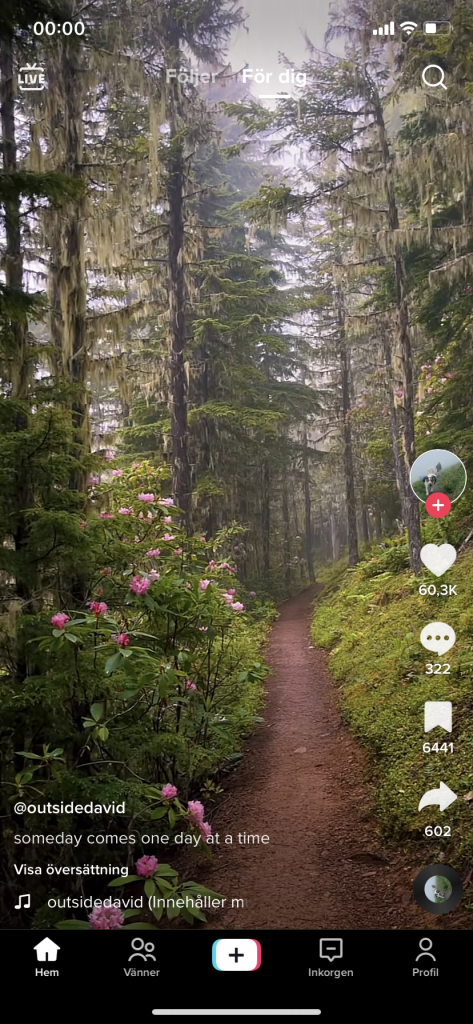
The algorithm for my own TikTok shows cinematic forest imagery on my For You-page, and puts a rare book account at the top on my Following. That content that is quite fitting with what I usually interact with. Since I only save, share and scroll but never publish, comment or stitch on TikTok, the content on my For You Page is probably not as rich as it could be if I interacted in all the possible modes of the app.
A Rhizome-like algorithm?
The main inspiration for the digital part of this idea is the algorithm that separates TikTok from other social media. Instead of basing the feed of who the user follows, a For You-page displays content based on what the user interacts with.
Not unlike a rhizome, the magic of this app lies in how it makes possible for infinite layers of meaning. And especially in the stitch-function that allows for overlapping existing content in different ways. This is used to comment, add value, build on a narrative, and more.
The idea would build heavily on several of the functions from TikTok but translate them into the context of Falmouth Flexible with the goal to create more interdisciplinary connections.
Design Development
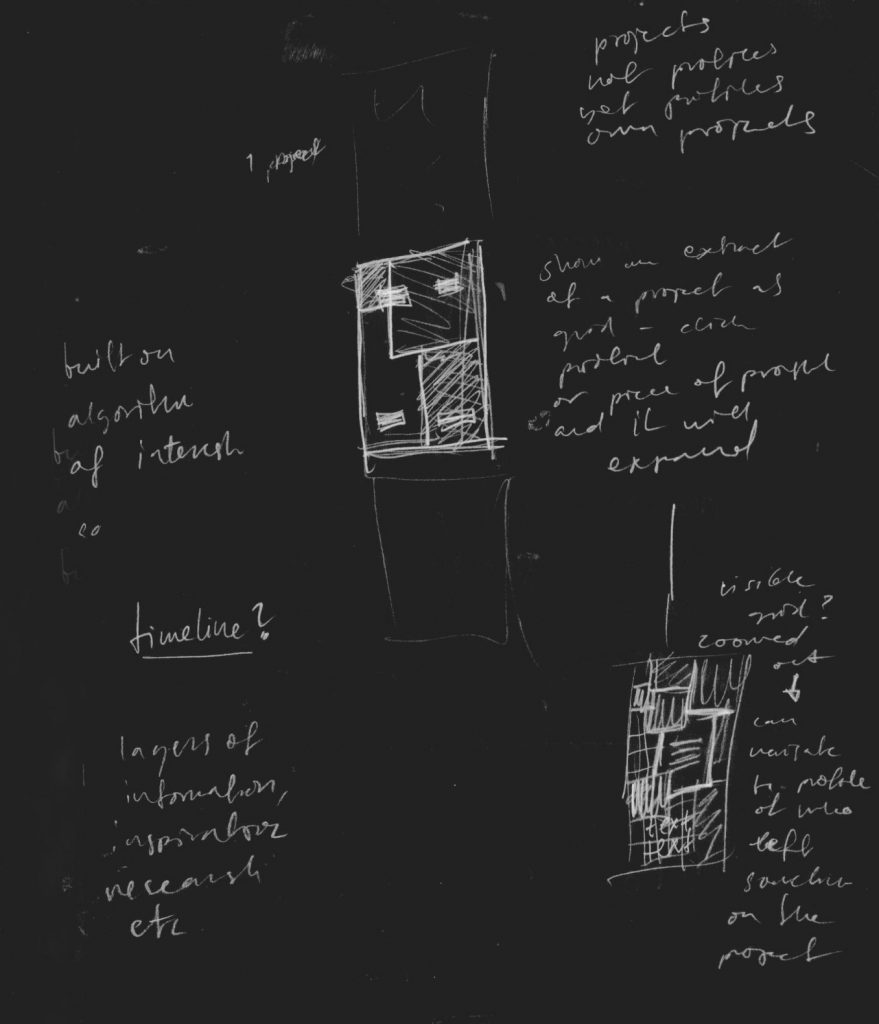
The initial sketches examined ways of distributing the content of project pages. The project pages would be at the center of this solution and is the place where students can pin research, inspiration and create those layers of meaning. The intention was to let these layers of meaning take place in a horizontal composition rather than stacking them.
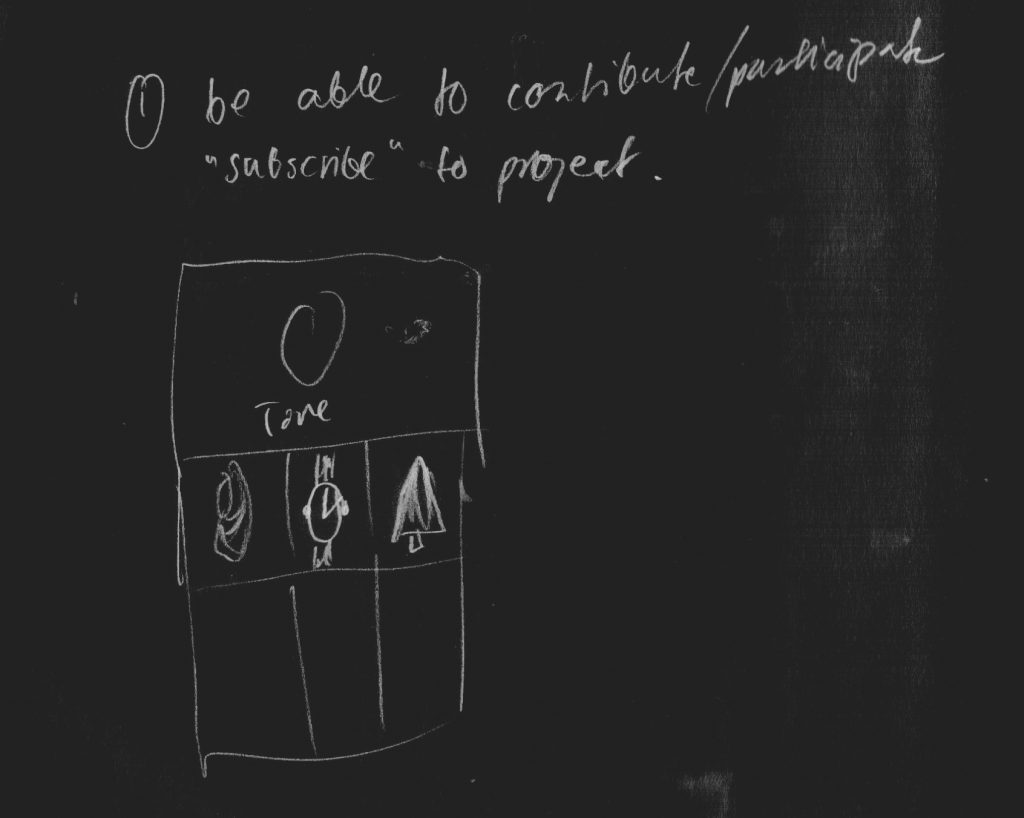
It was important to enable ways of not only interacting with other student’s projects, but participate and contribute to them.
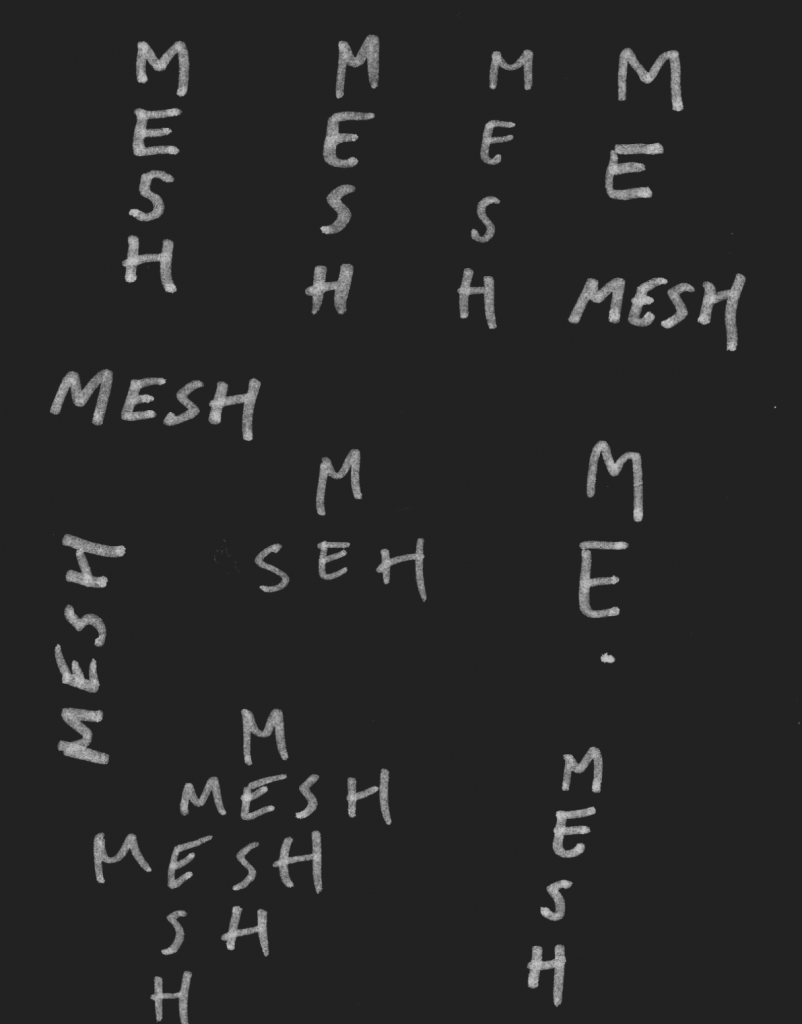
The app would rely less on visual expression and more on function and the ability to enhance the meaning-making processes between students. Yet a name and a logotype was needed, Mesh seemed like a suitable name and the initial sketches looked at possible visual nods to its inherent meaning.

The process moved quite quickly into Figma to work out possible ways of visualising this idea. The focus was on the projects and how to encourage interaction to create layers of meaning on project’s processes.
These first sketches fully embraced a design system based on the golden section and when zooming out the size of the content was sequentially smaller according to the fibonacci scale.
The design at this phase was unclear and did not let the content come through.
The reason was that the content on the project board had to many distracting elements.


Participatory learning process
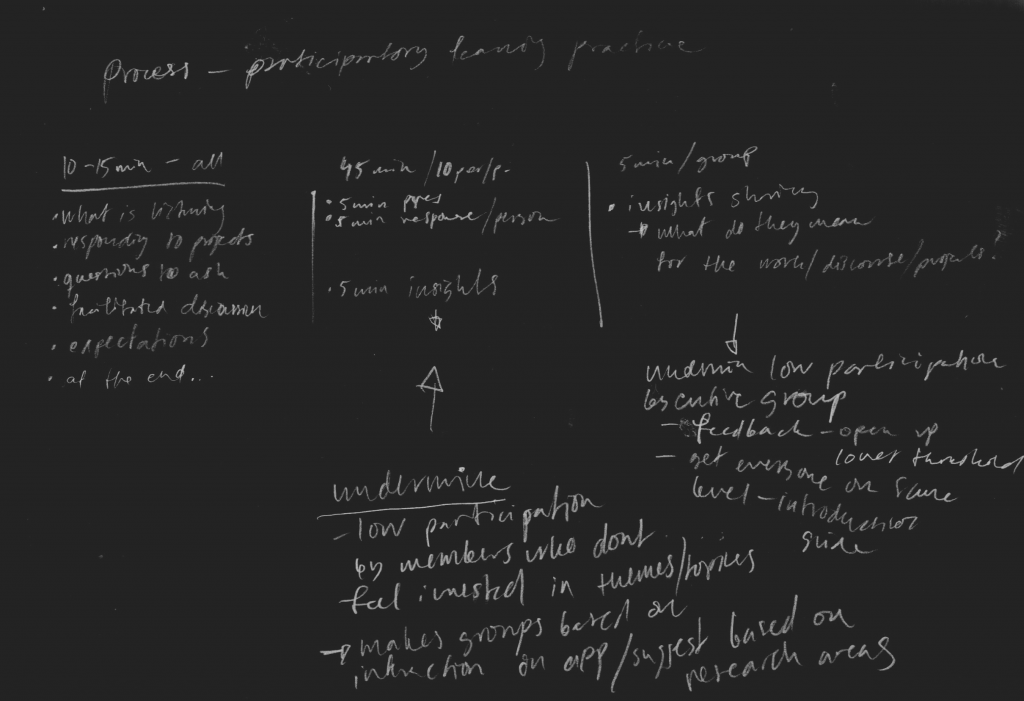
»Always be suspicious of low participation. Dependency, anger, or fear are often factors in play. The group, however, may not want to surface those feelings. If not, shift from open discussion to a format that lowers the anxiety level.«
»Use tracking: Name the various topics in play. «
The app would connect to a participatory learning process, similiar to group crits, but instead go across courses and be regulated by student facilitators.
For the developement of this process, the structure is drawing on the Facilitator’s Guide To Participatory Decision-Making (Community At Work, 2017). This will also be the primary context where Manyozo’s pedagogy of listening would be utilised. This relates to the podcast in week 6 and how the discussion in part focused on how education could promote greater community cohesion through more relational structures. Rolando Vázquez (2012) states that listening is a form of the question of the relational »We could say that modernity’s monopoly over representation is grounded on the negation of listening, that is, the negation of language as relationality.«
Final outcome

Here is the landing page, and it would be a vertical scroll between projects based on your interests. The algorithm would collect your interests based on what projects and what content within those projects you interact with. The text sizes used here are based on the Fibonacci sequence for better visual balance.

This would be a scrollable project board, where anyone can share, comment, stitch and interact with the board, the creator, the people contributing and the content on the board.


Clicking an object gives the opportunity to stitch, save or comment.
The concept of stitching comes from TikTok and means that you can add other content on top of the existing content, for example: stitch a book with a sequence from a film referring to that book.
The stitch is a function that is echoing the concept of the Rhizome, and allowing for students to create meaningful chains and layers of information building on each others research in various ways through interaction.
»Any point of a rhizome can be connected to anything other, and must be« (Delueze and Guattari).

Despite this idea putting the creator in a secondary mode as the focus is the substance of projects. Creators profile’s can be viewed, but as a way to dive into more of their project’s and to create connection.

References
DELUEZE, Gilles & Felix Guattari. 2005. A Thousand Plateaus. London: University of Minnesota Press.
KANER, Sam. 2014, Facilitator’s Guide to Participatory Decision-Making, John Wiley & Sons, Incorporated, New York, NY. Available from: ProQuest Ebook Central. [17 August 2022].
MANYOZO, Linje. 2017. Communicating Development with Communities. Routledge.
VÁZQUEZ, Rolando. 2012. ‘Towards a Decolonial Critique of Modernity. Buen Vivir, Relationality and the Task of Listening.’ in Raúl Fornet-Betancourt (ed.), Capital, Poverty, Development (pp.241-252).